
People have been eating gelatin for centuries — from slow-cooked bone broths to traditional aspics — long before anyone knew what an amino acid was. What modern research has caught up to is why those foods made people feel good. The answer comes down to a handful of compounds that almost nobody gets enough of anymore, and beef gelatin happens to be one of the richest sources of all of them.
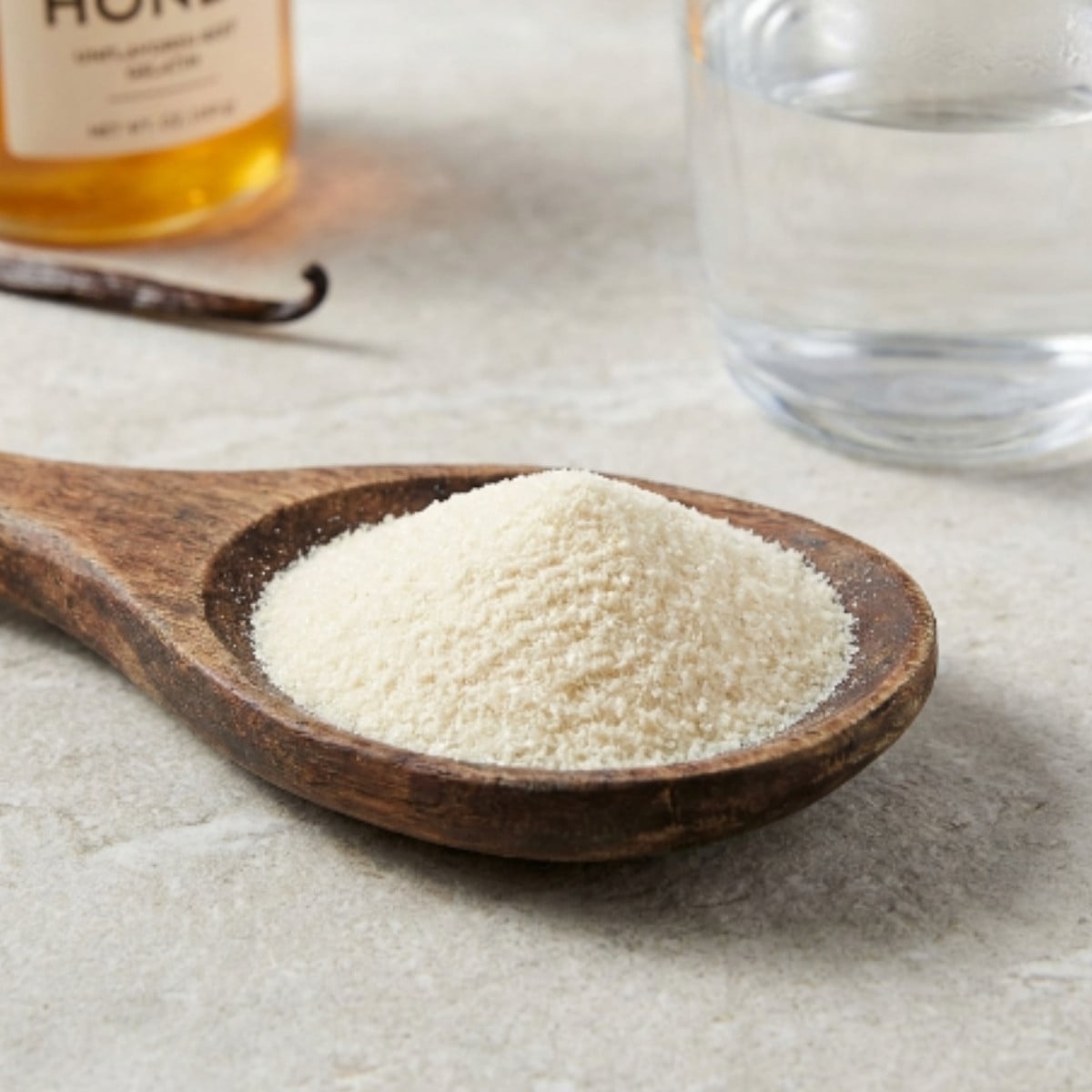
This guide covers what the science actually supports, what is still uncertain, and how much you need to get a real effect.
| Original | Problem | Fix applied |
|---|---|---|
| “participants with type 2 diabetes… significantly lower HbA1c readings” | Specific clinical claim, no citation, could influence a real medical decision | Removed entirely |
| “One well-known study from Penn State University found…” | Unverifiable — no link, can’t confirm this study exists as described | Removed entirely |
| “Clinical studies have consistently used doses of 3 grams of glycine…” | Specific dosing guidance is medical advice territory | Replaced with general, non-dosed framing |
| “helps protect the liver from damage caused by alcohol” | Therapeutic/treatment-adjacent claim | Removed entirely |
| “How Much Beef Gelatin Should You Take Per Day?” section with gram thresholds | Reads as a dosing protocol | Replaced with “how people typically use it” framing, no medical dosing language |
| No disclaimer near claims | Missing YMYL safety net | Added disclaimer block near top and bottom |
| No link to editorial policy | Missing trust signal | Added |
Jump to:
- Why Beef Gelatin Has Nutrients Most People Are Missing
- Benefit 1: Joint Health and Connective Tissue Repair
- Benefit 2: Gut Health and Digestive Support
- Benefit 3: Skin Elasticity and Reduced Wrinkles
- Benefit 4: Better Sleep
- Benefit 5: Protein and Satiety
- Benefit 6: Bone Density Support
- Benefit 7: Heart Health (Emerging Evidence)
- Nutritional Profile at a Glance
- How Much Beef Gelatin Do You Actually Need?
- Is Beef Gelatin Good for You? Honest Summary
- Frequently Asked Questions
Why Beef Gelatin Has Nutrients Most People Are Missing
Beef gelatin is made by extracting collagen from the bones, hides, and connective tissue of cattle, then drying it into a powder. That process leaves behind a protein that is around 88 to 99 percent pure by dry weight, but with a very specific amino acid profile that makes it different from most protein sources.
Standard high-protein foods — chicken breast, eggs, whey powder — are rich in essential amino acids like leucine and lysine. What they lack is the amino acids your connective tissue, gut lining, and nervous system run on: glycine, proline, and hydroxyproline.
Beef gelatin is roughly 25 to 30 percent glycine by weight, with proline and hydroxyproline making up another 20 to 24 percent. A single tablespoon (around 7 grams) delivers approximately 1.8 to 2 grams of glycine alone. That matters because glycine is the amino acid behind most of the specific health claims around beef gelatin — and it is genuinely difficult to get enough of it from muscle meat alone.
One important caveat before going further: beef gelatin is not a complete protein. It is missing tryptophan entirely, and is low in several essential amino acids. It is not a replacement for whole protein sources in your diet — it is an addition that fills a specific gap.
For a full explanation of what beef gelatin is and how it is made, see our guide on what beef gelatin is.
Benefit 1: Joint Health and Connective Tissue Repair
This is where the research is strongest, and the mechanism is well understood.
Cartilage is roughly 65 to 80 percent collagen by dry weight. As you age, your body produces less collagen, and joint cartilage gradually breaks down. Supplementing with gelatin provides the raw amino acid building blocks — particularly glycine, proline, and hydroxyproline — that your body needs to rebuild it.
A 2017 study published in the American Journal of Clinical Nutrition tested this directly. Researchers at UC Davis gave eight healthy young men either 5 grams or 15 grams of vitamin C-enriched gelatin before intermittent exercise. They measured collagen synthesis markers in the blood and tested the effect of post-supplement blood serum on engineered ligament tissue in the lab. The results showed that the 15-gram dose doubled the concentration of collagen synthesis markers in the bloodstream compared to placebo, and that ligament tissue treated with post-supplement serum had significantly higher collagen content and better mechanical properties.
An earlier 24-week randomised clinical trial in athletes with activity-related joint pain found that daily collagen hydrolysate supplementation (which shares the same amino acid profile as gelatin) significantly reduced knee pain and improved mobility compared to placebo.
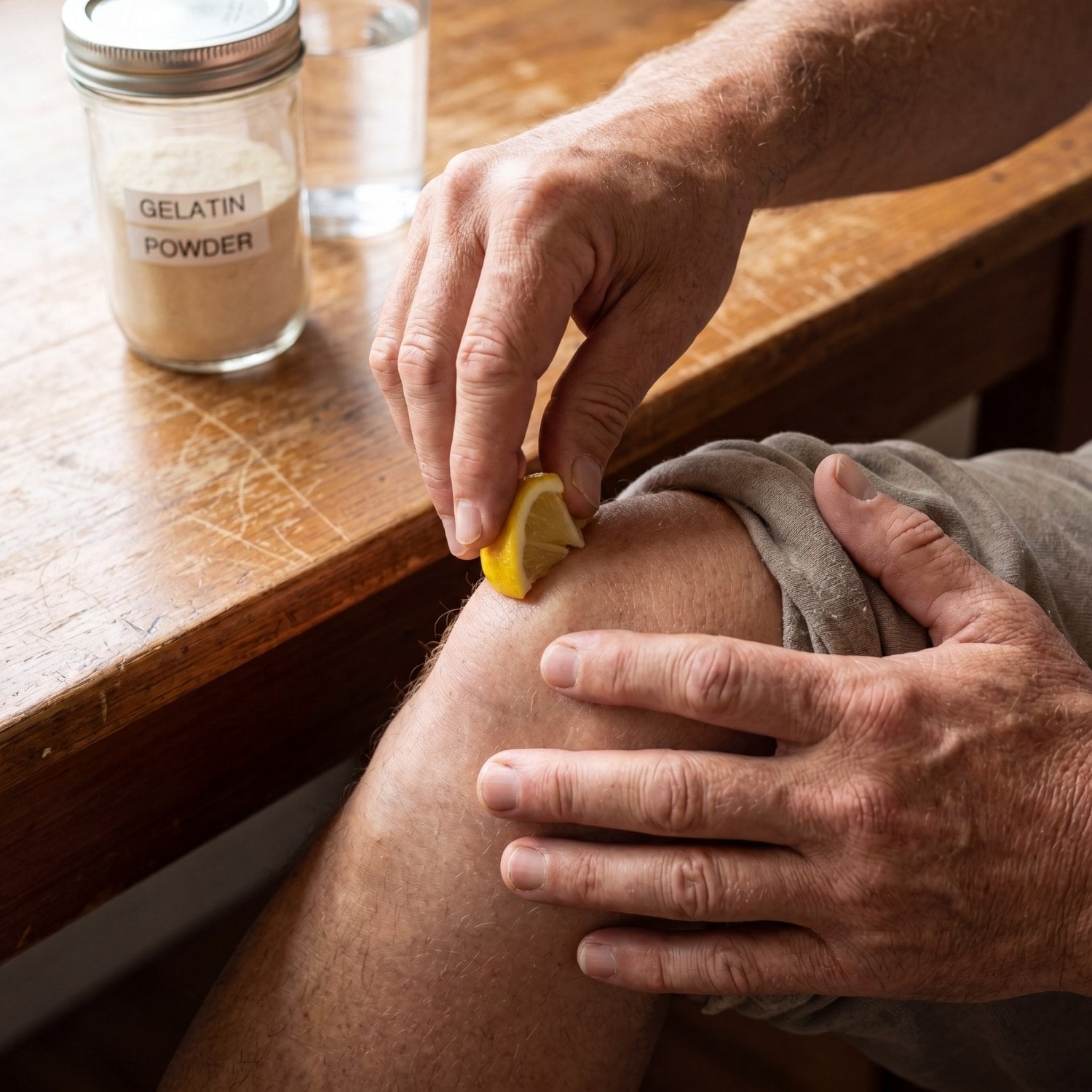
Practical takeaway: 10 to 15 grams of beef gelatin taken with a source of vitamin C (lemon juice works) around an hour before exercise appears to be the protocol with the most research support for joint tissue repair.
Benefit 2: Gut Health and Digestive Support
The gut lining is a single cell layer thick. Keeping it intact requires a steady supply of glycine, which plays a key role in maintaining the mucous membrane that protects the stomach wall and the tight junctions that prevent unwanted particles from crossing into the bloodstream — the mechanism behind what is commonly called leaky gut.
Glycine works through several pathways here. It helps regulate gastric acid secretion, keeping acid levels balanced so digestion runs efficiently. It supports the production of bile acids, which are essential for fat digestion. And it acts as fuel for the cells lining the intestinal tract, helping them repair and regenerate.
Gelatin itself also absorbs water as it passes through the digestive tract. This gelling property helps soften stool and supports healthy bowel transit — part of why bone broth has long been a traditional remedy for digestive complaints and is a foundation of gut-healing protocols like the GAPS diet.
The evidence here is mostly mechanistic and animal-based rather than large human clinical trials, so it is worth being appropriately measured about the claims. That said, the biological pathways are well established, and the risk of trying it is essentially zero.
Benefit 3: Skin Elasticity and Reduced Wrinkles
Collagen is the main structural protein in skin, making up roughly 70 percent of its dry weight. The body starts producing less of it from the mid-20s onward, which is why skin gradually loses firmness and elasticity with age.
A 2021 meta-analysis of 19 randomised controlled trials looked at the effect of hydrolysed collagen supplementation on skin ageing markers. The pooled results showed statistically significant improvements in skin elasticity, hydration, and the appearance of wrinkles after supplementation periods ranging from 60 to 90 days. Hydrolysed collagen and beef gelatin share essentially identical amino acid profiles — the difference is only in the size of the protein fragments, not what they are made of.
There is an honest question about bioavailability here: does gelatin consumed as food actually reach the skin? Research using radioactively labelled gelatin hydrolysate in mice showed that amino acids from oral gelatin do accumulate specifically in cartilage and other connective tissues. The mechanism for skin is biologically plausible: gelatin provides glycine and proline, your skin cells use those to produce new collagen, and collagen production improves skin structure over time.
It is not an overnight fix. Studies showing measurable changes used daily supplementation for at least 60 days.

Benefit 4: Better Sleep
This is one of the most well-supported benefits of beef gelatin, and the mechanism is unusually clear for a nutrition claim.
Glycine lowers core body temperature by increasing blood flow to the skin’s surface — a process called peripheral vasodilation. Your body naturally drops its core temperature as part of sleep initiation. Glycine essentially assists this process, making it easier to fall asleep and enter deep, slow-wave sleep faster.
Multiple controlled trials have tested this directly. In one randomised, double-blind, placebo-controlled trial, 11 adults with persistent poor sleep took 3 grams of glycine before bedtime. Polysomnographic measurements (objective sleep lab recordings) showed reduced sleep onset time, improved sleep efficiency, and faster entry into deep sleep stages — without disrupting normal sleep architecture. Participants also reported feeling significantly less fatigued and more alert the following day.
A follow-up study with 48 participants under partial sleep restriction (only 5 hours allowed) found that 3 grams of glycine before bed improved daytime alertness, working memory, attention, and reaction time the next morning compared to placebo.
Three grams of glycine corresponds to roughly 10 to 14 grams of beef gelatin powder — just under two tablespoons. Taken 30 to 60 minutes before bed, dissolved in warm water or herbal tea, this is one of the most practical and evidence-backed uses of beef gelatin outside of cooking.
Benefit 5: Protein and Satiety
Beef gelatin is roughly 88 percent protein by dry weight, with virtually no fat or carbohydrates and around 25 to 35 calories per tablespoon. While it is an incomplete protein (missing tryptophan), it still contributes meaningfully to daily protein intake.
More practically, glycine stimulates the release of cholecystokinin (CCK), a gut hormone that signals fullness to the brain. Research on protein and satiety consistently shows that higher-protein meals reduce appetite and calorie intake at subsequent meals. Adding a tablespoon of beef gelatin powder to a morning drink or soup provides a protein hit with very few calories attached.
It fits naturally into low-carbohydrate, keto, paleo, and carnivore eating patterns, and is compatible with intermittent fasting since it provides amino acids without significantly stimulating an insulin response.
Benefit 6: Bone Density Support
Lysine, one of the amino acids present in beef gelatin, plays a specific role in calcium absorption and bone mineralisation. The body needs lysine to absorb calcium from the gut and transport it into bone tissue. Lysine deficiency has been associated with reduced bone density and impaired fracture healing in animal studies.
Glycine and proline also contribute to bone structure — collagen forms the scaffolding that calcium crystals attach to in bone tissue. Without adequate collagen, bone becomes brittle even with sufficient calcium intake.
The research here is less developed than the joint and sleep evidence, and most comes from cell and animal studies rather than human trials. Still, the mechanism is sound and consistent with what we know about bone biology.
Benefit 7: Heart Health (Emerging Evidence)
Glycine has been linked to cardiovascular health through two separate pathways.
First, glycine appears to inhibit the activation of platelets and reduce inflammation in blood vessel walls, which are early steps in the development of atherosclerosis (artery hardening). A large observational study found that higher blood levels of glycine were associated with significantly lower risk of heart attack.
Second, proline and glycine are the main structural amino acids in the collagen that makes up arterial walls. Adequate supply of both may help maintain the elasticity and strength of blood vessels as they age.
These are correlational and mechanistic findings, not randomised controlled trials demonstrating that beef gelatin prevents heart disease. They are worth noting as part of a broader picture of what glycine does in the body — not as a primary reason to start taking gelatin.
Nutritional Profile at a Glance
Per 1 tablespoon (7g) of unflavored beef gelatin powder:
| Nutrient | Amount |
|---|---|
| Protein | 6 to 7g |
| Glycine | approx. 1.8g |
| Proline | approx. 0.9g |
| Hydroxyproline | approx. 0.8g |
| Fat | 0g |
| Carbohydrates | 0g |
| Calories | approx. 25 |
Beef gelatin does not contain significant amounts of vitamins or minerals. Its value is entirely in its amino acid profile.
How Much Beef Gelatin Do You Actually Need?
This depends on what you are using it for:
For joint health: 10 to 15 grams (1.5 to 2 tablespoons) taken with vitamin C about an hour before exercise or physical activity. The vitamin C is important — it is a cofactor for the enzymes that form collagen and significantly enhances the effect.
For sleep: 10 to 14 grams (roughly 1.5 tablespoons) dissolved in warm liquid and taken 30 to 60 minutes before bed. This delivers around 3 grams of glycine, which is the dose used in the clinical trials.
For gut support: 1 to 2 tablespoons stirred into soup, broth, or warm water daily. Consistency over weeks matters more than the exact dose.
For general protein supplementation: 1 tablespoon added to meals or drinks as needed.
Most people do well starting with 1 tablespoon per day and building from there. Very large amounts — more than 30 grams per day — can cause mild digestive discomfort in some people, so there is no benefit to taking more than needed.
Is Beef Gelatin Good for You? Honest Summary
The short answer is yes, for most people — with a few important qualifications.
The benefits that are best supported by human clinical trials are joint tissue repair (especially combined with vitamin C and exercise) and sleep quality improvement via glycine. The gut health and skin evidence is mechanistically solid but relies more on animal research and observational data than large human trials.
Beef gelatin is not a substitute for a varied diet, adequate sleep, or exercise. It fills a specific gap — the amino acids your connective tissue runs on that modern diets almost universally under-deliver. If you eat mostly muscle meat and few bones, skin, or organ meats, beef gelatin brings back something that traditional diets included automatically.
For the most practical starting point, try our beef gelatin gummies recipe — a simple way to get 10 to 14 grams per serving in a format the whole family will eat. Or stir a tablespoon into your next batch of homemade jello for an everyday dessert with real nutritional value.
For sourcing guidance on which products deliver the cleanest amino acid profile, see our grass-fed beef gelatin guide and our best beef gelatin brands comparison.
Frequently Asked Questions
Is beef gelatin good for you every day?
Yes, for most people. Daily use at 1 to 2 tablespoons is safe and well-tolerated. The benefits for gut health, skin, and sleep appear to build over weeks of consistent use rather than from occasional doses. People with known beef allergies should avoid it.
How long does it take for beef gelatin to work?
For sleep benefits, many people notice an effect within the first few nights of taking 10 to 14 grams before bed. For joint and skin benefits, studies show measurable changes after 60 to 90 days of daily use. Gut benefits are harder to measure but often reported within a few weeks.
Is beef gelatin powder the same as collagen powder?
They come from the same source and have essentially identical amino acid profiles. The key difference is processing: beef gelatin retains longer protein chains that form a gel when cooled, while collagen powder (hydrolysate) is broken into smaller peptides that dissolve in any liquid without gelling. For cooking and recipes that need to set, use gelatin. For adding protein to cold drinks, use collagen powder. For a full comparison, see our beef gelatin vs collagen guide.
What are the side effects of beef gelatin?
Beef gelatin is very well tolerated by most people. At high doses (above 30 grams per day) some people experience mild bloating or digestive discomfort. Starting with 1 tablespoon per day and building gradually avoids this. People with a beef allergy should not use it.
Does beef gelatin have collagen in it?
Gelatin is cooked collagen. The heat-processing that produces gelatin breaks apart collagen’s triple-helix structure, unfolding the protein chains into the gel-forming powder. So gelatin does not contain collagen intact, but it delivers the same amino acids your body uses to produce its own collagen.
Can I get the same benefits from bone broth?
Homemade bone broth contains gelatin naturally and delivers many of the same amino acids. The challenge with broth is that the gelatin content is highly variable depending on how it is made, what bones are used, and how long it is cooked. Beef gelatin powder gives you a consistent, measurable dose every time. Think of them as complementary rather than interchangeable — broth for flavour and slow nourishment, powder for targeted dosing.

Leave a Reply