
Adding baking soda to ground beef helps the meat brown faster and retain more moisture during cooking. For 1 pound of ground beef, mix ¼ teaspoon baking soda with 1 tablespoon water, toss it evenly with the meat, and let it rest for 15 minutes before cooking. Use a hot, wide skillet and avoid crowding the pan.
As of September 2026, this remains a useful technique for loose ground beef used in tacos, pasta sauces, casseroles, and skillet meals. The small amount matters: too much baking soda can leave an alkaline or soapy taste.
Quick answer: Use ¼ teaspoon baking soda and 1 tablespoon water for every 1 pound of ground beef. Rest for 15 minutes, then brown the beef over medium-high heat.
Jump to:
- What changed?
- Why do cooks add baking soda to ground beef?
- How much baking soda should you use for ground beef?
- How do you use baking soda in ground beef?
- Should you add salt before or after the baking soda rest?
- Does baking soda make ground beef tender?
- Does baking soda help ground beef brown?
- Baking soda versus cornstarch for ground beef
- When should you not put baking soda in ground beef?
- Can you use baking soda on frozen ground beef?
- Does the method work with lean and fatty ground beef?
- Why does baking-soda ground beef taste strange sometimes?
- Common mistakes that stop ground beef from browning
- Frequently asked questions about ground beef and baking soda
- The best ground beef baking soda ratio
- Ground Beef and Baking Soda Prep Method
What changed?
Updated September 12, 2026: This guide now includes a weight-based ratio, instructions for frozen and high-fat ground beef, a baking soda versus cornstarch comparison, food-safety guidance, and answers to common troubleshooting questions.
Why do cooks add baking soda to ground beef?
Baking soda raises the pH on the surface of ground beef. A less acidic surface slows the tightening and bonding of meat proteins during cooking, so the beef releases less liquid and stays more tender. The higher surface pH also supports faster Maillard browning, the heat-driven reaction responsible for the savory flavor and brown crust on cooked meat.
Without baking soda, a crowded pan of ground beef can release enough water to simmer in its own juices. The meat eventually cooks, but it may turn gray before the moisture evaporates. Baking soda reduces that problem, although pan size, heat, and batch size still affect the result.
This method changes texture and browning. It does not season the beef, replace salt, or make spoiled meat safe to eat.
How much baking soda should you use for ground beef?
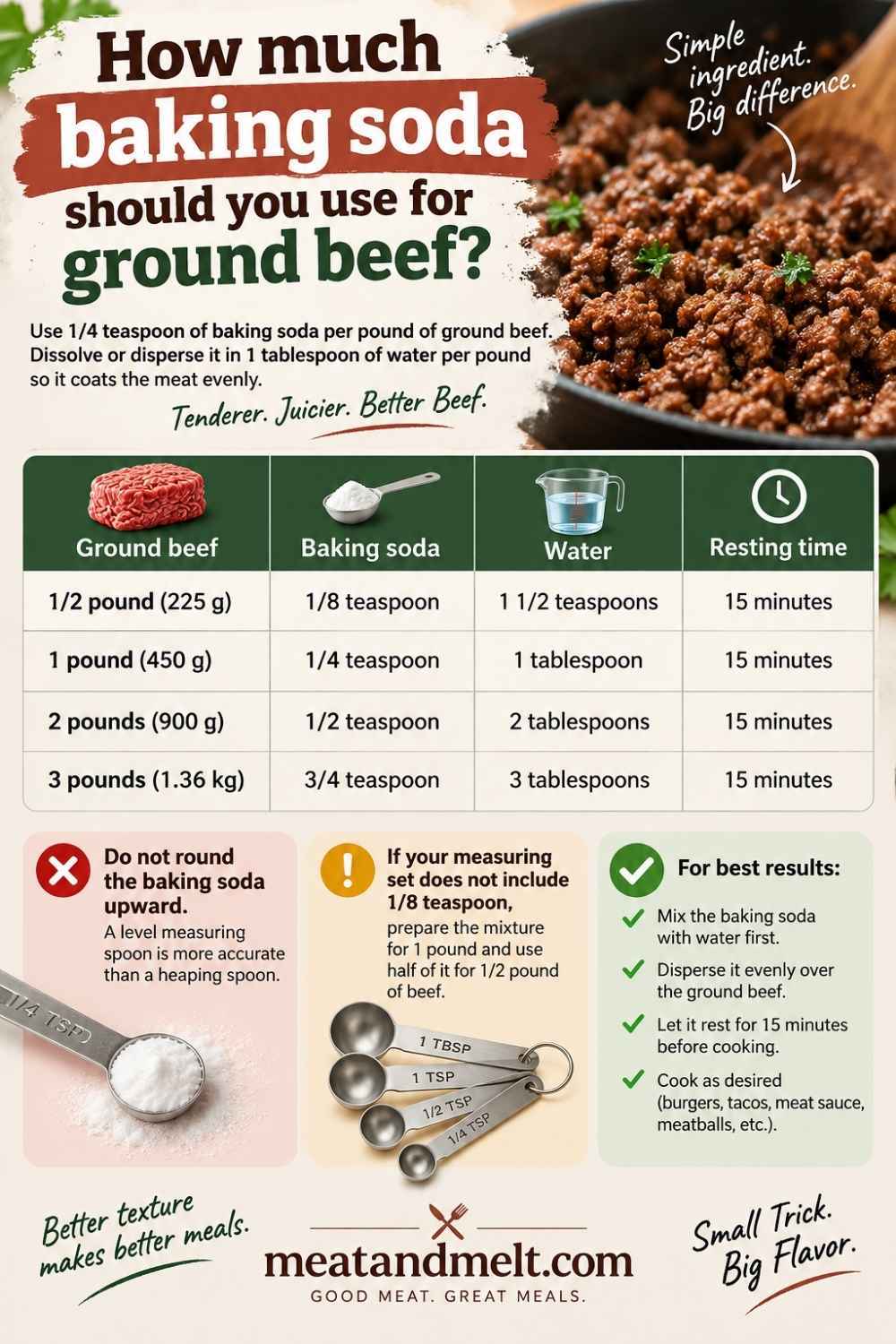
Use ¼ teaspoon of baking soda per pound of ground beef. Dissolve or disperse it in 1 tablespoon of water per pound so it coats the meat evenly.
| Ground beef | Baking soda | Water | Resting time |
|---|---|---|---|
| ½ pound (225 g) | ⅛ teaspoon | 1 ½ teaspoons | 15 minutes |
| 1 pound (450 g) | ¼ teaspoon | 1 tablespoon | 15 minutes |
| 2 pounds (900 g) | ½ teaspoon | 2 tablespoons | 15 minutes |
| 3 pounds (1.36 kg) | ¾ teaspoon | 3 tablespoons | 15 minutes |
Do not round the baking soda upward. A level measuring spoon is more accurate than a heaping spoon. If your measuring set does not include ⅛ teaspoon, prepare the mixture for 1 pound and use half of it for ½ pound of beef.
How do you use baking soda in ground beef?
The best method is to coat the raw beef lightly, rest it, and then cook it in a wide preheated skillet.
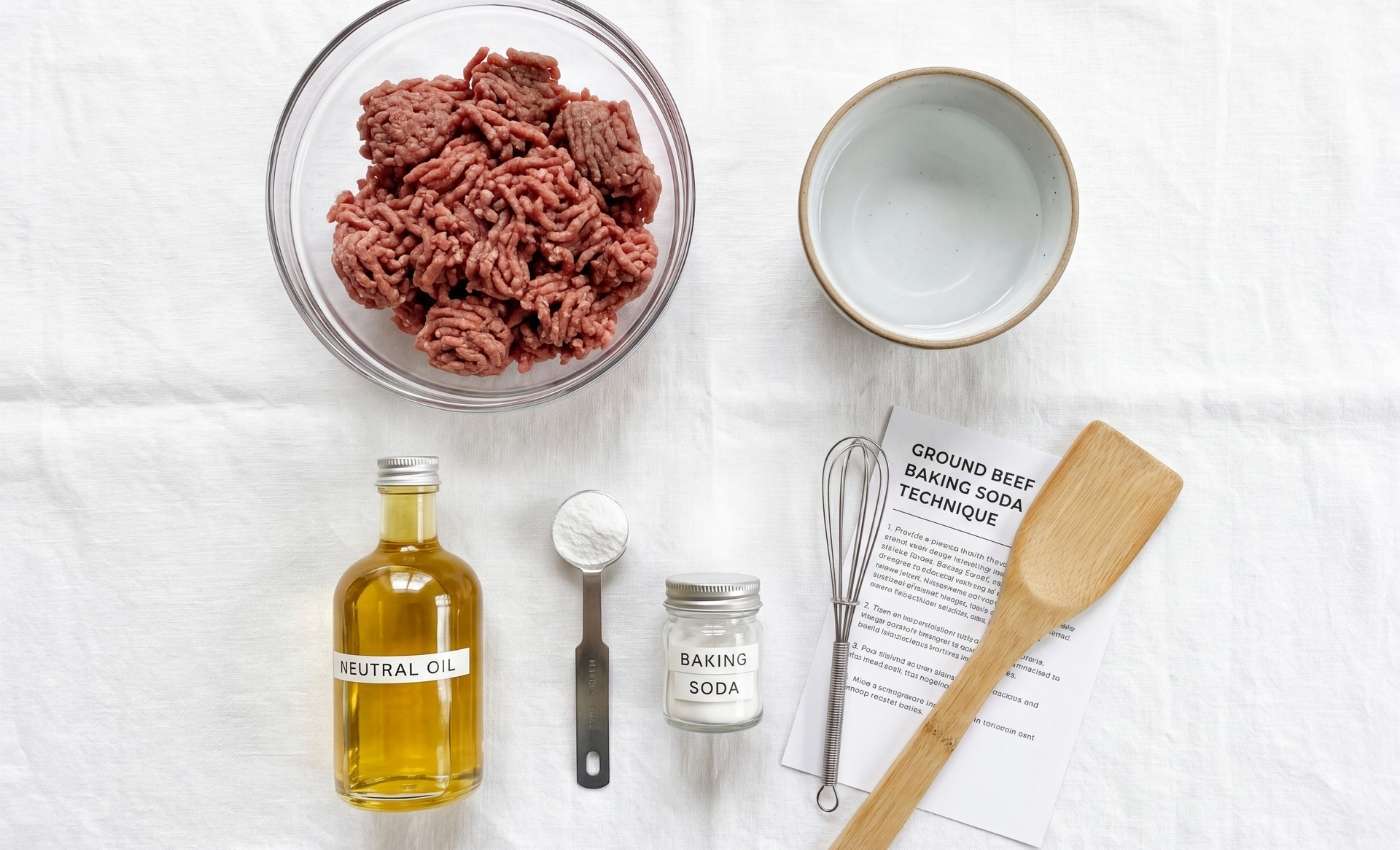
Ingredients
- 1 pound ground beef
- ¼ teaspoon baking soda
- 1 tablespoon water
- Salt and other seasonings required by your recipe
- 1 teaspoon neutral oil, optional for very lean beef
Instructions
- Make the solution. Stir ¼ teaspoon baking soda into 1 tablespoon water. The baking soda may not disappear completely, but the mixture should be evenly dispersed.
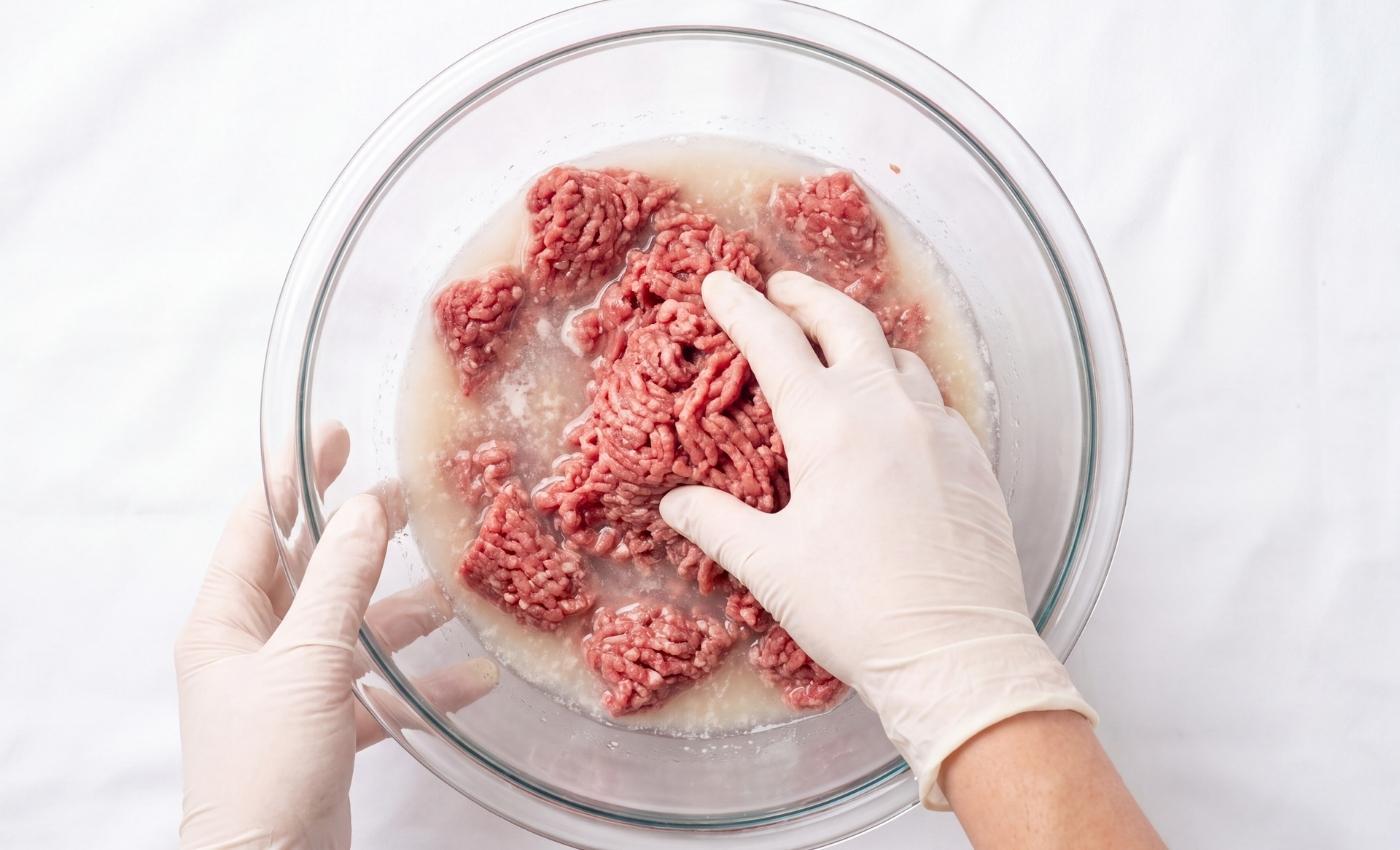
- Coat the beef. Place the ground beef in a bowl. Drizzle the solution over it and toss gently with clean hands or a fork. Do not knead or compress the meat.
- Rest for 15 minutes. Leave the coated beef at room temperature only for this short rest. If your kitchen is very warm or you are preparing it earlier, rest it in the refrigerator.
- Preheat the skillet. Heat a wide skillet over medium-high heat. Add a little neutral oil if the beef is 90% lean or leaner.
- Add the beef in a broad layer. Let it cook undisturbed for 2 to 3 minutes so the underside can brown.
- Break and turn. Divide the beef into bite-size crumbles, turn the browned sections, and continue cooking until no raw areas remain.
- Season and finish the recipe. Add salt, spices, aromatics, or sauce as directed. For food safety, ground beef should reach 160°F (71°C), as recommended by the USDA Food Safety and Inspection Service.
If you want a complete dinner that uses loose browned beef, try this ground beef stroganoff.
Should you add salt before or after the baking soda rest?
For loose, tender crumbles, add salt during cooking or shortly before the beef enters the pan. Salt mixed thoroughly into raw ground meat and left to sit can dissolve muscle proteins, producing a tighter, springier texture. That binding effect is useful for sausage or cohesive burger patties but less desirable for taco meat, chili, and pasta sauce.
Baking soda and salt do different jobs. Baking soda adjusts surface pH; salt seasons the meat and changes how proteins bind. Do not replace one with the other.
Does baking soda make ground beef tender?
Yes, a measured amount of baking soda can make cooked ground beef feel more tender and juicy. The alkaline coating limits how quickly the surface proteins squeeze out moisture as they heat. This is especially noticeable with lean ground beef and small crumbles that can otherwise become dry.
The treatment cannot fix every texture problem. Ground beef can still turn tough if it is packed tightly, stirred constantly, cooked in a small crowded pan, or held over heat long after it reaches a safe temperature.
For a ground-beef dish in which tenderness matters but the meat is shaped rather than crumbled, see this ground beef Salisbury steak. Use the baking soda method only if that recipe specifically allows it, because formed patties need a different protein structure from loose crumbles.
Does baking soda help ground beef brown?
Yes. Baking soda promotes browning in two ways. It raises the meat’s surface pH, which helps Maillard reactions occur more readily, and it reduces the amount of water expelled into the skillet. Less surface moisture means the pan can spend more time browning the beef instead of boiling away liquid.
For the deepest brown color, combine the baking soda treatment with these pan techniques:
- Use a wide stainless-steel or cast-iron skillet.
- Preheat the skillet before adding the meat.
- Brown no more than 1 pound at a time in a 12-inch skillet.
- Spread the meat out instead of piling it in the center.
- Leave the first side undisturbed for 2 to 3 minutes.
- Cook a large quantity in batches.
Serious Eats explains the same pH effect: a more alkaline meat surface changes protein behavior and encourages browning.
Baking soda versus cornstarch for ground beef
Baking soda and cornstarch are not interchangeable. Baking soda changes surface pH. Cornstarch forms a thin coating that thickens moisture and sauce around the meat.
| Method | Main effect | Best use | Common problem |
|---|---|---|---|
| Baking soda | Raises surface pH, improves browning, reduces moisture loss | Taco meat, chili, pasta sauce, casseroles | Alkaline taste if too much is used |
| Cornstarch | Coats meat and thickens liquid | Saucy stir-fries and finely minced beef | Gummy coating if overused |
| No treatment | Keeps the original beef texture | Burgers, meatballs, meatloaf, recipes with a specific binder | Lean crumbles may dry out more quickly |
Use baking soda when the goal is browned, tender crumbles. Use cornstarch when the goal is a glossy sauce that clings to small pieces of beef. Skip both when a recipe depends on the beef binding into a firm shape.
When should you not put baking soda in ground beef?
Skip the baking soda treatment when the recipe relies on raw ground beef binding firmly, unless the recipe was developed with baking soda included. Burgers, meatballs, meatloaf, dumpling fillings, and meat pastries can respond differently because their texture depends on mixing, salt, binders, and shaping.
Baking soda is most predictable in dishes where the beef is cooked loose before other ingredients are added. It works well for taco filling, chili, sloppy joes, casseroles, tomato-based meat sauce, and American-style goulash. For an example of the last use, see this easy ground beef goulash.
Can you use baking soda on frozen ground beef?
Thaw ground beef before adding baking soda. The solution cannot coat a frozen block evenly, and the exterior may begin cooking while the center is still frozen. Thaw beef in the refrigerator, in cold water inside a leakproof package, or in the microwave if you will cook it immediately.
After thawing, drain excess purge from the package, coat the beef with the measured solution, rest it for 15 minutes, and cook it promptly. Do not thaw ground beef on the counter.
Does the method work with lean and fatty ground beef?
The baking soda method works with common blends, including 80/20, 85/15, 90/10, and 93/7 ground beef. The difference is most noticeable in lean beef because lean crumbles have less fat to protect their texture.
For 90/10 or 93/7 beef, add about 1 teaspoon of neutral oil to the hot skillet if the pan is dry. For 80/20 beef, added oil is usually unnecessary. Drain excess rendered fat only after the meat has browned; draining too early cools the pan and interrupts browning.
Why does baking-soda ground beef taste strange sometimes?
A soapy, bitter, or metallic taste usually means too much baking soda was added or the powder was distributed unevenly. The correct amount is small: ¼ teaspoon per pound.
To prevent an alkaline taste:
- Use a level measuring spoon.
- Mix the baking soda with water before adding it.
- Toss the meat gently so the solution reaches the whole batch.
- Do not extend the rest in hopes of making the beef more tender.
- Do not add another alkaline ingredient unless the recipe accounts for it.
If too much baking soda has already been mixed into raw beef, the most reliable fix is dilution. Add enough untreated ground beef to restore the ratio of ¼ teaspoon per pound. Do not try to hide a large excess with vinegar or lemon juice, which can create uneven flavor and change the recipe.
Common mistakes that stop ground beef from browning
| Problem | Likely cause | Fix |
|---|---|---|
| Beef turns gray | Pan is crowded or not hot enough | Use a wider hot skillet and cook in batches |
| Liquid pools in the pan | Beef was piled up, very cold, or wet | Spread it broadly and blot excess package liquid |
| Meat tastes soapy | Too much baking soda | Keep the ratio at ¼ teaspoon per pound |
| Crumbles are rubbery | Beef was kneaded, salted early, or overcooked | Toss gently, season during cooking, and stop at doneness |
| Browning is patchy | Baking soda was sprinkled in one spot | Mix it with water before coating the beef |
| Beef sticks immediately | Pan was not preheated | Heat the skillet before adding meat |
Frequently asked questions about ground beef and baking soda
How long should baking soda sit on ground beef?
Let baking soda sit on ground beef for 15 minutes before cooking. That gives the alkaline solution time to affect the meat’s surface. A much longer rest is unnecessary for loose crumbles and may make meal preparation less food-safe if the beef is left warm.
Do you rinse baking soda off ground beef?
No. Do not rinse ground beef after the baking soda rest. The ratio is designed to remain on the meat, and rinsing raw ground beef can spread contaminated droplets around the sink and nearby surfaces.
Can you put baking soda directly into the skillet?
Coat the raw ground beef before it goes into the skillet. Adding dry baking soda directly to the pan causes uneven distribution and raises the chance of bitter or soapy spots.
Is baking powder the same as baking soda for ground beef?
No. Baking powder contains baking soda plus one or more acids and starch. It does not create the same predictable alkaline treatment. Use plain baking soda, also labeled sodium bicarbonate.
Can you use baking soda in taco meat or chili?
Yes. Taco meat and chili are good uses because the ground beef is browned as loose crumbles. Treat and brown the beef first, then add the spice blend, tomatoes, beans, broth, or other recipe ingredients.
Does baking soda change the flavor of ground beef?
At ¼ teaspoon per pound, baking soda should not create a noticeable alkaline flavor. It can indirectly deepen savory flavor by helping the beef brown. Too much can taste bitter, metallic, or soapy.
Is baking soda safe to cook with?
Food-grade baking soda is a common cooking ingredient. Measure it carefully for this method. The more important meat-safety step is cooking ground beef to 160°F (71°C) and preventing raw-meat cross-contamination.
The best ground beef baking soda ratio
The dependable starting ratio is ¼ teaspoon baking soda plus 1 tablespoon water per pound of ground beef, followed by a 15-minute rest. That amount supports browning and tenderness without making the beef taste alkaline. Finish the job with a hot, wide skillet, enough space around the meat, and a final internal temperature of 160°F (71°C).

Ground Beef and Baking Soda Prep Method
A simple technique using baking soda and water to help ground beef brown faster, retain moisture, and stay tender.
Ingredients
- 1 pound ground beef
- ¼ teaspoon baking soda
- 1 tablespoon water
- Salt and other seasonings required by your recipe
- 1 teaspoon neutral oil, optional for very lean beef
Instructions
- Make the solution. Stir ¼ teaspoon baking soda into 1 tablespoon water. The baking soda may not disappear completely, but the mixture should be evenly dispersed.
- Coat the beef. Place the ground beef in a bowl. Drizzle the solution over it and toss gently with clean hands or a fork. Do not knead or compress the meat.
- Rest for 15 minutes. Leave the coated beef at room temperature only for this short rest. If your kitchen is very warm or you are preparing it earlier, rest it in the refrigerator.
- Preheat the skillet. Heat a wide skillet over medium-high heat. Add a little neutral oil if the beef is 90% lean or leaner.
- Add the beef in a broad layer. Let it cook undisturbed for 2 to 3 minutes so the underside can brown.
- Break and turn. Divide the beef into bite-size crumbles, turn the browned sections, and continue cooking until no raw areas remain.
- Season and finish the recipe. Add salt, spices, aromatics, or sauce as directed. For food safety, ground beef should reach 160°F (71°C), as recommended by the USDA Food Safety and Inspection Service.
Notes
Nutrition Information
Yield 1 Serving Size 1Amount Per Serving Calories 1277Total Fat 78gSaturated Fat 30gUnsaturated Fat 49gCholesterol 413mgSodium 814mgFiber 0gProtein 125g
Nutritional data is estimated

Leave a Reply