
This beef collagen jello recipe makes soft, wobbly homemade jello with fruit juice and beef gelatin in about 10 minutes of active prep time. You need just 3 ingredients: 100% fruit juice, unflavored beef gelatin, and optional honey or maple syrup.
If you searched for collagen jello, there is one important distinction: collagen peptides do not make jello set. Beef gelatin is made from collagen but retains the protein structure needed to form a gel when chilled. Hydrolyzed collagen peptides dissolve in liquid without gelling.
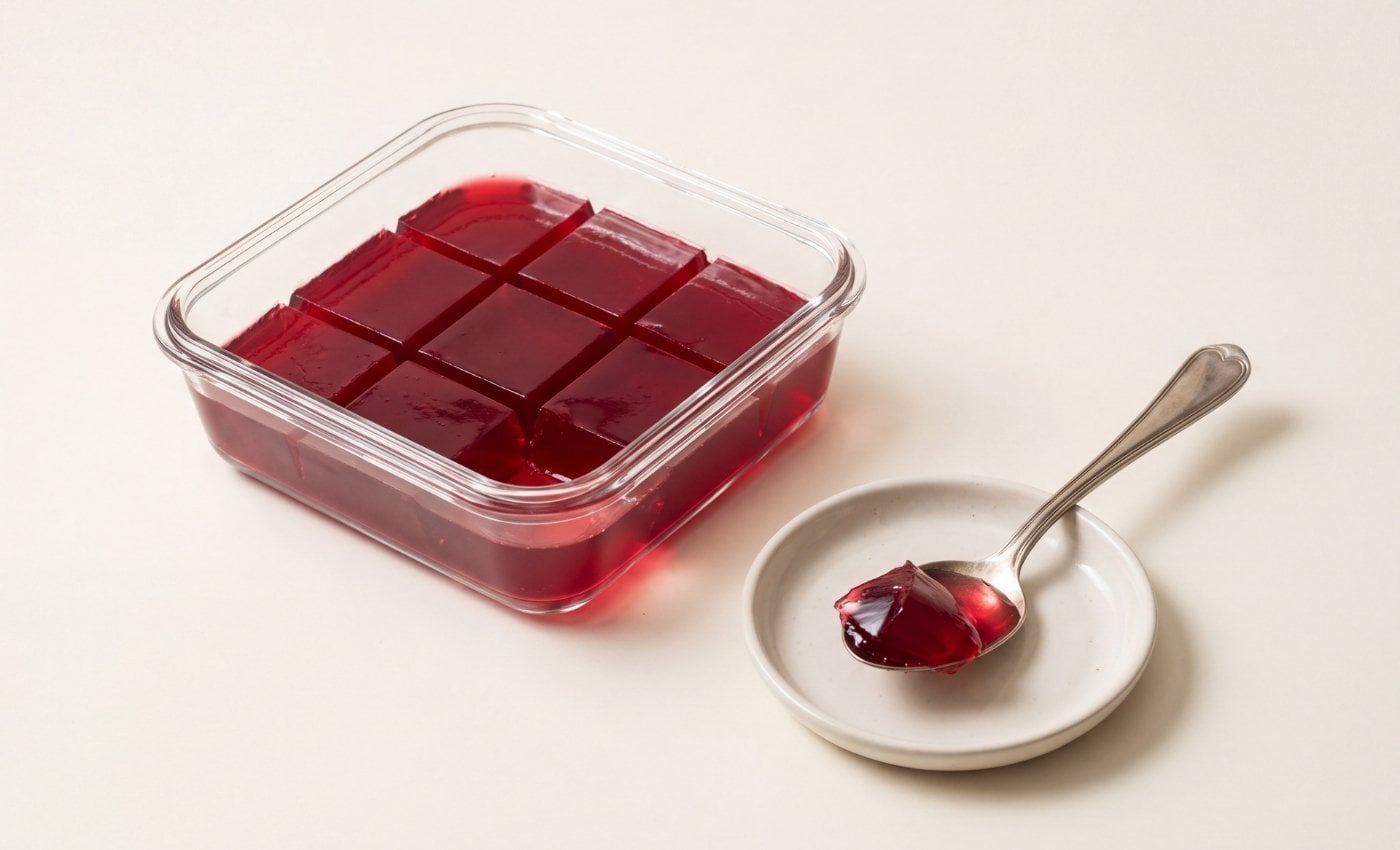
For this recipe, use 2 tablespoons of beef gelatin for 4 cups of liquid. Bloom the gelatin in cold juice for 5 minutes, gently heat until dissolved, add the remaining juice, and refrigerate for at least 4 hours.
If you are choosing a gelatin for the first time, see our best beef gelatin powder guide before starting.
Beef Collagen Jello at a Glance
- Prep time: 10 minutes
- Chill time: At least 4 hours
- Total time: About 4 hours 10 minutes
- Servings: 8
- Gelatin: 2 tablespoons unflavored beef gelatin
- Liquid: 4 cups fruit juice
- Texture: Soft, wobbly, and sliceable
- Best juices: Apple, grape, cranberry, tart cherry, blueberry, or pomegranate
- Do collagen peptides work? No. Use beef gelatin to make the jello set.
What Is Collagen Jello?
Collagen jello is homemade jello made with gelatin derived from collagen. In a recipe that needs to set, the correct ingredient is beef gelatin rather than hydrolyzed collagen peptides.
Beef gelatin and collagen peptides both originate from collagen, but they behave differently in liquid. Gelatin forms a three-dimensional protein network as it cools, creating the familiar jello texture. Collagen peptides have been hydrolyzed into smaller protein fragments, so they dissolve without creating a gel.
| Product | Derived From Collagen | Dissolves in Liquid | Sets Into Jello |
|---|---|---|---|
| Beef gelatin | Yes | Yes, after blooming and warming | Yes |
| Collagen peptides | Yes | Yes | No |
| Hydrolyzed collagen | Yes | Yes | No |
You can add collagen peptides to a gelatin-based recipe for additional protein, but beef gelatin still needs to be present for collagen jello to set.
Ingredients for Beef Collagen Jello
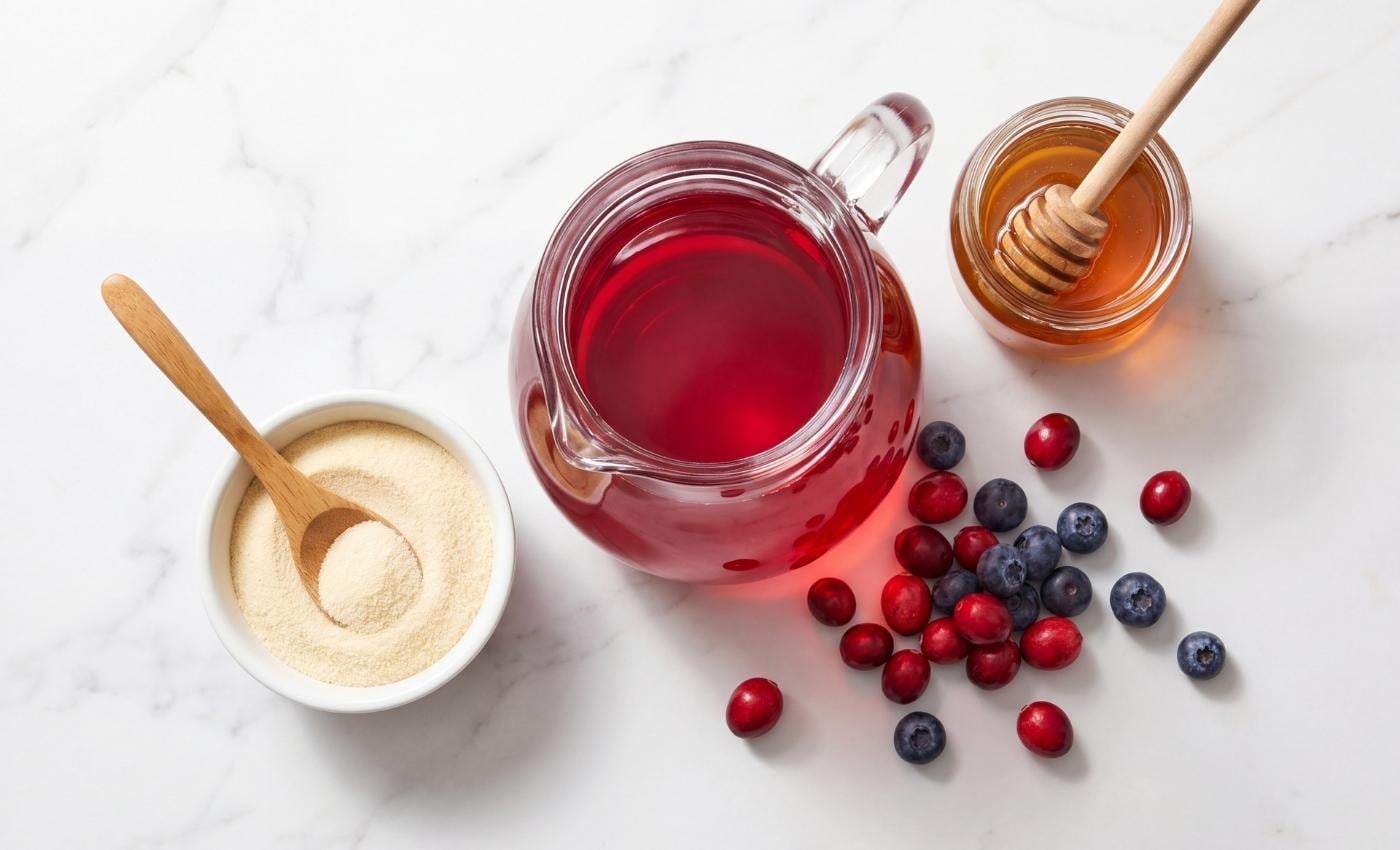
You need only three ingredients:
- 4 cups 100% fruit juice, divided
- 2 tablespoons unflavored beef gelatin
- 1 to 2 tablespoons honey or maple syrup, optional
Apple and grape juice produce a naturally sweeter jello. Cranberry, tart cherry, and pomegranate juice create a more tart flavor and may benefit from a little honey or maple syrup.
Use Beef Gelatin, Not Collagen Peptides
Check the package before making the recipe. Look for a product labeled beef gelatin, bovine gelatin, or grass-fed beef gelatin.
Do not substitute:
- Collagen peptides
- Hydrolyzed collagen
- Collagen hydrolysate
Those products dissolve well but will not turn fruit juice into jello.
If you want to compare sourcing, certifications, and gelling strength, see our beef gelatin powder guide.ready sweet, you can leave out the honey or maple syrup completely.
How to Make Beef Collagen Jello
Step 1: Bloom the Beef Gelatin
Pour 1 cup of cold fruit juice into a medium saucepan.
Sprinkle 2 tablespoons of beef gelatin evenly over the surface. Do not whisk immediately.
Let the gelatin sit for 5 minutes. The powder will absorb the juice, swell, and develop a wrinkled surface. This step is called blooming and helps prevent gelatin lumps.
Step 2: Gently Dissolve the Gelatin
Place the saucepan over low heat.
Whisk gently for 2 to 3 minutes, just until the gelatin has completely dissolved and the liquid looks smooth.
Do not bring the mixture to a hard boil. Remove it from the heat once the gelatin is dissolved.
Step 3: Add the Remaining Juice
Whisk in the remaining 3 cups of cold fruit juice.
Taste the mixture. If you are using tart cranberry, cherry, or pomegranate juice, stir in 1 to 2 tablespoons of honey or maple syrup if desired.
Step 4: Pour Into the Dish
Pour the collagen jello mixture into an 8×8-inch dish, individual glasses, jars, or ramekins.
Skim off any foam with a spoon if necessary.
Step 5: Refrigerate Until Set
Refrigerate for at least 4 hours.
For a firmer set and cleaner slices, refrigerate the jello overnight.
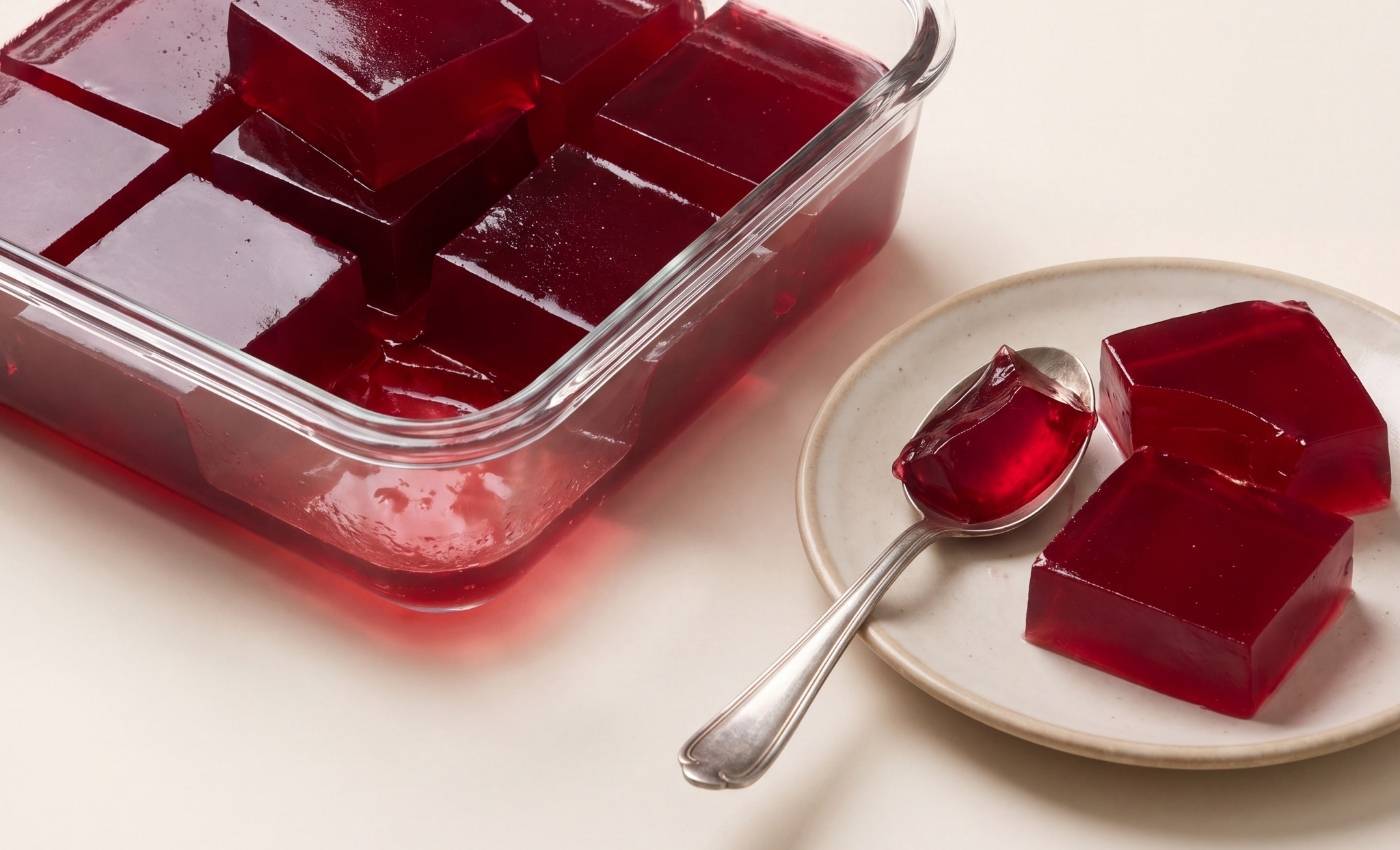
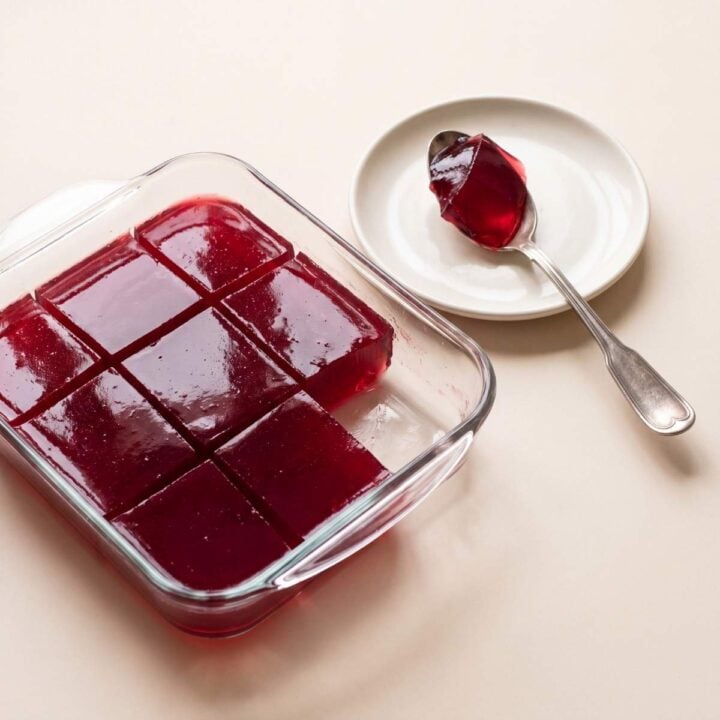
Once set, cut it into squares or serve directly from individual cups.
How Much Beef Gelatin Do You Need for Jello?
A reliable starting ratio for beef gelatin jello is 2 tablespoons of gelatin for 4 cups of liquid.
Use this chart to adjust the texture:
| Desired Texture | Beef Gelatin | Liquid |
|---|---|---|
| Soft, spoonable jello | 2 tbsp | 4½ cups |
| Classic wobbly jello | 2 tbsp | 4 cups |
| Firm, sliceable jello | 2 tbsp | 3½ cups |
The standard 2 tablespoons to 4 cups ratio works best for this collagen jello recipe because the finished jello holds its shape while remaining soft and wobbly.
For another version built specifically around fruit juice and beef gelatin, see our homemade jello with beef gelatin.
Is Beef Gelatin the Same as Beef Collagen?
Beef gelatin and beef collagen peptides come from the same underlying protein, but they are not interchangeable in jello recipes.
Beef gelatin contains protein chains that can form a gel after being dissolved in warm liquid and cooled.
Collagen peptides, also called hydrolyzed collagen, have been broken into smaller fragments. They dissolve easily, including in cold liquids, but no longer create the protein network required for jello.
The practical rule is simple:
Beef gelatin gels. Collagen peptides dissolve.
That is why a recipe described as beef collagen jello needs beef gelatin if the finished mixture is supposed to set.
Can You Make Jello With Collagen Peptides?
Collagen peptides alone cannot make jello because hydrolyzed collagen does not gel when chilled. However, you can add collagen peptides to jello as long as the recipe still contains beef gelatin.
For a collagen-enriched batch, use:
- 4 cups fruit juice
- 2 tablespoons beef gelatin
- 2 to 4 tablespoons unflavored collagen peptides
- Honey or maple syrup as needed
Bloom and dissolve the beef gelatin first. Remove the saucepan from the heat, whisk in the collagen peptides until dissolved, and then add the remaining cold juice.
The beef gelatin creates the gel. The collagen peptides are an optional addition.
How to Make Collagen Jello That Actually Sets
Three details determine whether collagen jello sets properly:
Use gelatin rather than collagen peptides. The package must say beef gelatin or bovine gelatin if you want the mixture to gel.
Bloom the gelatin in cold liquid first. Sprinkle the powder over cold juice and wait about 5 minutes before applying heat. This hydrates the gelatin evenly and helps prevent lumps.
Use enough gelatin for the amount of liquid. For classic jello, start with 2 tablespoons beef gelatin per 4 cups liquid.
The jello then needs approximately 4 hours in the refrigerator. A deep container may require longer, while shallow individual portions can set sooner.
Best Juice for Collagen Jello
Because this recipe contains so few ingredients, your choice of juice makes a big difference.
Grape Juice
Grape juice makes a dark purple, naturally sweet jello. It usually requires no additional sweetener.
It’s one of the easiest choices for your first batch.
Apple Juice
Apple juice produces a mild, pale golden jello.
Its neutral flavor makes it especially useful if you want to add berries or other fruit.
Cranberry Juice
Cranberry produces a beautiful red jello with a sharper flavor.
Check the bottle carefully because pure cranberry juice is much more tart than cranberry juice blends.
A little honey works particularly well here.
Tart Cherry Juice
Tart cherry makes a deep red jello with a noticeably tart flavor.
I recommend tasting the mixture before chilling and adjusting the sweetness as needed.
Pomegranate Juice
Pomegranate juice produces a rich ruby-colored jello.
You can also combine it 50/50 with apple juice for a milder flavor.
What Fruit Can Prevent Collagen Jello From Setting?
Some raw fruits contain protein-digesting enzymes that can interfere with gelatin’s ability to form a stable gel.
Be careful with fresh:
- Pineapple
- Kiwi
- Papaya
- Guava
- Fresh ginger
Heat can deactivate these enzymes, so canned or sufficiently cooked versions may work even when the raw fruit does not.
For the most reliable beef gelatin jello, use apple, grape, cranberry, blueberry, cherry, or pomegranate juice.
Why Did My Collagen Jello Not Set?
If your collagen jello remains liquid, check these causes first:
- You used collagen peptides instead of beef gelatin. Collagen peptides will not gel, regardless of how long you refrigerate them.
- The gelatin was not bloomed properly. Sprinkle gelatin over cold liquid and let it hydrate for about 5 minutes before heating.
- There was too much liquid. Use approximately 2 tablespoons of beef gelatin for 4 cups of liquid for standard jello.
- You added enzyme-rich raw fruit. Fresh pineapple, kiwi, papaya, and similar fruits can weaken or prevent the gel.
- The jello needs more time. Allow at least 4 hours in the refrigerator, preferably overnight for a firm set.
If you want a much firmer gelatin recipe, our beef gelatin gummies recipe uses a higher gelatin-to-liquid ratio.
Can I Make Beef Collagen Jello With Water?
Yes, but plain water and unflavored gelatin won’t have much flavor.
If you want a lighter jello instead of using four full cups of juice, try:
- 2 cups fruit juice
- 2 cups water
- 2 tablespoons beef gelatin
- Honey or maple syrup to taste
You can also add lemon or lime juice for more flavor.
The gelatin-to-liquid ratio stays approximately the same.
How to Avoid Lumpy Beef Gelatin
The easiest way to ruin homemade jello is dumping gelatin directly into hot liquid.
The outside of the powder can hydrate immediately, trapping dry gelatin inside and creating stubborn lumps.
Instead, always sprinkle the gelatin over cold liquid first.
Let it bloom for approximately five minutes, then gently heat it.
If your gelatin still forms lumps, whisk continuously over low heat until they dissolve. Avoid increasing the temperature aggressively just to make the process faster.
How Long Does Beef Collagen Jello Take to Set?
Allow at least 4 hours in the refrigerator.
Small individual portions may set sooner, while a large or deep dish can take longer.
If you want clean squares, make the recipe the night before and refrigerate it overnight.
If your jello is still completely liquid after several hours, check whether you accidentally used collagen peptides rather than beef gelatin.
How Long Does Collagen Jello Last?
Store homemade collagen jello covered in the refrigerator and use it within 5 to 7 days.
Keep the jello chilled until serving because gelatin softens as it warms.
Freezing is not recommended. Frozen and thawed gelatin can release water and develop a grainy or broken texture.
Is Collagen Jello the Same as Beef Jello?
Not always. Collagen jello usually refers to a sweet fruit-juice gelatin recipe made with beef-derived gelatin. Beef jelly or beef aspic is a savory preparation made with beef stock or bone broth.
Both rely on gelatin’s ability to set when chilled, but their flavors and uses are completely different.
For the savory version, see our beef jelly recipe.
Beef Collagen Jello Recipe
A wholesome homemade fruit juice jello made with unflavored beef gelatin and naturally sweetened. (inferred)
Ingredients
- 4 cups 100% fruit juice, divided
- 2 tablespoons unflavored beef gelatin
- 1 to 2 tablespoons honey or maple syrup, optional
Instructions
- Pour 1 cup of cold fruit juice into a medium saucepan.
- Sprinkle the beef gelatin evenly over the surface.
- Let the gelatin bloom for 5 minutes without stirring.
- Place the saucepan over low heat.
- Whisk gently for 2 to 3 minutes until the gelatin has completely dissolved. Do not boil.
- Remove from the heat.
- Whisk in the remaining 3 cups of cold juice.
- Add honey or maple syrup if needed.
- Pour into an 8×8-inch dish or individual serving cups.
- Refrigerate for at least 4 hours, or overnight for the firmest set.
- Cut into squares or serve with a spoon.
Notes
Nutrition Information
Yield 1 Serving Size 1Amount Per Serving Calories 698Sodium 677mgCarbohydrates 147gFiber 1gSugar 133gProtein 25g
Nutritional data is estimated
Frequently Asked Questions
What is collagen jello?
Collagen jello is a gelatin-based jello made with gelatin derived from collagen. For a jello that sets, use beef gelatin rather than hydrolyzed collagen peptides.
How do you make collagen jello?
Bloom 2 tablespoons of beef gelatin in 1 cup of cold fruit juice for 5 minutes. Gently heat until dissolved, whisk in 3 additional cups of juice, pour into a dish, and refrigerate for at least 4 hours.
Can you make jello with beef collagen?
You can make jello with beef gelatin, which is derived from bovine collagen. Hydrolyzed beef collagen peptides will not set by themselves.
Will beef collagen peptides set like gelatin?
No. Collagen peptides dissolve in liquid but do not form a gel when refrigerated. Beef gelatin is required when a recipe needs to set.
What is the best ratio for collagen jello?
For classic homemade jello, use approximately 2 tablespoons of beef gelatin for 4 cups of liquid. Use 3½ cups of liquid for a firmer texture or 4½ cups for softer, spoonable jello.
Can I put collagen powder in homemade jello?
Yes. Add collagen peptides for additional protein if desired, but keep the beef gelatin in the recipe. Collagen powder is an optional addition and does not replace the gelatin.
Is beef gelatin collagen?
Beef gelatin is produced from bovine collagen. Unlike hydrolyzed collagen peptides, gelatin retains the ability to form a gel when dissolved and cooled.
How long does collagen jello take to set?
Allow at least 4 hours in the refrigerator. For the firmest texture and cleanest slices, refrigerate it overnight.
Why isn’t my collagen jello setting?
The most common reason is using collagen peptides instead of beef gelatin. Too much liquid, insufficient chilling time, or fresh pineapple, kiwi, or papaya can also prevent a proper set.
Can collagen jello be made without added sugar?
Yes. Use naturally sweet 100% fruit juice such as apple or grape juice and omit the optional honey or maple syrup.
More Beef Gelatin Recipes and Guides
Once you understand the difference between gelatin and collagen peptides, you can use beef gelatin in several different recipes.
Start with our homemade jello with beef gelatin for another simple fruit-juice version.
For a firmer snack, try beef gelatin gummies.
If you are still choosing an ingredient, compare options in our best beef gelatin powder guide.
For a savory preparation instead of sweet jello, make our beef jelly recipe.
The key rule for any collagen jello recipe is straightforward: collagen peptides dissolve, while beef gelatin gels. Use beef gelatin, bloom it in cold liquid, dissolve it gently, and refrigerate the mixture for at least 4 hours.

Leave a Reply