
Beef jelly — also called beef aspic or jellied beef stock — is a savory, protein-rich jelly made by setting concentrated beef stock or bone broth with gelatin. It has nothing to do with the sweet, fruit-juice jello you might already know from our homemade beef gelatin jello recipe. This is an old-fashioned, nose-to-tail dish: the same jelly that seals a British pork pie, coats potted beef, or holds together a cold terrine. Made properly, it sets firm, slices clean, and adds a rich, savory wobble to anything it touches.
If you’re new to beef gelatin generally, our beef gelatin guide covers the basics before you start.
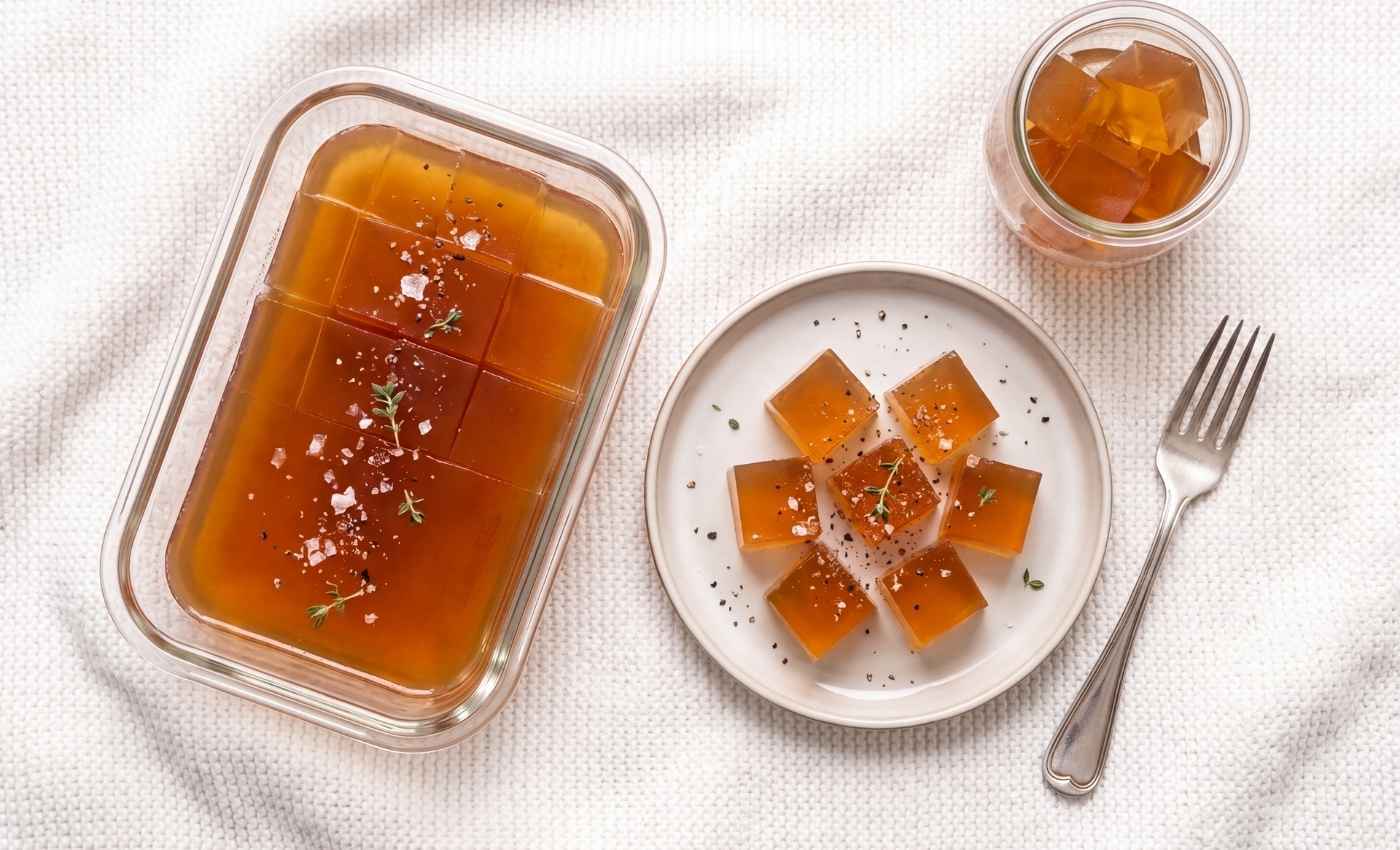
What Is Beef Jelly (Beef Aspic)?
Beef jelly is what happens when beef stock — full of natural collagen from bones and connective tissue — is concentrated and chilled until it sets into a firm, sliceable jelly. Traditionally this happens naturally from long-simmered bone broth alone, but most home cooks add a measured amount of beef gelatin powder to guarantee a firm, reliable set every time, especially when using a quicker stock instead of an 8-hour bone broth.
It’s the jelly you’ve seen around cold roast beef, inside a pork pie, or holding potted meat together — just made deliberately, on its own, rather than as a byproduct.
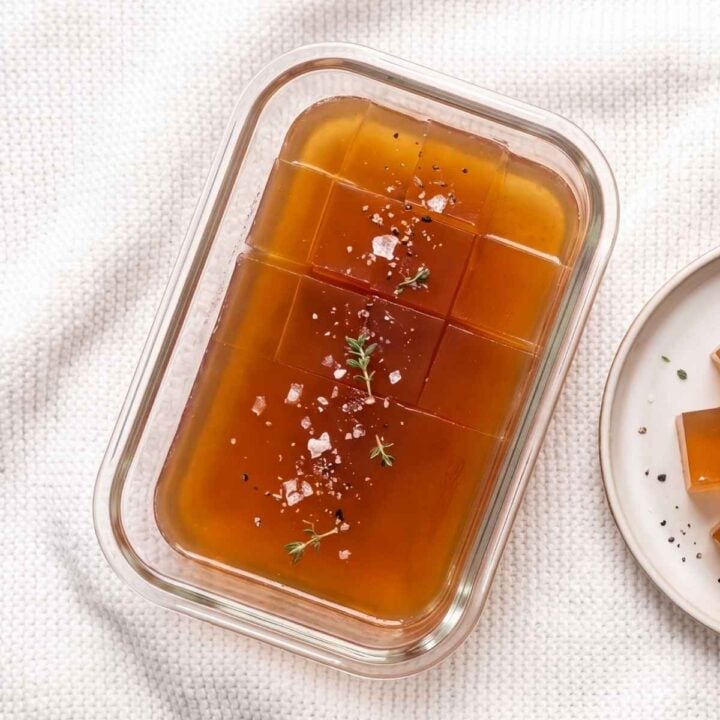
beef jelly recipe
savory, protein-rich jelly made by setting concentrated beef stock or bone broth with gelatin, perfect for sealing pork pies, coating potted beef, or binding cold terrines.
Ingredients
- 2 cups beef stock or bone broth, strongly flavored and well-seasoned
- 1 to 2 tablespoons beef gelatin powder (see note below on how much to use)
- Salt and black pepper, to taste
- Optional: 1 tablespoon dry sherry, Madeira, or red wine, for depth
- Optional: fresh thyme or a bay leaf, simmered briefly in the stock for aromatics
Instructions
- Simmer your beef stock uncovered over medium-low heat for 10–15 minutes to concentrate the flavor. Taste as you go — jelly mutes seasoning once cold, so it should taste slightly saltier and more intensely flavored than you'd want a hot soup to taste. Stir in your optional wine and aromatics here.
- Ladle out ½ cup of the warm (not boiling) stock into a separate bowl. Sprinkle the beef gelatin evenly over the surface and let it sit for 5 minutes without stirring, until it swells into a soft, wrinkled layer. This step prevents lumps.
- Whisk the bloomed gelatin back into the rest of the warm stock until fully dissolved and smooth — about 1–2 minutes of gentle whisking. Do not let the stock boil at this stage; a hard boil can weaken the gelatin's set.
- Pour the mixture through a fine mesh strainer into your serving dish, mold, or terrine. This removes any stray herbs or fat specks for a clear, glossy set — the hallmark of a good aspic.
- Refrigerate uncovered for the first hour, then cover loosely. It will be sliceable after about 4 hours, and fully firm overnight. A properly set beef jelly holds a clean edge when cut with a knife.
Notes
Nutrition Information
Yield 1 Serving Size 1Amount Per Serving Calories 87Total Fat 1gSaturated Fat 0gUnsaturated Fat 0gSodium 988mgCarbohydrates 6gSugar 3gProtein 16g
Nutritional data is estimated
What to Do With Beef Jelly
- Potted beef: layer shredded, well-seasoned beef in a jar or ramekin, pour warm jelly over the top, and chill until set — the jelly seals in moisture and flavor.
- Pork or beef pie topping: pour warm jelly into the gap between a cooked pie filling and its crust; it sets and keeps the pie moist for days.
- Cold terrine or pâté layer: use it to bind sliced meats or vegetables into a cold terrine.
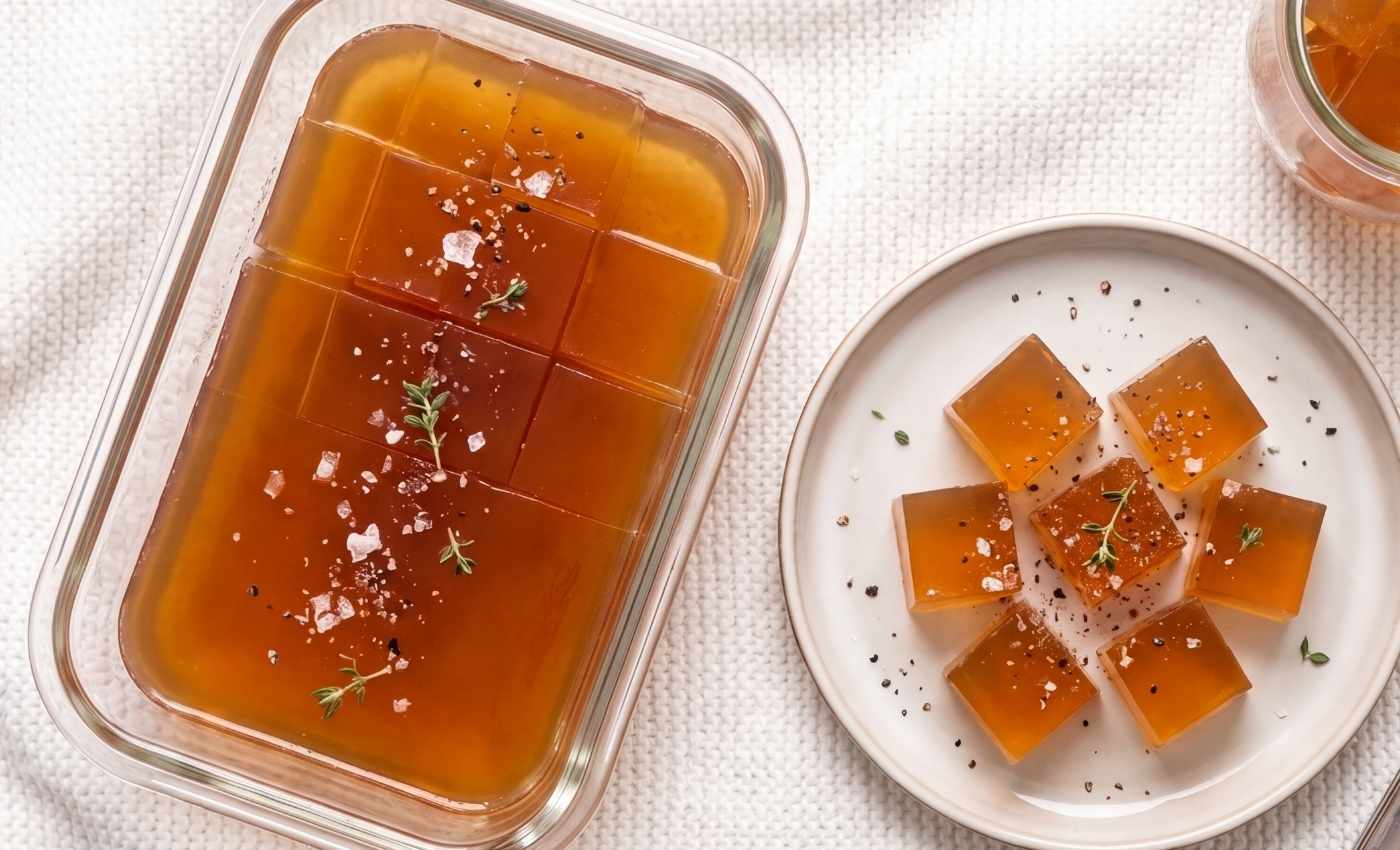
- Simple garnish: dice the set jelly into small cubes to garnish cold roast beef or a charcuterie board.
Why Didn’t My Beef Jelly Set?
The most common cause is stock that’s too thin or too weakly seasoned to hold gelatin structure — add more gelatin next time, or reduce your stock further before setting. The second most common cause is not enough chilling time; give it a full 4 hours before judging it a failure. If you used fresh pineapple, kiwi, or papaya in the stock (uncommon, but it happens in fusion recipes), those fruits contain enzymes that break down gelatin and will prevent a set entirely.
Frequently Asked Questions
What’s the difference between beef jelly and beef gelatin jello?
Beef jelly (aspic) is a savory dish made from seasoned beef stock and gelatin, used in pies, potted meats, and terrines. Beef gelatin jello is a sweet dessert made from fruit juice and the same type of gelatin. They share an ingredient — beef gelatin — but are otherwise completely different dishes. See our homemade beef gelatin jello recipe for the dessert version.
Can I use bone broth instead of stock?
Yes — bone broth works especially well because it’s naturally rich in collagen and may need less added gelatin. Use the same 1–2 tablespoon guideline per 2 cups, tasting the broth’s natural set first if you’ve chilled a small spoonful ahead of time.
How long does beef jelly keep in the fridge?
Up to 5 days in an airtight container. Because it’s a savory, protein-based dish rather than a sugar preserve, it doesn’t keep as long as sweet jello — use it within the week.
Can I freeze beef jelly?
It’s not recommended. Like sweet gelatin desserts, beef jelly turns grainy and weeps liquid after freezing and thawing. Make it fresh, close to when you plan to use it.
Is beef jelly the same as beef aspic?
Yes — “beef jelly” and “beef aspic” describe the same dish. “Aspic” is the more traditional French culinary term; “beef jelly” is the more common everyday name, especially in British home cooking.
Beef jelly is the savory counterpart to everything else on this site’s beef gelatin collection — where our jello recipe and gummies recipe use beef gelatin for dessert, this uses the exact same ingredient for a classic, protein-forward, old-fashioned dish. If you’re already using a quality beef gelatin powder in your kitchen, this is the natural next recipe to try.

Leave a Reply