
Beef stroganoff sauce breaks for one reason, happens at one moment, and is preventable with one technique. If you understand the why, the rest is just following three steps in order.
This is the technique guide that every stroganoff recipe links to. If you’re making classic beef stroganoff, ground beef stroganoff, easy beef stroganoff, or slow cooker stroganoff, this is where the sour cream part happens the same way every single time.
Jump to:
Why Sour Cream Curdles (The Science)
Sour cream is an emulsion: tiny fat globules suspended in water, held together by proteins. When heat is applied gradually, the emulsion stays stable. When heat is applied suddenly — a cold spoonful of sour cream hitting a 200°F sauce — the proteins tighten up all at once and clump together. The fat and water separate, and you end up with grainy curds and watery whey.
Once the proteins have curdled, they can’t un-curdle. The separation is permanent. This is why tempering — gradually raising the temperature of the sour cream before it meets the hot sauce — is non-negotiable.
The Three Rules That Prevent Curdling
Follow these three rules in order and you will never curdle sour cream in stroganoff:
Rule 1: Room Temperature Sour Cream
Pull the sour cream out of the refrigerator when you start cooking. It should sit at room temperature for at least 20 to 30 minutes before it goes into the sauce. Cold dairy added to hot liquid is the fastest route to a broken emulsion.
This is the easiest rule to follow because it requires zero technique — just planning. Make it a habit: open the fridge, pull out the sour cream, and set it on the counter right when you start prepping the beef or vegetables.
Rule 2: Temper It First
This is the critical step. When your sauce is done simmering and coats the back of a spoon, take the pan off the heat and let it sit undisturbed for 2 minutes. The temperature will drop slightly and the surface will calm down.
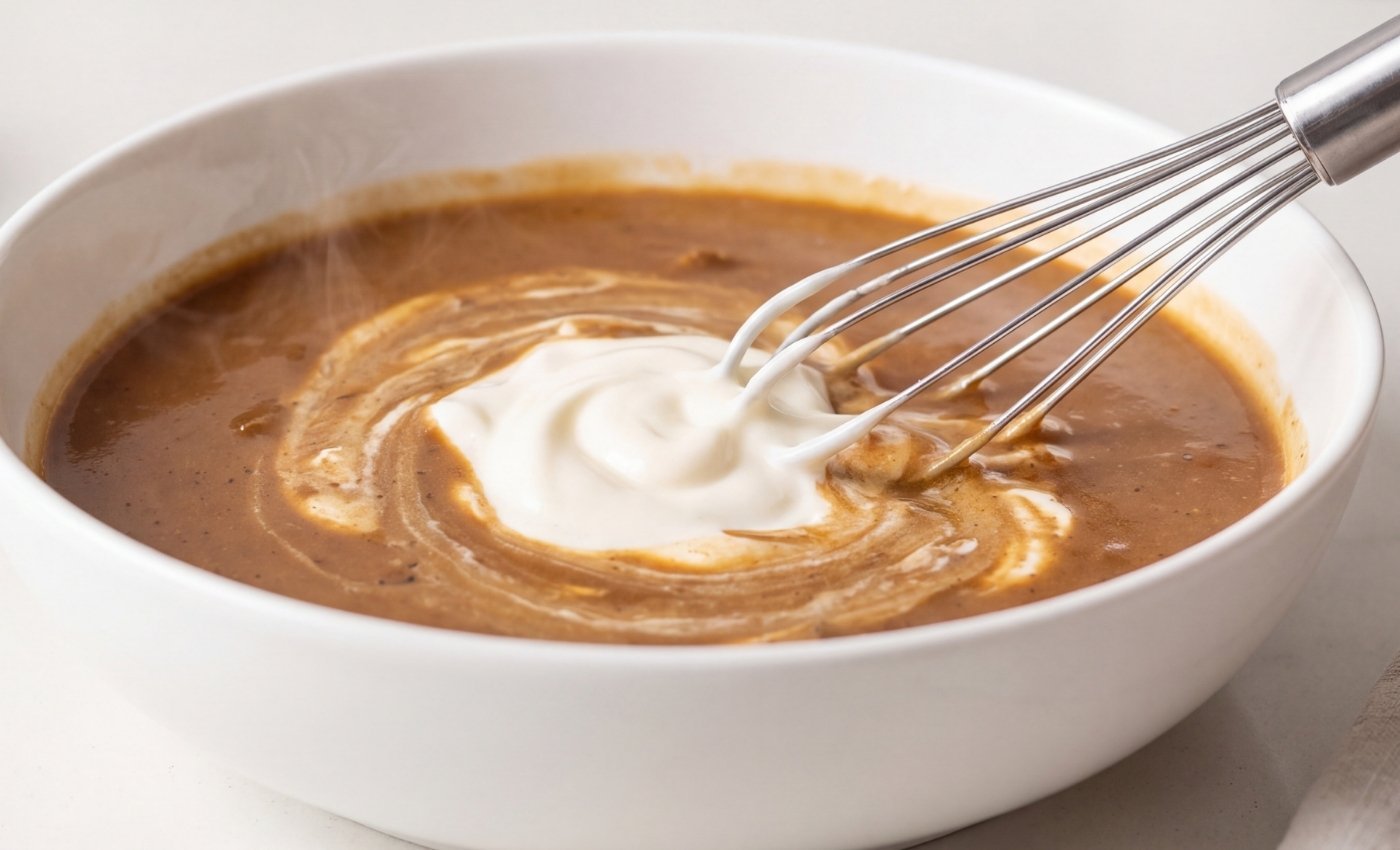
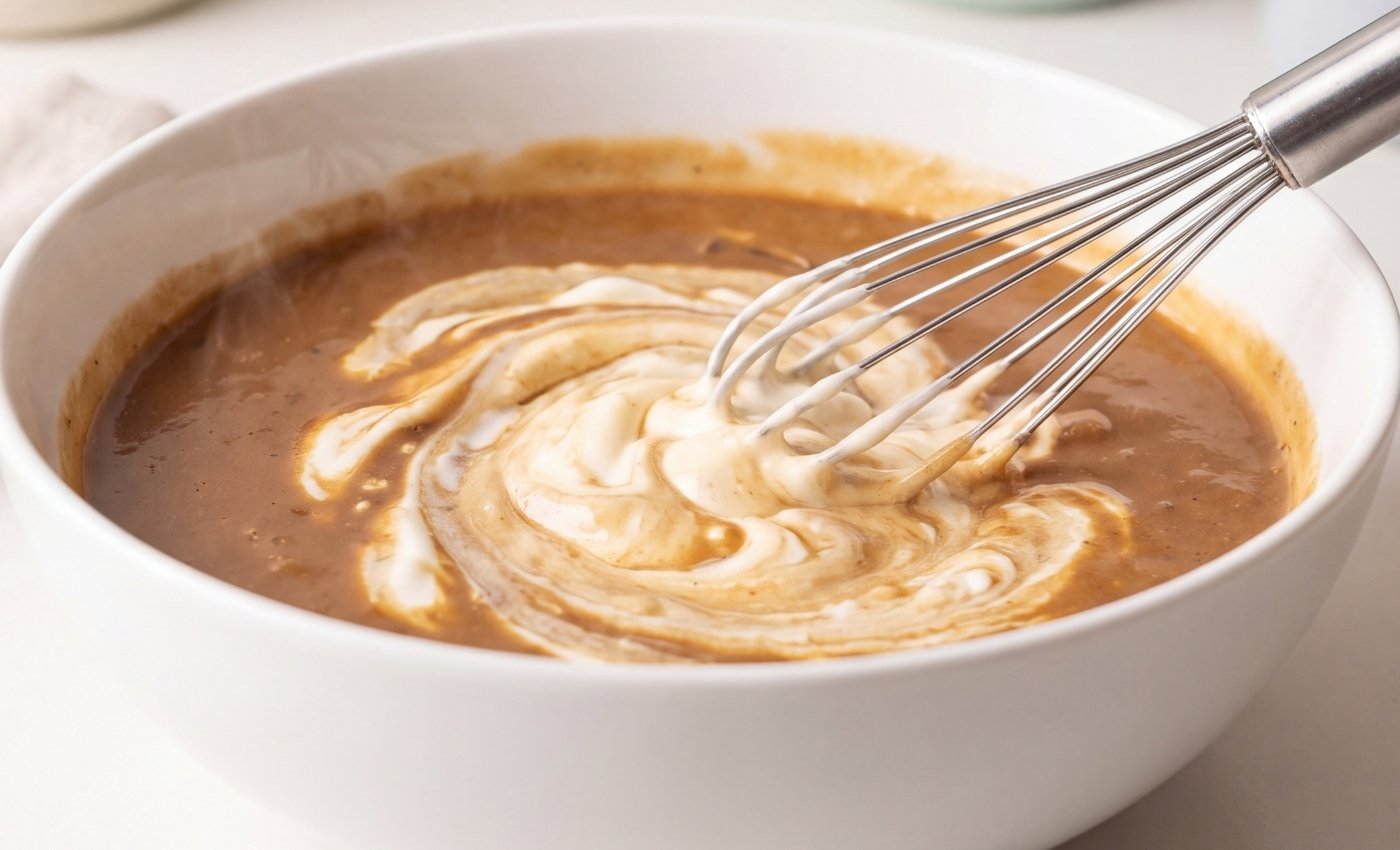
Then, scoop about half a cup of the hot sauce into a separate bowl with the sour cream. Whisk them together until completely smooth. Pour that mixture slowly back into the pan, stirring as you go.
What you’re doing: you’re raising the sour cream’s temperature gradually (from room temp to sauce temp) instead of all at once. The proteins relax into the heat change instead of seizing up.
Rule 3: Never Boil After It’s Added
Once the sour cream is in the stroganoff, keep the heat low. The sauce should steam gently, not bubble. Boiling will break the emulsion, even if the sour cream went in tempered.
This is especially important in slow cooker stroganoff, where the appliance defaults to high. Switch it to low or warm after the sour cream goes in.
Step-by-Step Tempering
Here’s exactly what it looks like, moment by moment:
- Sauce is done simmering. It coats the back of a spoon. Take the pan completely off the heat.
- Wait 2 minutes. Set a timer if you want. The pan cools slightly and the sauce surface goes calm.
- Scoop hot sauce into a bowl. About half a cup. Pour it in with the room-temperature sour cream.
- Whisk aggressively. For at least 30 seconds. The goal is to combine them completely so there are no streaks or lumps of unmixed sour cream.
- Pour slowly back into the pan. Don’t dump it in all at once. Stir the pan as you’re pouring.
- Stir the whole thing together. Make sure the streaks are gone and the sauce is uniform in color and consistency.
- If needed, return to very low heat for 2–3 minutes. Just to bring everything to a warm, eating temperature. No bubbles. No steam wisps that look aggressive.
That’s the whole technique. It takes maybe 3 minutes total and is the reason you’ll never have a broken stroganoff sauce.

What If It Does Curdle?
If the sauce split despite your best efforts, all is not lost. The moment you see graininess, pull the pan off the heat immediately. Whisk in a tablespoon of cold heavy cream. The fat in the cold cream can sometimes re-emulsify the broken sauce.
It usually works. The result won’t be perfect — it won’t be as silky smooth as a sauce that never broke — but it’s usually salvageable to a point where it’s still good to eat.
If re-emulsifying doesn’t work, you can push the whole thing through a fine-mesh strainer to filter out the curds, which will leave you with a thinner but usable sauce. Not ideal, but better than starting over.
Sauce Ratios and Thickness
A stroganoff sauce should coat the back of a spoon when it’s done simmering (before the sour cream goes in). Here’s how to hit that texture:
For a medium sauce (standard stroganoff):
- 2 to 2½ cups beef broth
- 2 to 3 tablespoons roux (flour cooked in fat)
- 1 cup sour cream stirred in at the end
This ratio is what most stroganoff recipes use — it coats noodles or mashed potatoes but still has enough flow to be saucy.
For a thicker sauce (gravy-like):
- 1½ to 2 cups beef broth
- 3 to 4 tablespoons roux
- 1 cup sour cream stirred in at the end
This is closer to stroganoff as it’s served in Russia — more of a braise than a saucy dish. Use this if you prefer things pooled on the plate rather than flowing.
For a thinner sauce (loose, pourable):
- 3 cups beef broth
- 1½ to 2 tablespoons roux
- 1 cup sour cream stirred in at the end
This is looser and works well over rice, which needs something to soak into. It’s less common in American stroganoff but not wrong.
The sour cream amount doesn’t change. A full cup of full-fat sour cream is the standard across all three. It’s the broth and roux that you adjust for thickness.
Troubleshooting the Sauce
Too thin? Make a cornstarch slurry (1 tablespoon cornstarch mixed with 2 tablespoons cold water), stir it into the sauce, and simmer for 2 to 3 minutes. The sauce will thicken noticeably. (Don’t use flour for this — it gets gummy when added to an already-liquid sauce.)
Too thick? Stir in a splash of broth, water, or even a little milk at a time until it’s the right consistency. Go slowly — it’s easier to add liquid than remove it.
Not savory enough? Stroganoff should taste tangy and savory at once. If it’s just creamy, try adding a teaspoon of Dijon mustard (which you should have anyway), or a splash of Worcestershire sauce. Taste as you go.
Too acidic or tangy? A tiny pinch of baking soda (literally ⅛ teaspoon at a time) neutralizes sourness. Stir it in and wait a few seconds — it’ll bubble slightly. Taste and repeat if needed. Or just stir in a teaspoon of honey, which rounds out harshness.
Substitutions for Sour Cream
If you don’t have sour cream or want a different flavor, these work with the same tempering method:
Full-fat Greek yogurt — tangier than sour cream but will temper the same way. Use a 1:1 ratio. Low-fat versions are more likely to split, so skip those.
Crème fraîche — the most stable option. It won’t curdle at all, even if you skip tempering (though you shouldn’t test that). Closest in flavor and texture to sour cream. More expensive, but worth it if you have access to it.
Heavy cream — the most stable but also the most neutral in flavor. Stroganoff made with heavy cream alone tastes like stroganoff without the tang. If you use it, add a teaspoon of lemon juice at the end to restore the brightness.
Mascarpone — rich and creamy, but thick enough that it needs diluting. Mix 1 part mascarpone with 1 part cream or yogurt before tempering.
Avoid low-fat sour cream, fat-free sour cream, and whipped cream. Low-fat and fat-free versions have more water and less fat, both of which make curdling more likely. Whipped cream separates into a weird grainy texture.
Why This Technique Appears in Every Stroganoff Recipe
Every stroganoff post on this site links here because the sour cream moment is the same whether you’re making stroganoff with sirloin, ground beef, in a slow cooker, or on a weeknight. The beef is different. The technique is different. The sauce base is different. But the moment you add the sour cream, it’s identical.
By linking to this guide from every recipe, you get the full explanation once, and the recipes can focus on what makes them unique (the beef cut, the cooking method, the timing). That’s better than repeating the same three paragraphs eight times in eight different posts.
Where This Sauce Goes
These stroganoff recipes all use the same sour cream sauce technique:
- Classic beef stroganoff with sirloin (40 minutes)
- Ground beef stroganoff (30 minutes)
- Easy beef stroganoff (30 minutes with shortcuts)
- Slow cooker stroganoff with chuck roast (6–8 hours)
- Julia Child’s stroganoff (with a slight variation for fresh cream)
- Instant Pot stroganoff (45 minutes)
Pick the recipe that fits your time and beef cut, then come back here if you want the full explanation of the science and the troubleshooting.
Frequently Asked Questions
Why does sour cream curdle in stroganoff?
Sour cream is an emulsion of fat and water held together by proteins. When it hits hot liquid too suddenly, the proteins seize up and separate the fat from the water, causing curdling. Tempering — gradually raising the sour cream’s temperature before it meets the hot sauce — prevents this.
Can I use Greek yogurt instead of sour cream?
Yes, use a 1:1 substitution and temper it the same way. It’s tangier than sour cream, so the stroganoff will taste brighter and sharper. Avoid low-fat versions, which are more prone to splitting.
What if my sour cream is already cold from the fridge?
It’ll still work if you temper it, but it’s riskier. The temperature difference between cold sour cream and hot sauce is larger, so the protein shock is more severe. Plan ahead and pull it out 20–30 minutes before you need it.
Can I add the sour cream while the sauce is still simmering?
No. The boiling action will break the emulsion even if you temper it. Take the pan off the heat first, wait 2 minutes, then do the tempering. This single step cuts your curdling risk by about 90%.
If my sauce broke, can I fix it?
Usually. Pull the pan off the heat immediately and whisk in a tablespoon of cold heavy cream. The fat in the cold cream can sometimes re-emulsify the broken sauce. If that doesn’t work, you can strain it through a fine-mesh strainer to filter out the curds and use the liquid, though it’ll be thinner.
Does stroganoff have to have sour cream?
Traditionally, yes — the tang is part of the identity of the dish. But you can use crème fraîche, full-fat Greek yogurt, or heavy cream instead. Each changes the flavor slightly. Heavy cream is the most neutral and won’t curdle at all, but you’ll lose the characteristic stroganoff tang unless you add lemon juice at the end.
What’s the best stroganoff sauce consistency?
It should coat the back of a spoon when done — not thick like gravy, not thin like broth. It should pool slightly on the plate but still flow enough to look saucy. If your stroganoff is too thin or too thick, adjust the roux-to-broth ratio next time, or use a cornstarch slurry to thicken.
Ready to make stroganoff? Start with the classic beef stroganoff recipe or pick a version that fits your time and beef cut.

Leave a Reply