
Not all beef gelatin is the same. The source matters — and if you have spent any time comparing labels, you have probably noticed the words “grass fed” cropping up on the better products. This guide explains exactly what grass-fed beef gelatin is, why it is worth choosing over the conventional alternative, how to use it in your kitchen, and which brands are actually delivering on their promises.
Whether you are here for the health benefits, the cooking uses, or just trying to pick the right bag off the shelf, you are in the right place.
Jump to:
- What Is Grass-Fed Beef Gelatin?
- Why Grass-Fed Matters: The Difference It Actually Makes
- Health Benefits of Grass-Fed Beef Gelatin
- How to Use Grass-Fed Beef Gelatin Powder
- Grass-Fed Beef Gelatin vs Grass-Fed Collagen Powder
- Best Grass-Fed Beef Gelatin Brands
- What to Look for on the Label
- Frequently Asked Questions
- The Bottom Line
What Is Grass-Fed Beef Gelatin?
Beef gelatin is a protein extracted from the collagen found in the bones, hides, and connective tissue of cattle. That collagen is cooked down, filtered, and dried into the fine, pale powder you see in stores. When the label says grass-fed, it means the cattle grazed on pasture rather than being finished on grain in a feedlot.
It is the same process — just a better starting material.
Gelatin is distinct from collagen powder (also called collagen peptides). Both come from the same animal parts, but beef gelatin vs collagen behave differently in the kitchen: gelatin gels when cooled, collagen stays liquid. If you need a recipe to set — gummies, panna cotta, jello, marshmallows — gelatin is what you want. If you are stirring something into a smoothie or coffee, collagen powder is the better choice.
For a fuller explanation of what the ingredient actually is, read our guide on what beef gelatin is and where it comes from.
Why Grass-Fed Matters: The Difference It Actually Makes
Amino acid profile
Cattle raised on grass produce collagen with meaningfully higher concentrations of glycine and proline — the two amino acids that do most of the work in gelatin’s health benefits. Grain-fed cattle accumulate more intramuscular fat and less collagen-rich connective tissue overall, which affects the quality of the gelatin extracted from them.
Glycine in particular is the amino acid responsible for:
- Supporting the gut lining and improving intestinal integrity
- Improving sleep quality (studies suggest 3g of glycine before bed shortens time to sleep and improves sleep depth)
- Regulating inflammation throughout the body
- Supporting liver detoxification
Fewer unwanted inputs
Grass-fed cattle are typically raised without routine antibiotics and without synthetic growth hormones. Feedlot operations commonly use both to accelerate weight gain. Since gelatin is a concentrate of animal tissue, a cleaner animal means a cleaner final product.
Certification and traceability
Premium grass-fed gelatin brands typically offer third-party testing, non-GMO verification, and sourcing transparency. That means you can actually find out where the cattle were raised — something conventional gelatin brands rarely disclose.
Health Benefits of Grass-Fed Beef Gelatin
The benefits of beef gelatin come from its amino acid content. Grass-fed versions deliver these in higher concentrations. Here is what the research supports:
Joint and cartilage support
Glycine and proline are the primary building blocks of cartilage. Multiple studies on collagen supplementation — and by extension, gelatin — show reductions in joint pain and improved mobility, particularly in people with osteoarthritis and in athletes undergoing heavy training loads. One study in the American Journal of Clinical Nutrition found that gelatin combined with vitamin C significantly increased collagen synthesis markers in the blood.
Gut health and digestive integrity
Glycine is essential for maintaining the mucosal lining of the gut. Research has found that glycine helps regulate gastric acid secretion, supports healthy bowel transit, and may assist in repairing intestinal permeability (commonly called “leaky gut”). Bone broth has long been used as a traditional gut-healing food for this reason — and grass-fed beef gelatin powder delivers the same compounds in a more concentrated, convenient form.
Skin elasticity and hydration
Collagen makes up roughly 70% of the dry weight of skin. As we age, collagen production slows — typically from the mid-20s onward. Supplementing with gelatin provides the amino acid precursors the body needs to synthesise new collagen. A 2021 meta-analysis found that hydrolysed collagen supplementation improved skin elasticity and hydration markers after 90 days.
Sleep quality
Glycine acts on the nervous system as an inhibitory neurotransmitter. A controlled Japanese study found that 3 grams of glycine before bed (roughly 8–12 grams of gelatin) reduced fatigue, improved sleep quality, and decreased daytime sleepiness the following morning — without any sedative effects.
Protein and satiety
Grass-fed beef gelatin is roughly 88–90% protein by dry weight. It is low in calories, contains no fat or carbohydrates, and provides a meaningful protein hit per tablespoon. The amino acid glycine also increases the release of the gut satiety hormone CCK, which helps you feel full for longer — making it a useful addition to a weight-management approach.
For a detailed deep dive into each benefit with dosage notes, see our full beef gelatin benefits guide.
How to Use Grass-Fed Beef Gelatin Powder
The blooming method (essential)
Grass-fed beef gelatin powder must be bloomed before use. Sprinkle it over cold liquid, use about 1 tablespoon of gelatin per 2 cups of liquid, and let it sit undisturbed for 5 minutes. It will absorb the water and turn rubbery. Then gently heat the bloomed gelatin — either directly in a saucepan or by stirring it into a hot liquid — until it dissolves completely. Do not boil it; heat above 90°C (195°F) begins to break down the protein chains and weakens the set.
Ratio guide
| Use | Gelatin per 2 cups liquid | Result |
|---|---|---|
| Soft jello / panna cotta | 1 tablespoon (7g) | Wobbly, sliceable |
| Gummies | 2 tablespoon (14g) | Firm, chewy |
| Marshmallows | 3 tablespoon (21g) | Very firm, whippable |
| Thickening a sauce | ½ teaspoon (2g) | Adds body without gelling |
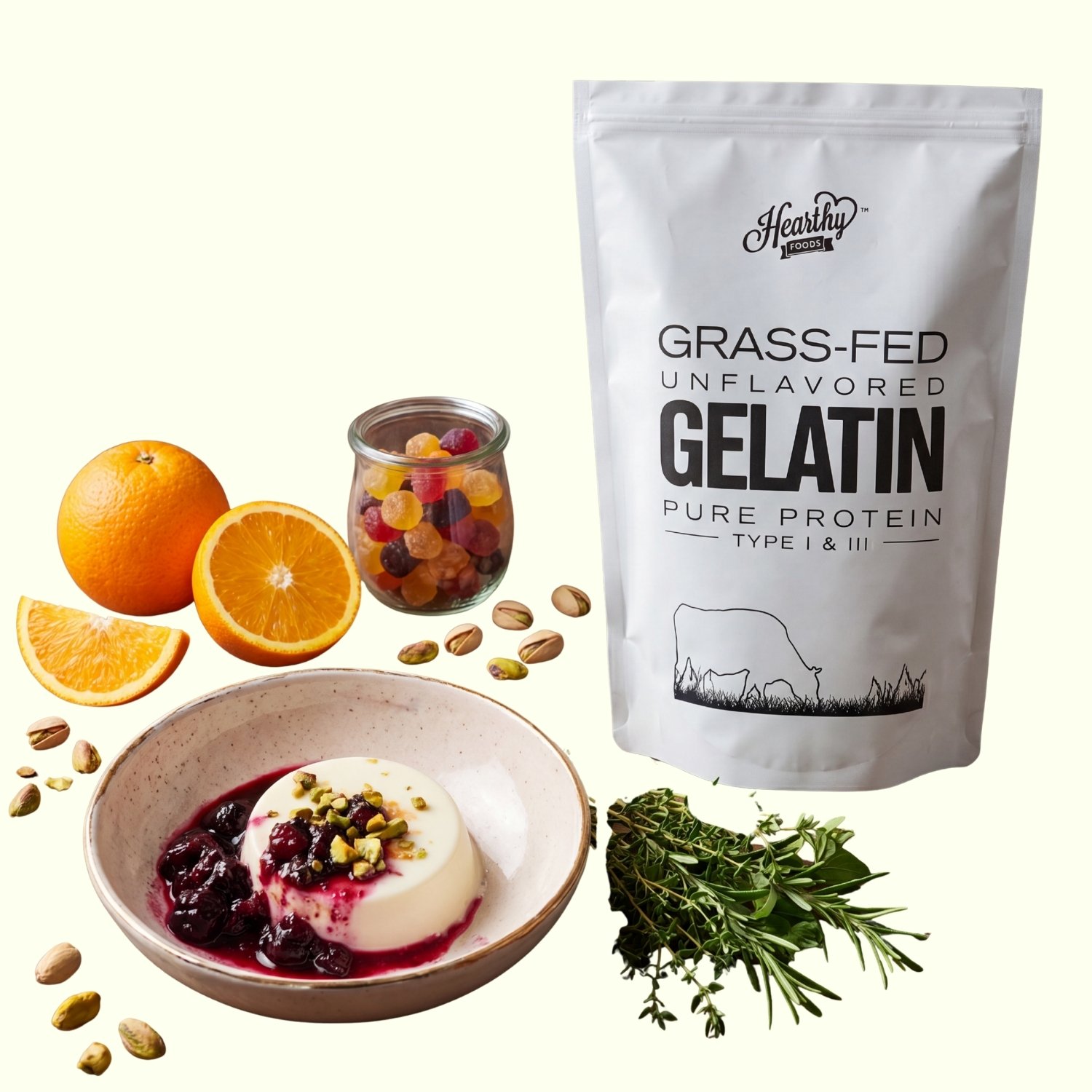
Kitchen uses
Sweet recipes:
- Beef gelatin gummies made with 100% fruit juice — one of the easiest ways to use the powder and a great snack for adults and kids alike. See our beef gelatin gummies recipe for step-by-step instructions.
- Homemade jello with beef gelatin — a clean alternative to commercial versions that are full of artificial dyes and high-fructose corn syrup.
- Marshmallows — the protein structure in gelatin is what gives marshmallows their stretch and chew. A grass-fed version turns a junk food into a genuinely nourishing treat.
- Panna cotta, mousse, and custards — anywhere a recipe needs to set firmly in the fridge.
Savoury recipes:
- Bone broth and soups — add a teaspoon to any broth to boost body and nutrition.
- Glazes and pan sauces — a small amount thickens a sauce beautifully without flour or cornstarch.
- Aspics and terrines — the traditional use that fell out of fashion but is worth reviving.
Grass-Fed Beef Gelatin vs Grass-Fed Collagen Powder
People often confuse these two products. Both come from grass-fed cattle, both are rich in glycine and proline, and both appear in similar packaging in health food stores.
| Grass-Fed Beef Gelatin | Grass-Fed Collagen Powder | |
|---|---|---|
| Dissolves in | Hot liquid only | Hot or cold liquid |
| Gels when cooled | Yes | No |
| Use in recipes | Gummies, jello, marshmallows | Smoothies, coffee, soups |
| Protein per tbsp | ~6–7g | ~6–8g |
| Amino acids | Identical | Identical |
| Price | Usually lower | Usually higher |
The rule: if the recipe needs to set, use gelatin. If you are adding protein to a drink without changing its texture, use collagen powder. Both deliver the same amino acids and long-term health benefits — it is purely a question of function.
Best Grass-Fed Beef Gelatin Brands
Great Lakes Wellness Beef Gelatin
The most widely available grass-fed option in the US. Made from cattle in South America, IFANCA halal certified, and available in most health food stores and Amazon. The red canister (beef gelatin) is the gelling version — make sure you are not accidentally buying the green canister (collagen hydrolysate), which does not gel.
Best for: everyday kitchen use, gummies, jello, cooking
Vital Proteins Beef Gelatin
Sourced from grass-fed, pasture-raised bovine hide. Available at Whole Foods and most major retailers, which makes it convenient. The certification varies by production run — always verify the halal or kosher mark on the specific batch if that matters to you.
Best for: people who want a well-known brand with easy retail access
Further Food Premium Gelatin
Grass-fed, pasture-raised, kosher-certified, and comes in a large resealable pouch that represents solid value per gram. One of the cleaner options for people who want kosher certification alongside grass-fed sourcing.
Best for: kosher kitchens, bulk buying
Nutraviva Beef Gelatin
An Australian brand with a strong following among clean-eating communities. Sourced from grass-fed cattle, non-GMO, and available internationally. Particularly popular in health-conscious recipe communities.
Best for: international buyers, paleo and clean-eating audiences
NOW Sports Beef Gelatin
A budget-friendly option from a reputable supplement brand. Grass-fed sourcing, widely available. Works well for cooking applications. Less premium than the above options but reliable.
Best for: cost-conscious buyers who still want grass-fed sourcing
What to Look for on the Label
Not every product that says “beef gelatin” is grass-fed, and not every product that says “grass-fed” is telling the full story. Here is how to read a label properly:
Look for:
- “Grass-fed” AND “pasture-raised” — grass-fed alone sometimes means grass-finished but grain-started
- A third-party certification (IFANCA for halal, OU or Star-K for kosher, non-GMO Project for GMO-free)
- Country of origin — South American (Brazil, Argentina) and New Zealand cattle tend to have the most consistent grass-fed practices
- Bloom strength — higher is firmer; 200–250 bloom is standard for cooking
Avoid:
- “Bovine gelatin” with no mention of feeding practices
- Products with fillers, maltodextrin, or flowing agents listed in the ingredients
- Brands that list no sourcing information anywhere on the packaging or website
Frequently Asked Questions
Is grass-fed beef gelatin the same as regular gelatin?
No. Standard supermarket gelatin (like Knox) is typically made from pork or from conventionally raised cattle. Grass-fed beef gelatin uses only cattle raised on pasture, which produces a different amino acid profile, avoids synthetic hormones and antibiotics, and comes with greater sourcing transparency. The gelling behaviour in recipes is identical.
How much grass-fed beef gelatin should I take per day?
Most people use 1–2 tablespoons (7–14 grams) per day, spread across meals or taken as a supplement in warm water. Studies on glycine’s sleep and gut benefits typically use 3 grams of glycine, which corresponds to roughly 8–12 grams of gelatin. There is no established upper limit, but very high doses (over 30g/day) can cause digestive discomfort in some people.
Can I use grass-fed beef gelatin in cold recipes?
Not directly. Unlike collagen peptides, gelatin must be dissolved in hot liquid first. Once dissolved, it can be added to cold or room-temperature ingredients — but the mixture will eventually gel in the fridge. This is what makes it useful for gummies, jello, and panna cotta but unsuitable for cold drinks.
Is grass-fed gelatin the same as grass-fed collagen powder?
They come from the same animals and the same body parts, but the processing differs. Beef collagen powder is fully hydrolysed into short peptide chains that dissolve in any liquid. Beef gelatin retains longer protein chains and gels when cooled. Same source, different behaviour — choose based on what your recipe needs.
Is grass-fed beef gelatin halal?
It depends on the brand. Grass-fed tells you about the diet of the cattle, not the slaughter method. For halal use, you also need a recognised halal certification confirming the zabiha slaughter method was followed. Great Lakes Wellness carries IFANCA halal certification. For a full breakdown, see our dedicated guide on whether beef gelatin is halal and kosher.
Does grass-fed beef gelatin taste like beef?
No. Properly processed beef gelatin powder is virtually tasteless and odourless. It takes on the flavour of whatever liquid it is added to. If you notice a meaty or off-putting smell, it is usually a sign of a lower-quality product or a batch that has been stored poorly.
What is the difference between gelatin powder and gelatin sheets?
Both are the same product in different forms. Powder is easier to measure and dissolve; sheets (also called leaf gelatin) are preferred in professional kitchens for their precision and the very clear set they produce. One standard gelatin sheet is roughly equivalent to ¼ teaspoon of powder.
The Bottom Line
Grass-fed beef gelatin is worth choosing over conventional gelatin if you care about amino acid quality, sourcing transparency, and avoiding unwanted additives. The gelling behaviour is identical in recipes, but the nutritional starting point is simply better.
For practical kitchen use, start with Great Lakes Wellness or Vital Proteins — both are widely available, well-certified, and perform consistently. If kosher certification matters to you, Further Food is the cleaner pick.
Ready to start cooking? Try our beef gelatin gummies recipe — one of the simplest ways to make grass-fed gelatin part of your routine — or explore homemade jello with beef gelatin for a family-friendly option.

Leave a Reply