
To make smoked beef ribs on a pellet grill, season the ribs, cook over indirect heat at 250°F, and continue until a probe slides into the thickest meat with little resistance. Thick plate ribs can take roughly 7–10 hours, while smaller back-rib racks may finish sooner. The clock helps you plan; tenderness tells you when to stop.
This beef ribs pellet smoker recipe uses a simple salt, pepper and garlic seasoning, with an optional sauce finish. The main recipe is written for one 4–5-pound rack of bone-in beef plate ribs. If you have back ribs or individual short ribs, use the cut guide before planning your cook.
What this update clarifies: the differences between beef rib cuts, cooking-time estimates, thermometer placement, optional wrapping, and safe leftover storage.
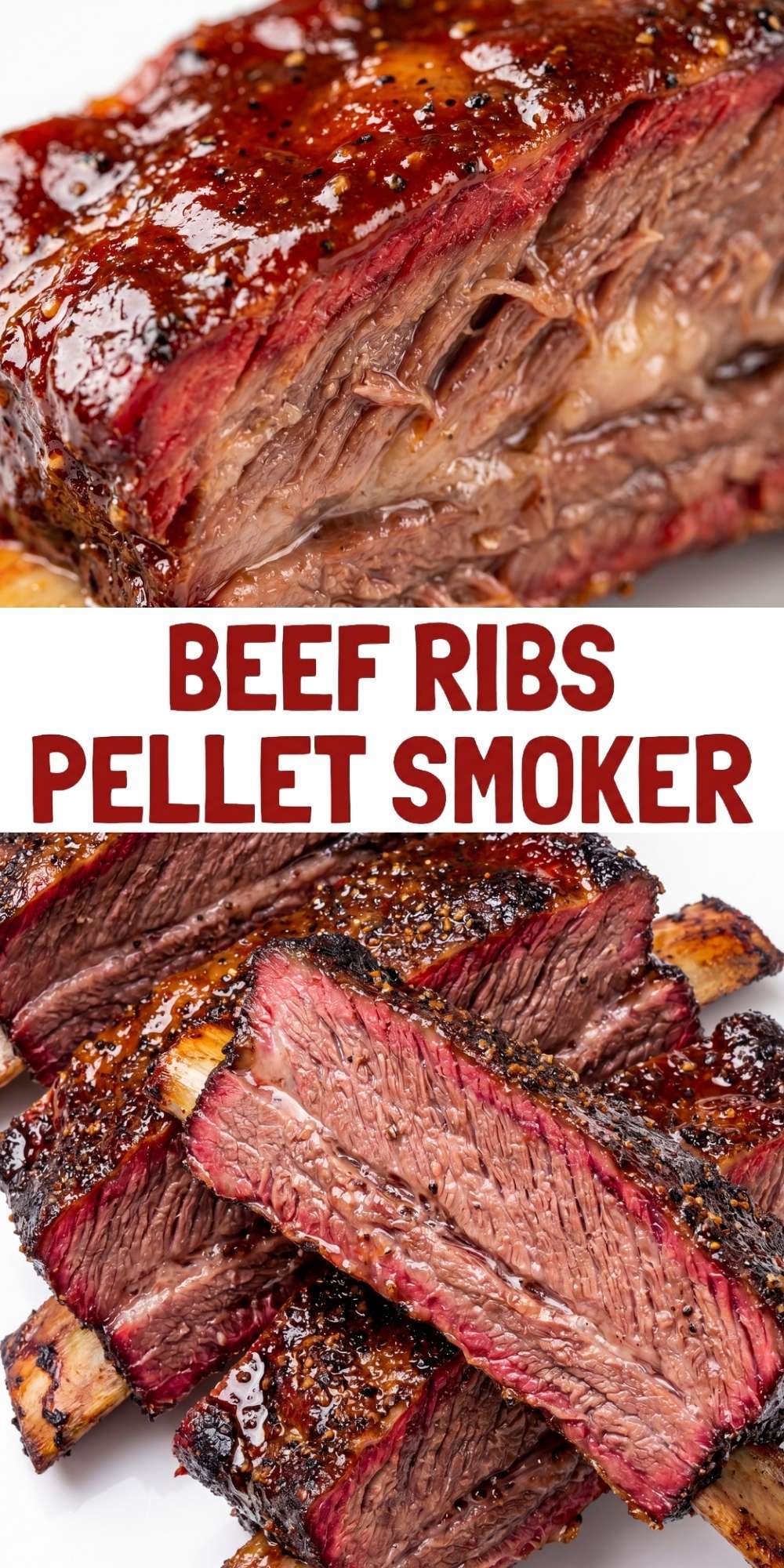
This beef ribs pellet smoker recipe is one of those game-changers. It’s simple, super forgiving, and gives you that deep, smoky flavor with tender, juicy meat that practically melts when you bite into it. No complicated steps, no stress, just real comfort food that feels like a weekend win.
I’ve tested this method again and again because I wanted something that works every time, even if you’re new to smoking. So grab your pellets, let’s fire things up, and I’ll walk you through everything step by step.
Beef ribs on a pellet grill: the quick guide
| Question | Practical answer |
|---|---|
| What cut does the main recipe use? | One 4–5-pound bone-in beef plate-rib rack |
| What smoker temperature? | 250°F, about 121°C, over indirect heat |
| Which side faces down? | Bone side down |
| How long should I allow? | Roughly 7–10 hours for the specified thick plate rack, plus 30–60 minutes resting |
| What internal temperature? | Often around 200–205°F, but check tenderness rather than forcing an exact reading |
| Should I wrap? | Optional, once the bark has set |
| Is sauce required? | No; apply a light coat near the end if desired |
| What is the main doneness check? | A probe enters several thick sections with little resistance, away from bone |
These are planning ranges, not a promise that every rack will finish on schedule. Leave extra time before serving.
Which beef ribs should you buy?
Beef plate ribs, chuck short ribs and back ribs differ in thickness and the amount of meat around the bones. Identify the cut before choosing a cooking schedule.
| Cut | How to recognize it | How to approach the cook |
|---|---|---|
| Plate short ribs, often called dino ribs | Large bones with a thick layer of meat above them | Use the main recipe and allow a long cook |
| Chuck short ribs | Meaty ribs, often sold as a rack or individual thick pieces | Check piece thickness; individual pieces can finish earlier than a full rack |
| Beef back ribs | Long curved bones with much of the meat between them | Check earlier and protect thinner exposed edges |
| Flanken-cut short ribs | Thin strips cut across several bones | Use a separate quick-cooking recipe, not this all-day method |
Choose a rack with useful meat coverage rather than paying mainly for exposed bones. For a dedicated short-rib variation, see the smoked beef short ribs.
Keep the raw ribs refrigerated while preparing the smoker. Use separate utensils and surfaces for raw and cooked meat.
Choosing the Best Beef Ribs
Not all ribs are created equal, and this part matters more than you might think.
Types of Beef Ribs
- Plate ribs (dino ribs): Big, meaty, super juicy
- Back ribs: Less meat but still flavorful
- Chuck ribs: A nice balance of meat and fat
If you can find plate ribs, grab them. They give you that classic BBQ experience.
What to Look For
- Good marbling (little white streaks of fat)
- Thick meat on top of the bones
- Fresh, bright red color
The more marbling, the more flavor and tenderness you’ll get.
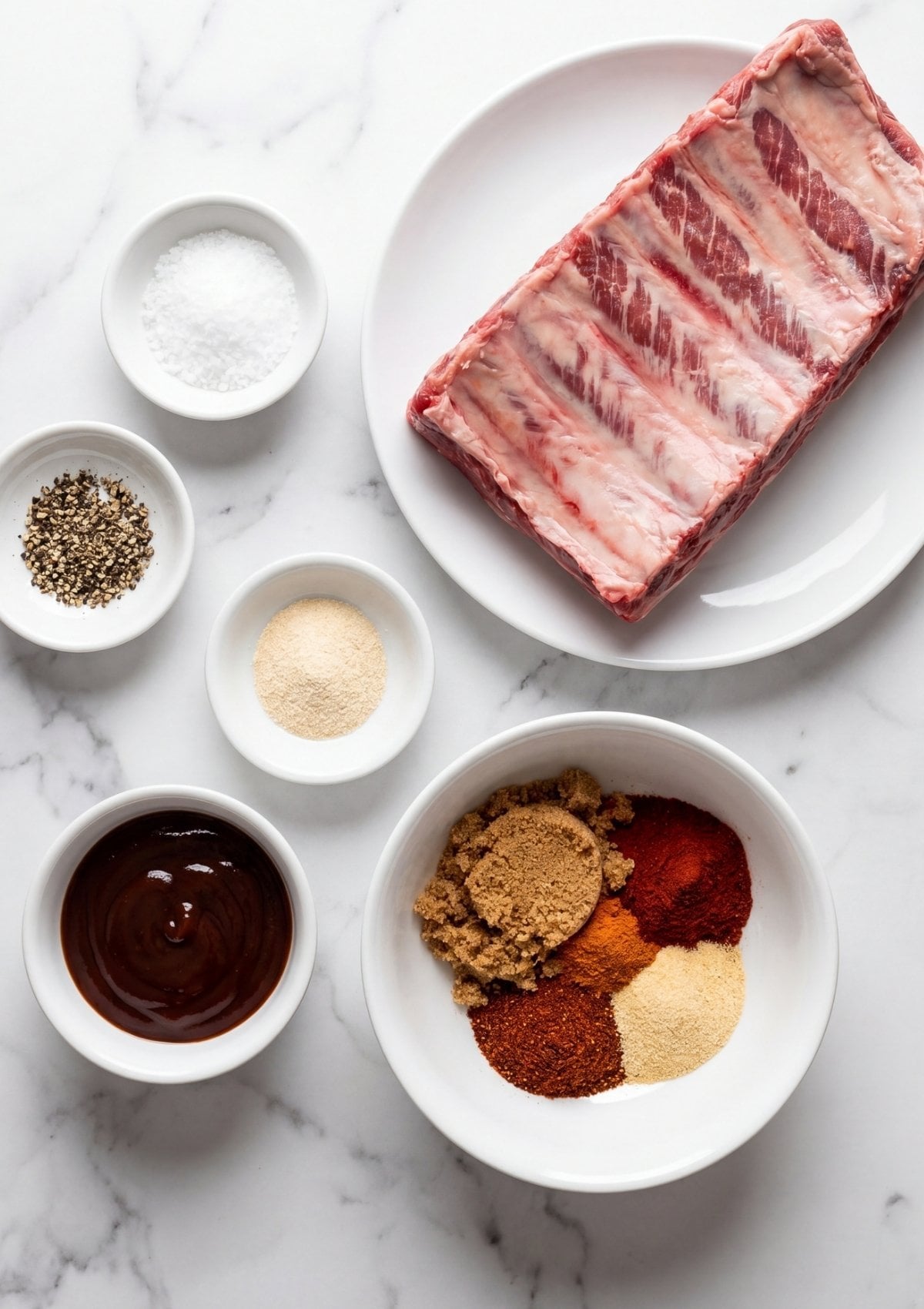
Ingredients You’ll Need
This recipe keeps things simple, just like we love around here.
For the Ribs
- 1 rack beef ribs
- Kosher salt
- Black pepper
- Garlic powder
Optional Flavor Boost
- Your favorite BBQ sauce
- Homemade dry rub (brown sugar, paprika, chili powder, onion powder)
Simple seasoning lets the smoke and beef do most of the work, and honestly, that’s where the magic happens.
For precise amounts, check the recipe card at the end of the post.
Prepping Your Ribs Like a Pro
Before anything hits the smoker, we need to set things up right.
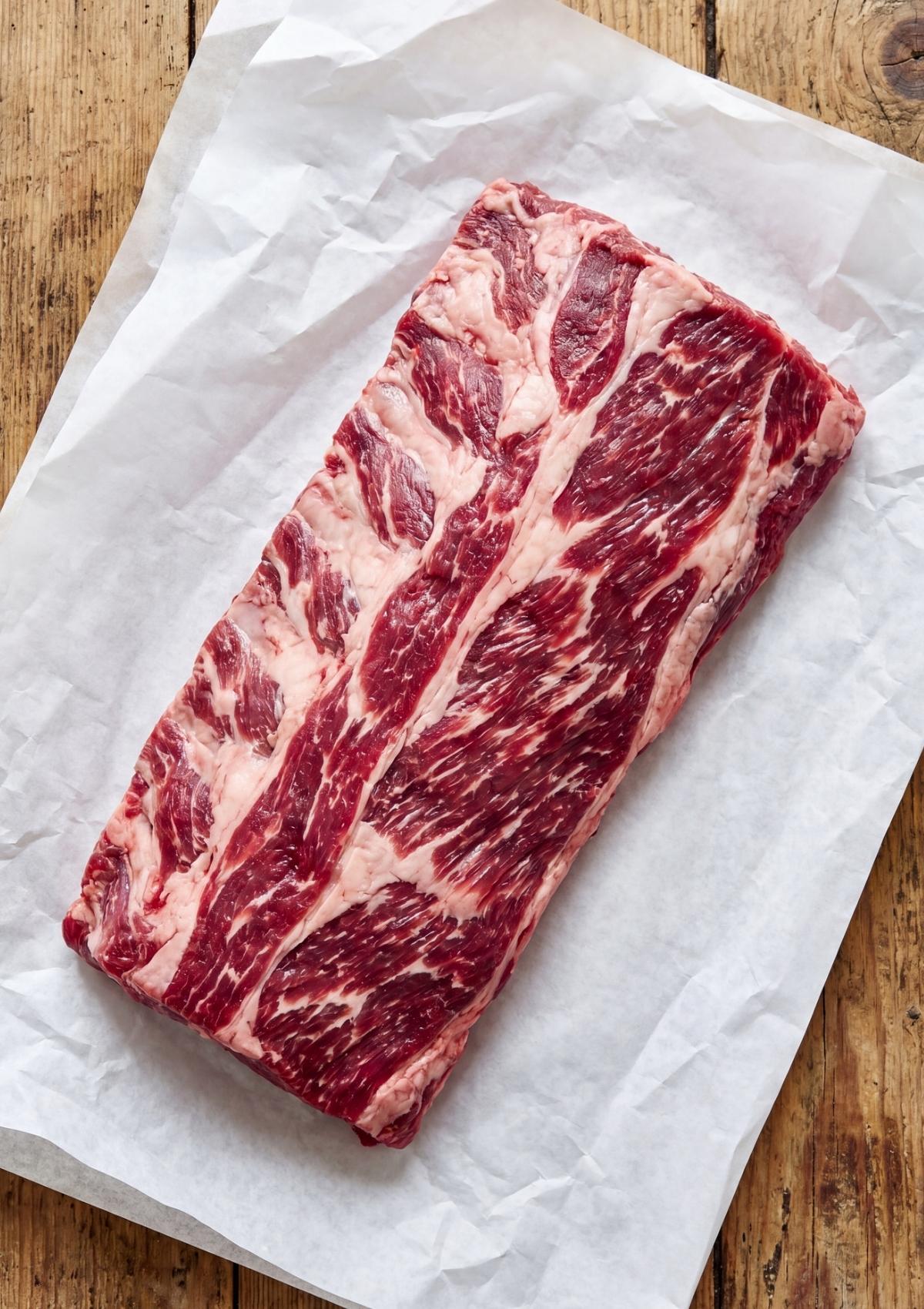
Remove the Membrane
Flip your ribs over and you’ll see a thin, shiny layer. That’s the silverskin.
- Slide a knife under it
- Grab it with a paper towel
- Pull it off
It might fight you a bit, but removing it helps seasoning soak in and keeps the ribs from being chewy.
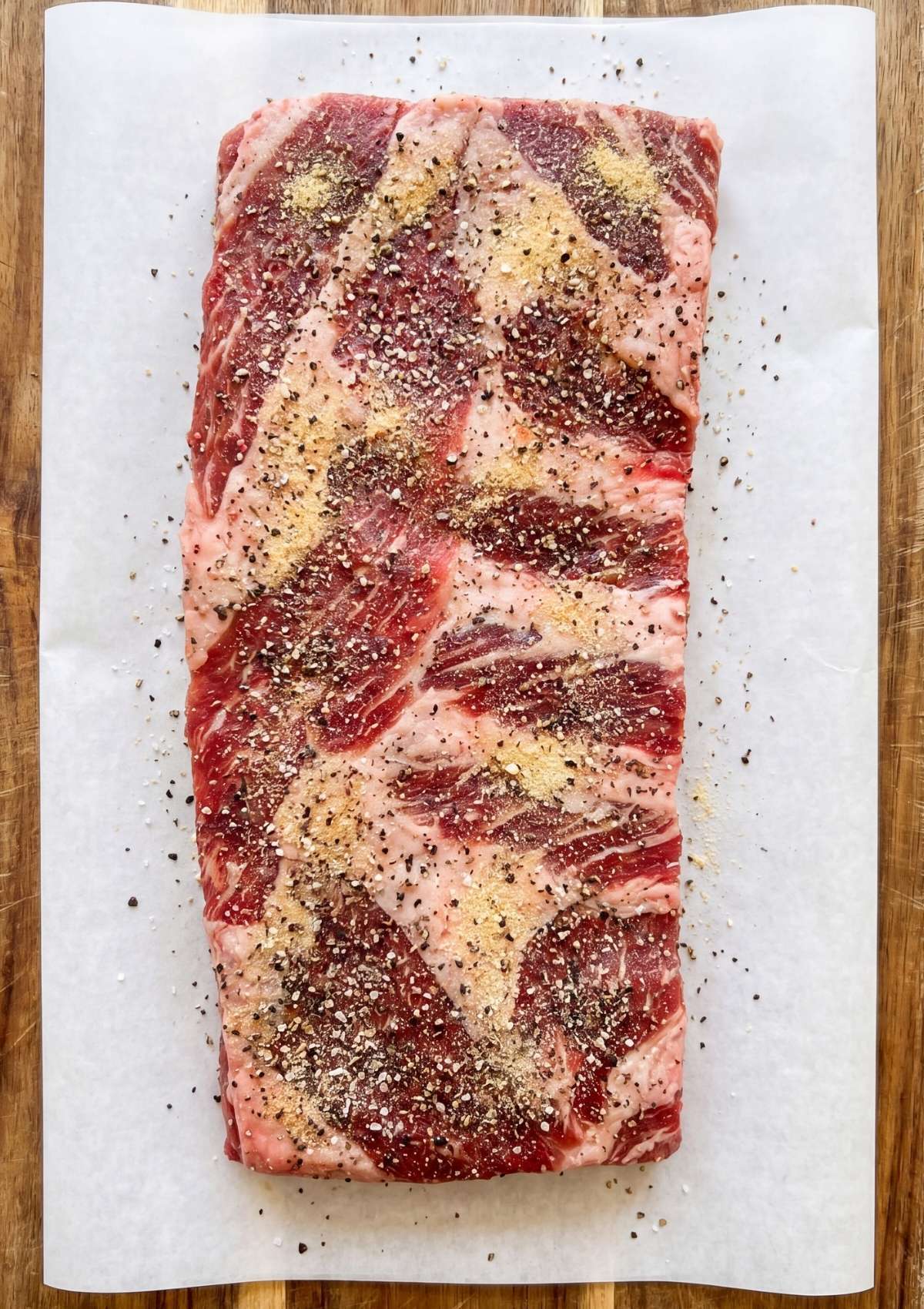
Season Generously
Don’t be shy here.
- Coat both sides with salt, pepper, and garlic powder
- Press the seasoning into the meat
You want a nice, even layer that builds flavor as it cooks.
How to Smoke Beef Ribs on a Pellet Smoker
This is where everything comes together.
Let me walk you through it in a way that feels easy and doable.
Step-by-Step Instructions
- Preheat your pellet smoker to 250°F
- Place ribs directly on the grill, bone-side down
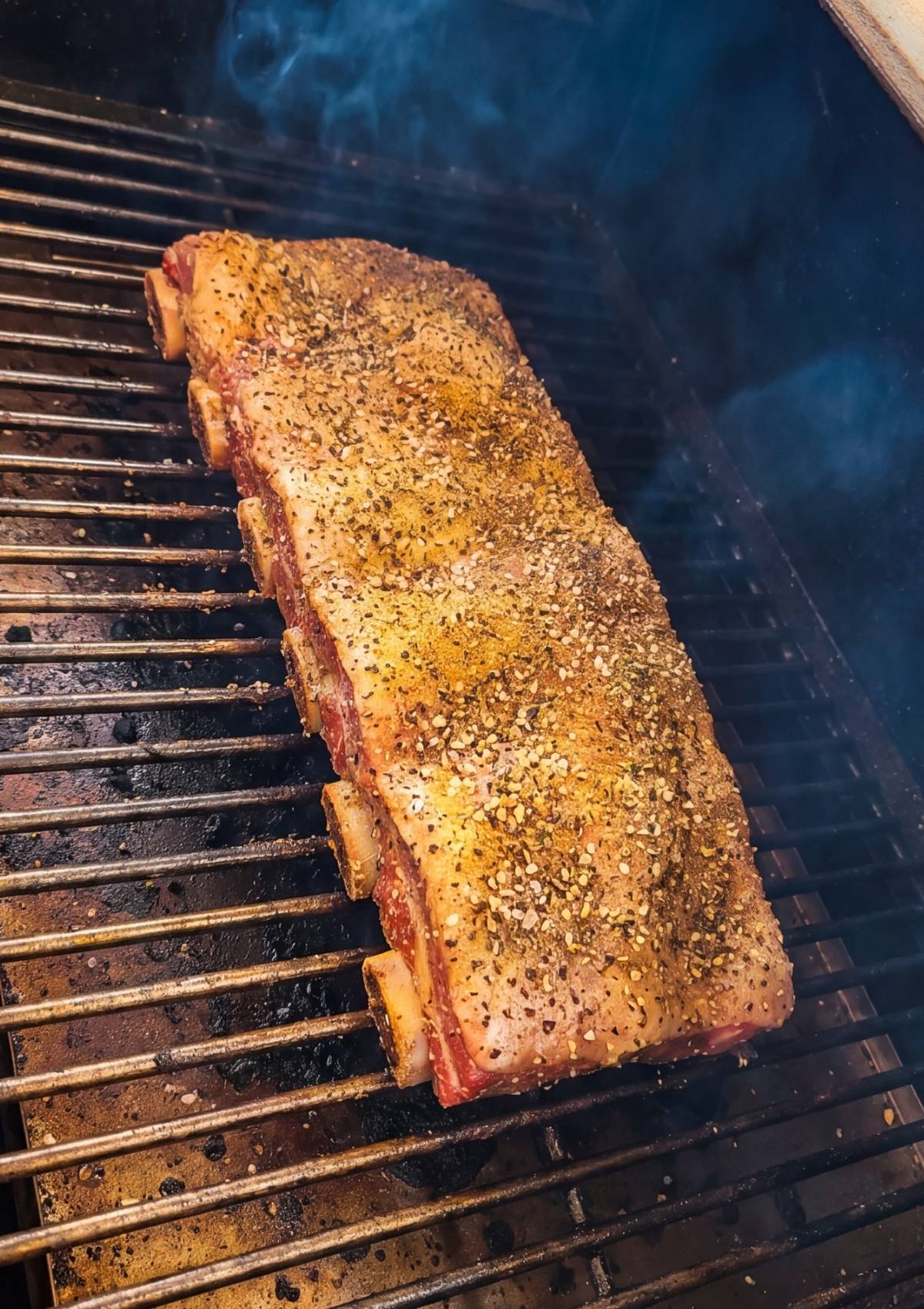
- Smoke for 3 to 4 hours without touching them
- Keep the lid closed as much as possible
- During the last hour, brush BBQ sauce on every 20 minutes (optional)
- Cook until internal temp reaches 200 to 205°F
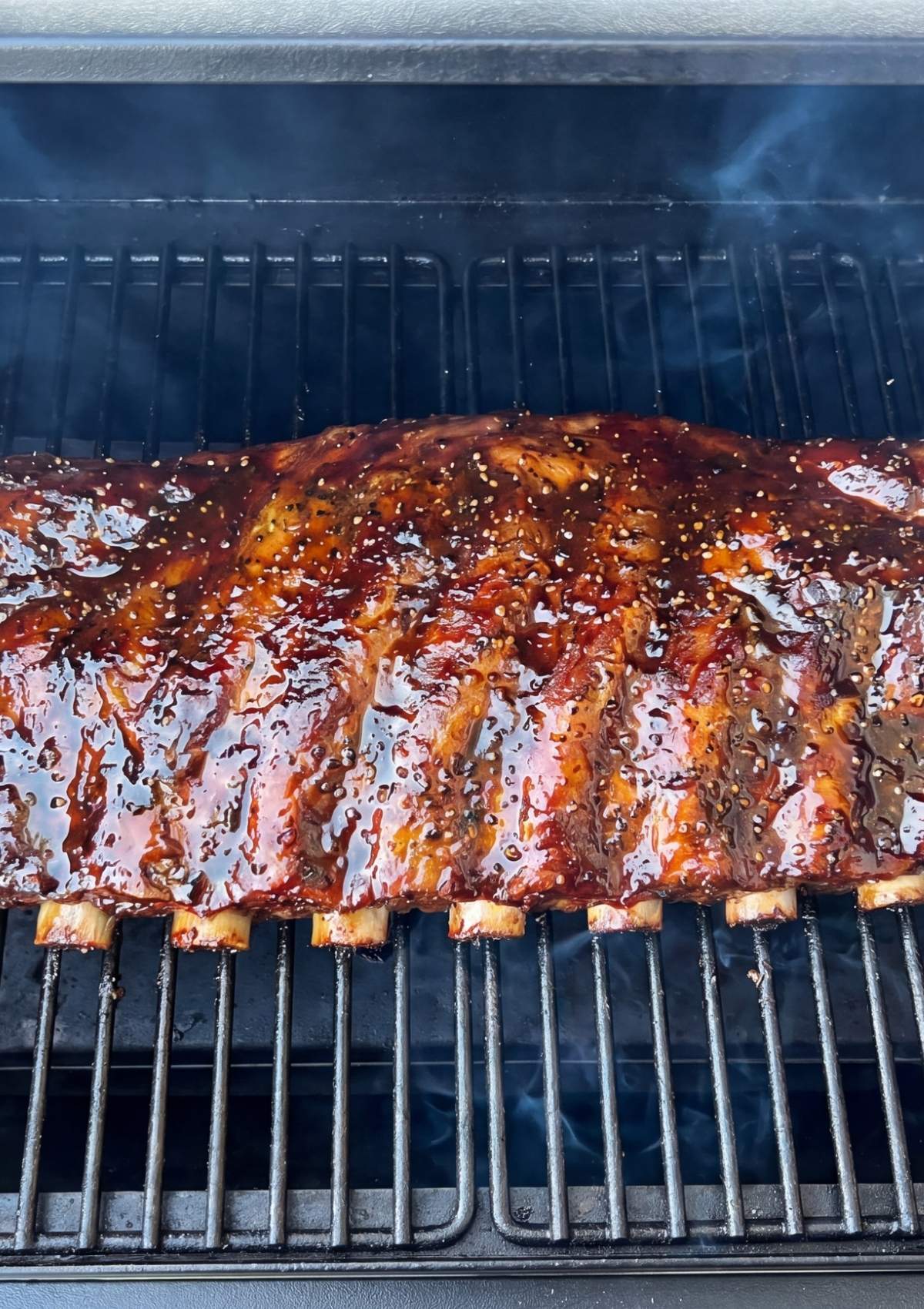
- Remove and let rest for 15 minutes
If you want to experiment with different rib styles and timing methods, this 3 2 1 ribs recipe pellet smoker is a great next step once you’re comfortable with the basics.
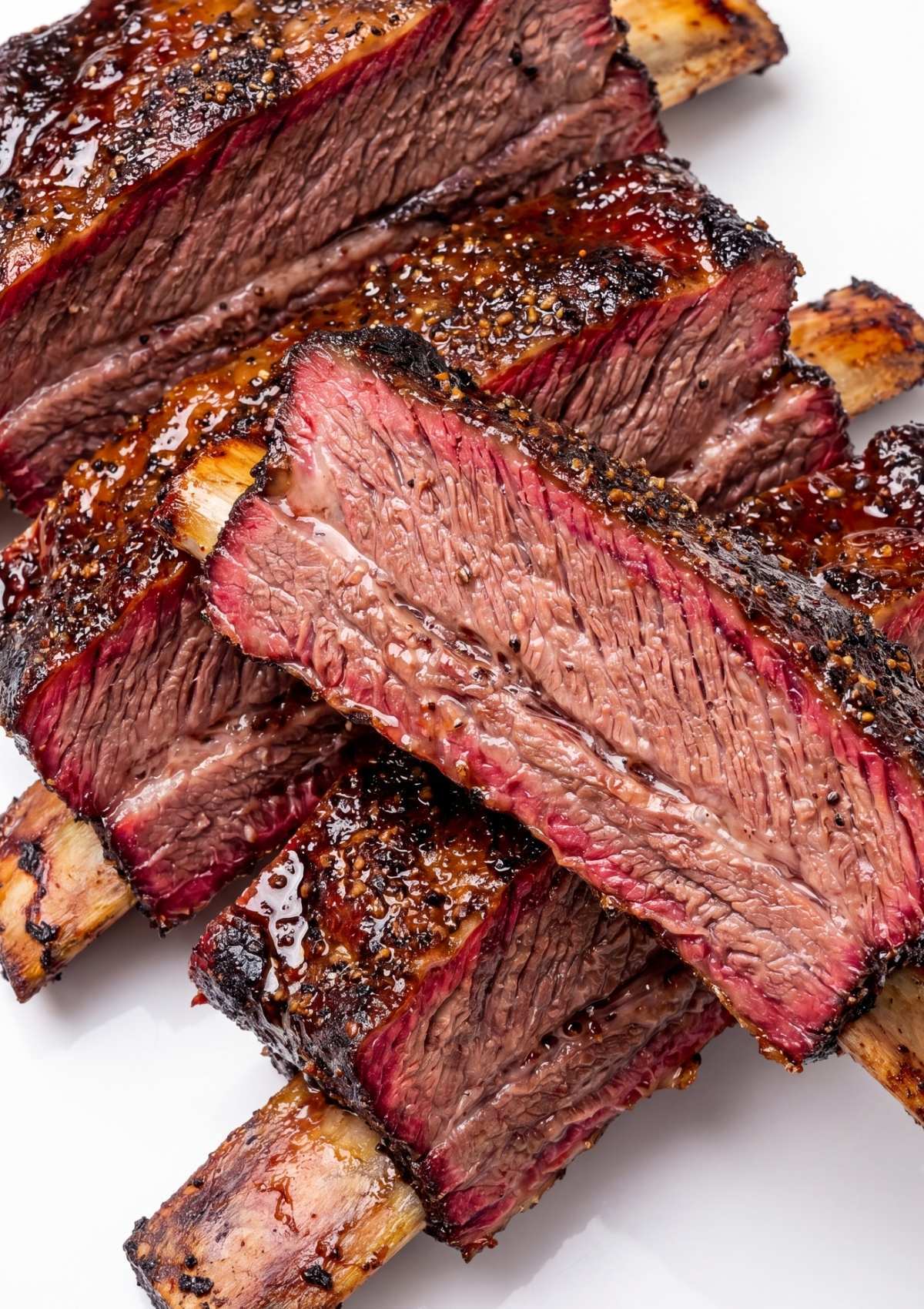
The Secret to Tender, Juicy Ribs
Let’s talk about the real goal here.
Tender ribs aren’t about time alone. They’re about temperature.
- Around 200–205°F, the connective tissue breaks down
- That’s what gives you that soft, juicy texture
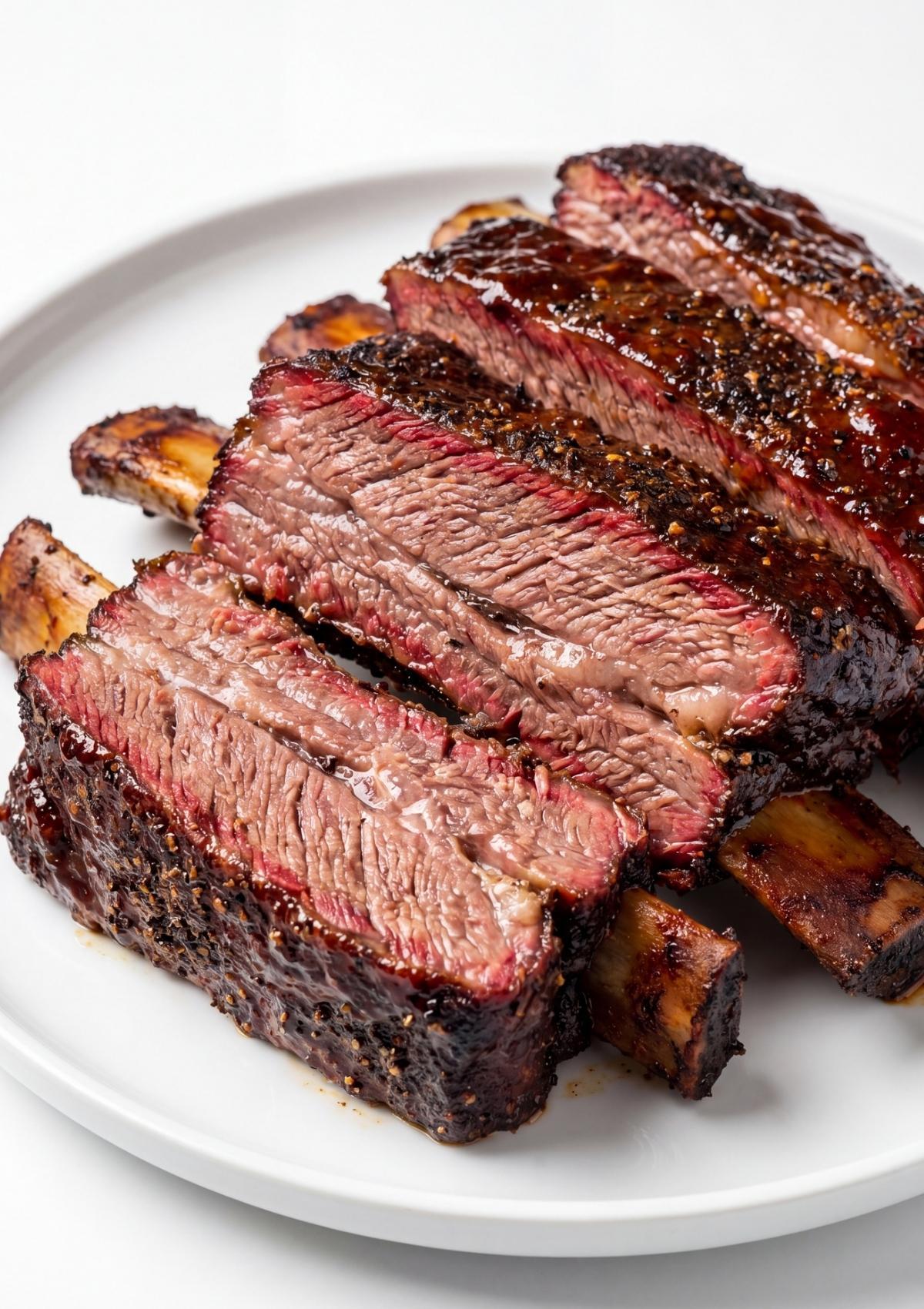
If you pull them too early, they’ll be tough. Let them go long enough, and they’ll be incredible.
Best Wood Pellets for Beef Ribs
Your pellet choice changes the flavor more than you might expect.
My Favorites
- Mesquite: Bold, classic BBQ flavor
- Hickory: Smoky and slightly sweet
- Oak: Balanced and mild
- Cherry or apple: Slight sweetness and great color
There’s no “wrong” choice here, so go with what you enjoy most.
Do You Need BBQ Sauce?
Short answer: not really.
These ribs are packed with flavor on their own.
But if you love sauce:
- Add it during the last hour
- Brush lightly every 20 minutes
- Let it caramelize
You’ll get that sticky, glossy finish that just looks amazing.
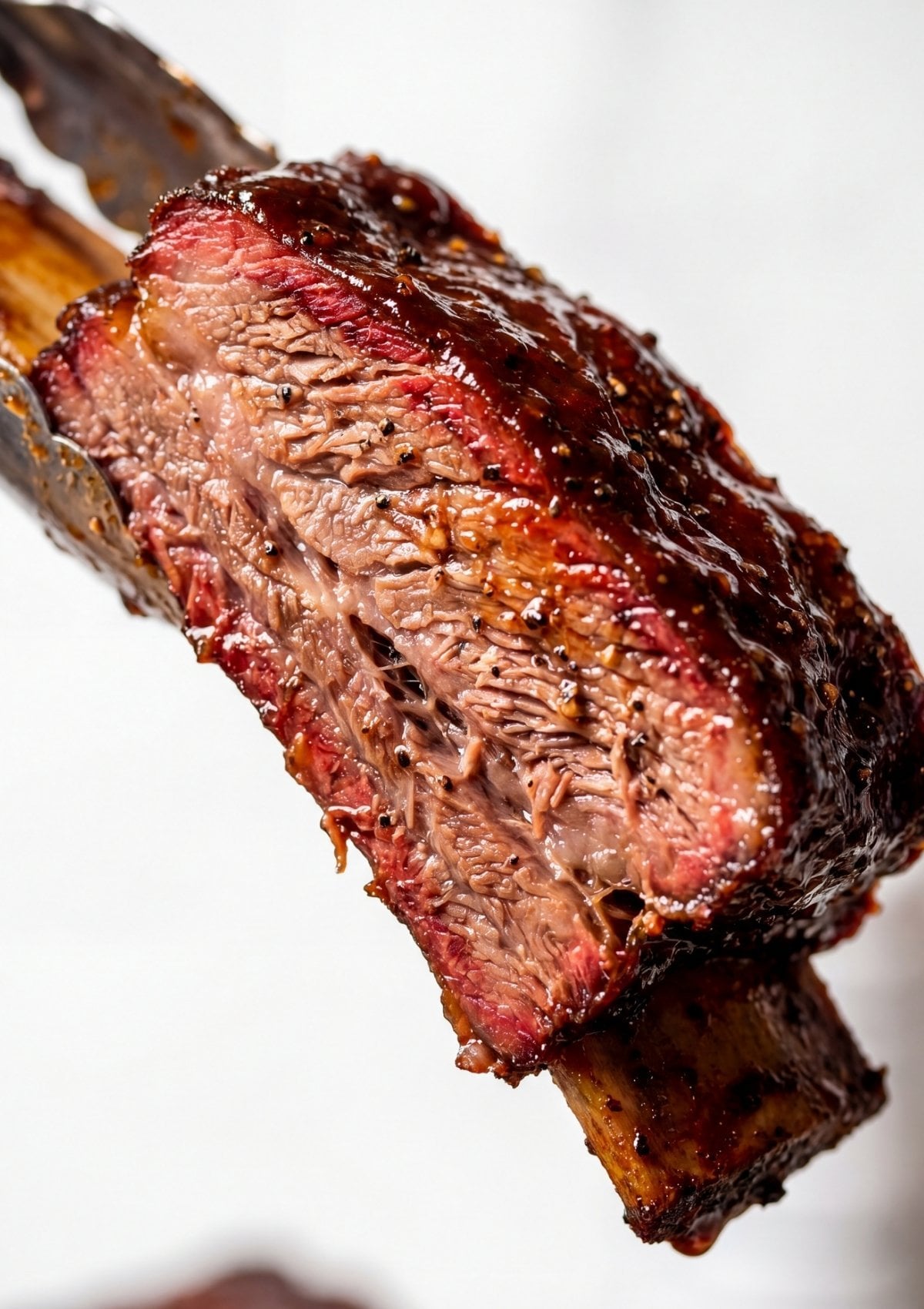
How long does it take to smoke beef ribs at 250°F?
For planning, allow roughly 7–10 hours for a thick plate rack, 6–9 hours for a chuck-rib rack, and 4–6 hours for a smaller back-rib rack at 250°F. Unusually thick, cold or unwrapped racks can take longer.
| Rib cut at 250°F | Approximate cooking window | What can change it |
|---|---|---|
| Beef back-rib rack | 4–6 hours; sometimes longer | Meat coverage, exposed edges and actual grate temperature |
| Chuck short-rib rack | 6–9 hours; sometimes longer | Thickness and whether the rack is intact |
| Thick plate-rib rack, about 4–5 pounds | 7–10 hours; sometimes longer | Thickness, wrapping, weather and smoker performance |
These are broad editorial planning estimates, not results from a controlled comparison. Do not use them as a countdown to guaranteed doneness.
Manufacturer recipes also distinguish the cuts. For example, Traeger’s short-rib recipe gives an 8–10-hour cook at 225°F. That is a different setup, but it illustrates why a short back-rib schedule should not be applied automatically to a heavy rack.
A 225°F cook will generally require more time than the 250°F method used here. Raising the temperature changes the cook; it does not create an exact finish time.
What temperature are smoked beef ribs done?
For barbecue tenderness, many beef ribs finish near 200–205°F, or about 93–96°C. Use that range as a cue to check the meat, not as a universal target.
Probe placement matters. Touching a bone, measuring a thin edge or placing the tip in a fat pocket can give a misleading reading. Check the thickest meat in several locations.
Traeger’s beef back-rib guidance also emphasizes probe resistance alongside temperature.
Food safety and barbecue tenderness are separate questions. FoodSafety.gov lists 145°F with a three-minute rest for beef steaks, roasts and chops. The higher temperatures discussed here serve the texture goal of slow-cooked ribs; they are not a claim that all beef requires 205°F for safety.
Can you make these beef ribs on a Pit Boss pellet grill?
Yes, use the same 250°F indirect-cooking approach on a Pit Boss pellet grill that supports that setting. Follow the instructions for your particular model rather than assuming all Pit Boss controls work the same way.
If the model has an adjustable flame-broiler opening, configure it for indirect cooking according to the manual. Keep the ribs away from direct flame.
For a Pit Boss vertical pellet smoker, leave clearance around the rack and check the actual temperature at the shelf holding the meat. The controller reading may differ from the temperature beside the ribs.
Rib thickness and probe tenderness determine the finish. The brand name alone does not determine the cooking time. These setup notes are general guidance, not a claim of testing on every Pit Boss model.
Should beef ribs use the 3-2-1 method?
Do not automatically apply a fixed 3-2-1 schedule to beef ribs. That schedule is commonly used for pork spare ribs, while beef plate ribs and back ribs have different dimensions and cooking needs.
Use bark development to decide when to wrap and tenderness to decide when to stop. For a separate pork-rib cook, use the 3-2-1 pork ribs guide.
Why are my smoked beef ribs tough or dry?
Tough ribs can need more cooking, but dryness can also come from overcooking, exposed edges or poor meat coverage. Diagnose the texture before deciding to extend the cook.
| Problem | Likely explanation | What to do |
|---|---|---|
| Meat is firm and a probe pushes back | Connective tissue has not softened enough | Continue cooking; protect an already-dark exterior if needed |
| Outside is hard but inside remains tight | Surface is drying faster than the center cooks | Check grate temperature and consider wrapping |
| Meat is dry and stringy | Overcooking or a lean, thin section | Stop cooking; serve with juices or sauce |
| Bark is pale or soft | Early wrapping, too much spritzing or surface moisture | Let the surface develop before wrapping next time |
| Temperature appears stuck | A cooking stall or thermometer issue | Verify placement and grate temperature; avoid repeated lid opening |
| One end finishes early | Uneven rack thickness or a hot spot | Rotate or shield the exposed end |
| Thermometer says 203°F but meat feels tight | Reading is not representative or tenderness is incomplete | Check several areas away from bone |
A smoke ring is not a substitute for measuring temperature or checking tenderness.
What should you serve with smoked beef ribs?
Serve beef ribs with something fresh or tangy, such as coleslaw, pickles or a vinegar-dressed salad. Mac and cheese, cornbread and baked beans are options for a larger barbecue meal.
One 4–5-pound plate rack can serve roughly four people with sides, depending on bone weight, trimming and appetite. A bone is not a standardized serving size.
For another barbecue menu, the pellet smoker pork ribs recipe covers a different rib style.
How to store and reheat leftover beef ribs
Refrigerate leftovers promptly in shallow containers. Keep the refrigerator at 40°F or below. Perishable food should not sit out longer than two hours, or one hour when exposed to temperatures above 90°F. These limits follow FoodSafety.gov’s cooling guidance.
Use refrigerated cooked ribs within 3–4 days. Freeze portions for longer storage; the cold food storage chart gives cooked meat a 2–6-month freezer quality window.
To reheat, place a portion in a covered oven-safe dish with a little broth. Heat in a 325°F oven until the meat reaches 165°F, checking the thickest section. That is the recommended reheating temperature for leftovers. Thaw frozen portions in the refrigerator first.
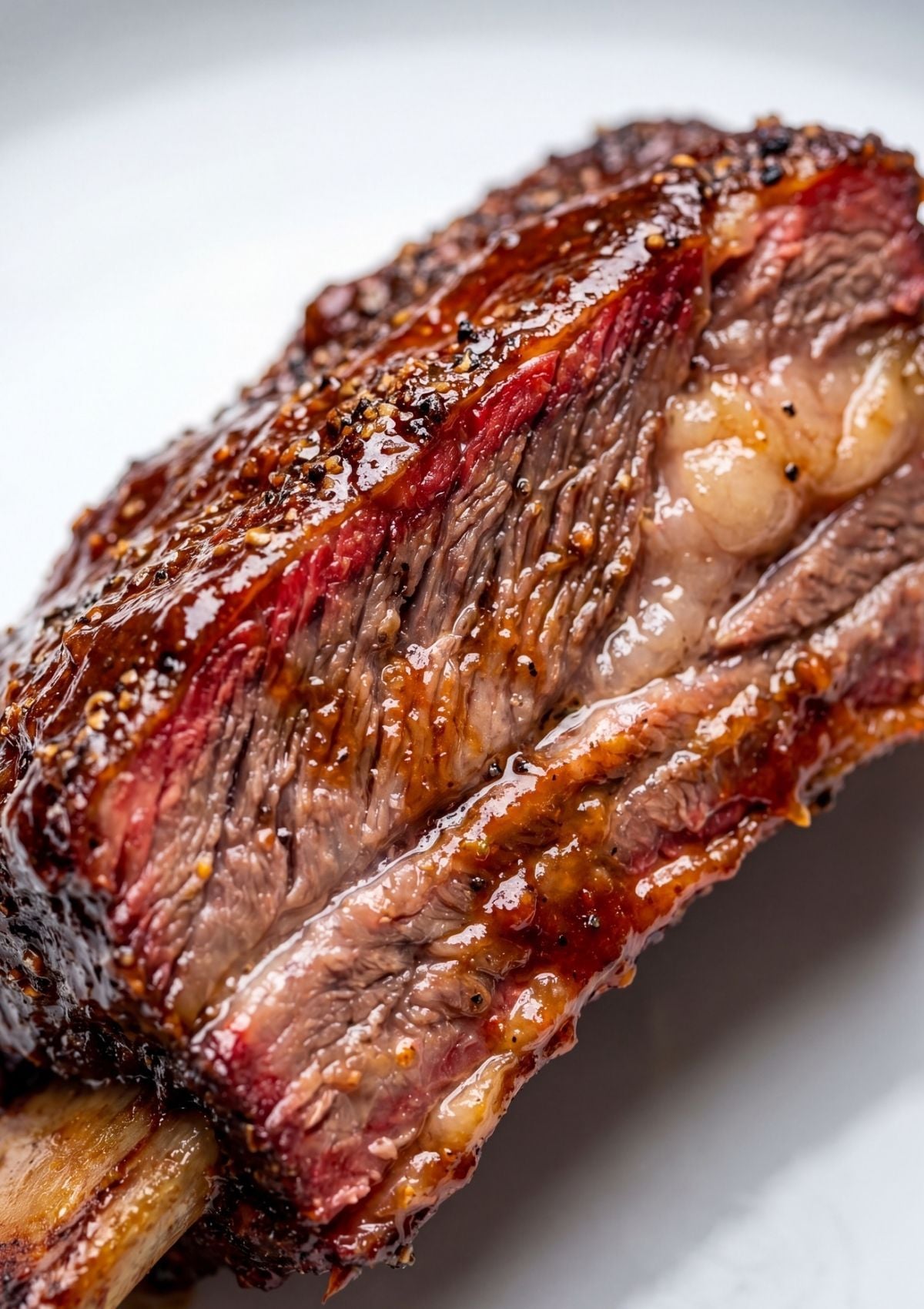
FAQ
How long does it take to smoke beef ribs on a pellet smoker?
Usually around 4 to 6 hours, depending on the size of the ribs. Always go by internal temperature instead of time.
What temperature should beef ribs be done?
They’re ready when they reach about 200 to 205°F. That’s when they become tender.
Do I need to wrap beef ribs?
No, this recipe works perfectly without wrapping. It keeps the process simple and still gives great results.
Can I use a different seasoning?
Absolutely. You can use any dry rub you like or keep it classic with salt, pepper, and garlic.

Beef Ribs Pellet Smoker Recipe
This beef ribs pellet smoker recipe delivers tender, juicy, fall-off-the-bone ribs with deep smoky flavor. Using a simple seasoning and low and slow cooking method, these ribs turn out rich, flavorful, and perfect for any backyard BBQ.
Ingredients
- 1 rack beef ribs
- 1 ½ tablespoons kosher salt
- 1 tablespoon black pepper
- ½ tablespoon garlic powder
- BBQ sauce (optional)
Instructions
- Remove the membrane from the back of the ribs.
- Season both sides generously with salt, pepper, and garlic powder.
- Preheat pellet smoker to 250°F.
- Place ribs bone-side down in the smoker.
- Smoke for 3 to 4 hours without opening the lid often.
- During the last hour, brush BBQ sauce every 20 minutes if using.
- Cook until internal temperature reaches 200 to 205°F.
- Remove from smoker and let rest for 15 minutes.
- Slice and serve.
Notes
Low and slow cooking is key for tender beef ribs. Removing the membrane improves texture and flavor. Use your favorite wood pellets to customize the smoky taste. Let ribs rest before slicing to keep them juicy.
Nutrition Information
Serving Size 1 servingAmount Per Serving Calories 520Total Fat 38gSaturated Fat 15gTrans Fat 0gUnsaturated Fat 20gCholesterol 140mgSodium 700mgCarbohydrates 4gFiber 0gSugar 6gProtein 42g

Leave a Reply