
Julia Child never published a recipe called “Beef Stroganoff.” What she did publish was Sauté de Bœuf à la Parisienne — a French method for quickly cooking beef tenderloin in a cream sauce, found on pages 325–326 of Mastering the Art of French Cooking, Volume 1. It’s delicious, it’s French rather than Russian, and it uses fresh cream instead of sour cream. It’s not stroganoff, but it’s often confused with stroganoff, and the confusion is worth clearing up.
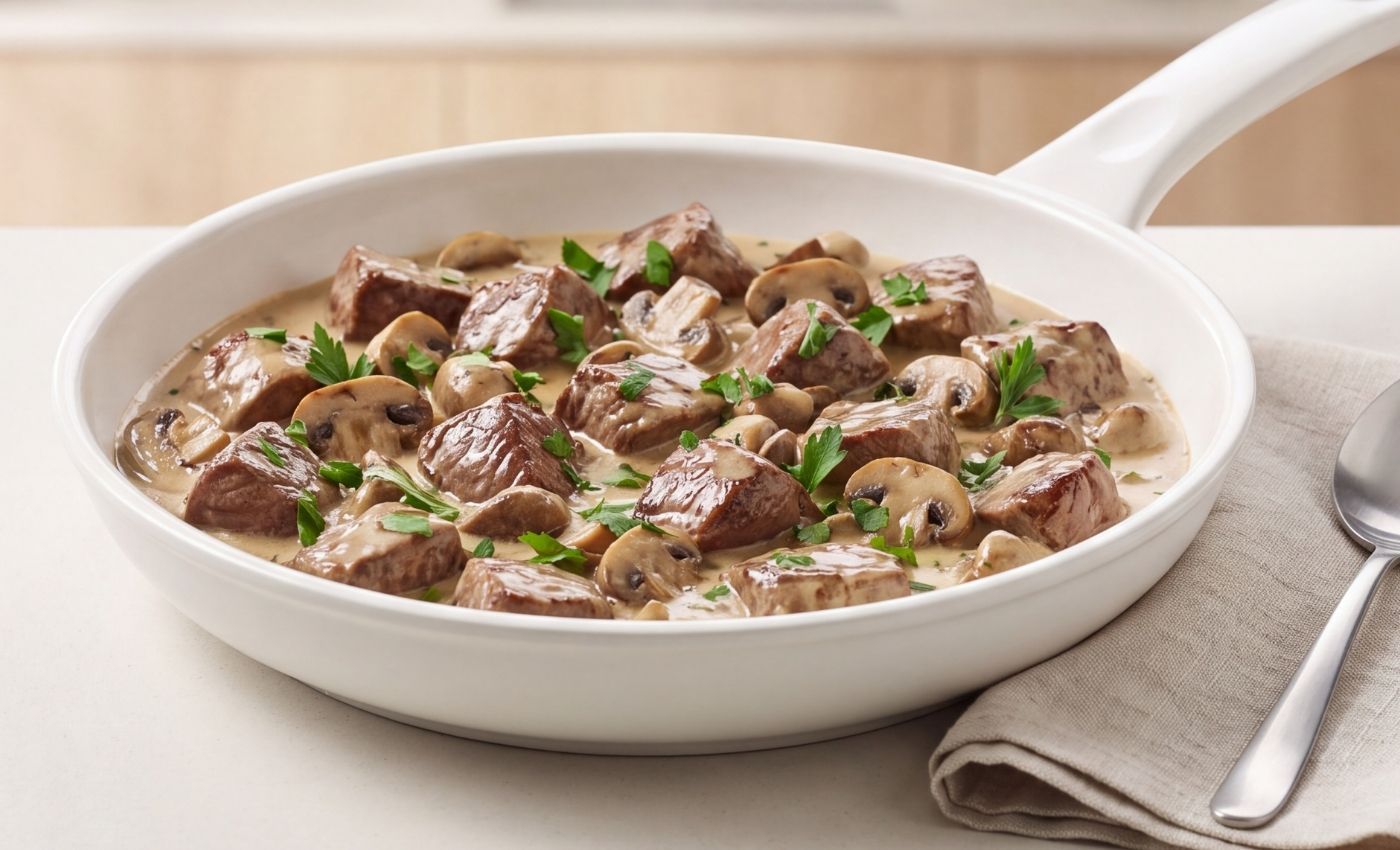
This post is a faithful adaptation of Julia Child’s actual recipe, paired with an explanation of how it’s different from American stroganoff. If you want the saucy, tangy stroganoff most people grew up with, make the classic beef stroganoff recipe. If you want to learn Julia Child’s actual method — a technique-focused dish built for tender beef and fresh cream — this is it.
Jump to:
The Misinformation Problem
Search for “Julia Child beef stroganoff recipe” and you’ll find dozens of recipes that claim Julia Child invented or popularized beef stroganoff. They include invented quotes, fabricated techniques, and recipes that look nothing like what she actually published. This is simply not true.
Julia Child’s actual beef dish — the one she cared about enough to include in her seminal cookbook — is Sauté de Bœuf à la Parisienne. It appears in Mastering the Art of French Cooking, Volume 1 (Alfred A. Knopf, 1961), pages 325–326. It’s a French dish, not Russian. It uses tenderloin instead of less-tender cuts. It uses fresh heavy cream instead of sour cream. And it’s genuinely worth knowing how to cook.
By writing this post, I’m hoping to shift some of that search real estate back to the actual recipe instead of the invented versions.
How Julia Child’s Method Is Different
The technique Julia Child teaches in Mastering the Art of French Cooking is all about precision, control, and letting the beef shine. Here are the differences from American stroganoff:
- Cut: Beef tenderloin (the most tender cut), not sirloin or chuck.
- Sauce base: Fresh heavy cream, not sour cream. No tangy note.
- Flavor profile: Subtle, elegant, cream-forward. Less mustard, less Worcestershire.
- Technique: Fast and hot, with close attention to temperature. Not a set-it-and-forget-it dish.
- Garnish: Simple — parsley, maybe a touch of lemon juice. No heavy spices.
- Philosophy: Let the beef and cream speak. Don’t hide them in sauce.
Both are valid dishes. They’re just built on completely different ideas about what stroganoff should be.

Sauté de Bœuf à la Parisienne (Julia Child's Method)
Julia Child's French method for quickly cooking beef tenderloin in a fresh cream sauce, adapted from Mastering the Art of French Cooking.
Ingredients
For the beef:
- 1 ½ to 2 lb beef tenderloin, cut into 1-inch cubes
- 1 teaspoon kosher salt
- ½ teaspoon freshly ground black pepper
- 3 tablespoon unsalted butter (divided: 2 tablespoon for beef, 1 tablespoon for sauce)
- 2 tablespoon Cognac or dry white wine (optional)
- For the sauce:
- 8 oz cremini mushrooms, sliced
- 2 shallots, minced
- 1 tablespoon Dijon mustard
- 1 cup low-sodium beef broth
- 1 cup heavy cream, cold
- 1 tablespoon fresh lemon juice
- 2 tablespoon fresh flat-leaf parsley, chopped
- Salt and white pepper to taste
To serve:
- 12 oz wide egg noodles or 2 cups mashed potatoes
- 1 tablespoon butter, for tossing noodles
Instructions
- Prep the Beef: Cut tenderloin into 1-inch cubes, trim fat, pat dry, and season with salt and pepper right before cooking.
- Sear the Beef: Heat 2 tablespoons of butter in a large skillet over high heat until foaming. Add beef in a single layer and sear for 2 to 3 minutes until golden brown on all sides (should still be rare inside). Transfer to a plate.
- Build the Base: Add mushrooms to the same pan over medium-high heat and cook 4 to 5 minutes. Add shallots and cook 2 minutes until softened.
- Deglaze: Pour in Cognac or wine (if using) and let reduce by half, scraping up browned bits.
- Build the Sauce: Add beef broth and Dijon mustard. Bring to a simmer and cook 3 to 4 minutes until slightly reduced.
- Add the Cream: Take the pan off the heat and pour in cold heavy cream, stirring until combined. Stir in lemon juice.
- Finish and Serve: Return the beef and resting juices to the pan, warming through over low heat for 2 to 3 minutes. Adjust salt and white pepper, stir in parsley, and serve over egg noodles or mashed potatoes.
Notes
Nutrition Information
Yield 6 Serving Size 1Amount Per Serving Calories 341Total Fat 27gSaturated Fat 15gUnsaturated Fat 12gCholesterol 74mgSodium 800mgCarbohydrates 16gFiber 2gSugar 4gProtein 8g
Nutritional data is estimated
Why This Approach Makes Sense
Julia Child’s method is built around three principles: precision, restraint, and technique. You’re not trying to hide tough beef under a thick sauce. You’re working with tender beef and letting its flavor shine through a simple cream sauce. Every ingredient has a purpose, and nothing is wasted.
This is the approach you’d learn in a French kitchen — technique first, flavor second. It’s less forgiving than American stroganoff (which relies on time and simmering to develop flavor), but once you understand the technique, it’s actually faster and more elegant.
Serving Suggestions
Wide egg noodles are the traditional pairing, as they are with stroganoff. The ruffled edges catch the cream sauce beautifully.
Mashed potatoes are equally good and actually more French in approach — they absorb the sauce and create a plate that’s silkier and more unified.
With a vegetable: Serve alongside steamed asparagus (classic French pairing), green beans, or roasted mushrooms. Keep vegetables simple — this dish is the star.
How This Is Different From the Classic American Stroganoff
| Julia Child’s Sauté de Bœuf à la Parisienne | American Stroganoff | |
|---|---|---|
| Beef cut | Tenderloin (most tender) | Sirloin, chuck, or ground beef |
| Cooking time | 30–40 minutes, hands-on | 30–60 minutes depending on version |
| Sauce base | Fresh heavy cream | Sour cream or cream of mushroom soup |
| Flavor profile | Subtle, cream-forward, elegant | Tangy, savory, comfort-food |
| Spice/seasoning | Light hand — mustard, lemon, parsley | Heavier — mustard, Worcestershire, paprika |
| Technique focus | Searing and temperature control | Building flavors through browning and simmering |
| Philosophy | French: let the beef and cream shine | American: comfort food, technique-forgiving |
Both are good. They’re just answering different questions about what beef in cream sauce should be.
Storage and Reheating
Refrigerate leftovers: in an airtight container up to 3 days. Store the noodles separately — they absorb sauce.
Reheating: stovetop over low heat with a splash of cream or broth. Stir often. This dish is less resilient to overheating than sour cream stroganoff — the fresh cream can break if you’re not gentle.
Freezing: not recommended. Heavy cream freezes and separates worse than sour cream. Enjoy fresh or refrigerated.
On Beef Tenderloin Technique
This recipe is an introduction to cooking with tenderloin — a cut many home cooks avoid because it’s expensive and they’re unsure of the technique. Julia Child builds confidence in the method here. If you want to go deeper into tenderloin cooking, see the wagyu beef tenderloin recipe, which uses the same searing and temperature-control principles on an even more premium cut.
Frequently Asked Questions
Did Julia Child actually publish a beef stroganoff recipe?
No. She published Sauté de Bœuf à la Parisienne in Mastering the Art of French Cooking, Volume 1 (pages 325–326). It’s a French cream sauce dish, not stroganoff. Many websites claim she invented stroganoff, but this is fabricated.
What’s the difference between Julia Child’s recipe and American stroganoff?
Julia’s uses tender beef tenderloin and fresh heavy cream. American stroganoff uses less-tender cuts (sirloin, chuck, ground beef) and sour cream. Julia’s is French and elegant; American stroganoff is comfort food. Both are valid — they’re just different dishes.
Do I have to use beef tenderloin?
For this recipe, yes. Julia Child’s technique is built around the speed and tenderness of tenderloin. If you use a tougher cut, the quick searing won’t work and you’ll end up with tough beef. Use the classic stroganoff recipe for tougher cuts instead.
Can I use sour cream instead of heavy cream?
Technically yes, but you’ll be making American stroganoff, not Julia Child’s recipe. Sour cream will need tempering (taking the pan off heat, whisking together cold sour cream with hot sauce before combining). Heavy cream is more forgiving and is what Julia Child specified for a reason.
Why is lemon juice in the sauce?
Heavy cream is rich and can taste flat without acidity to brighten it. Lemon juice adds freshness and prevents the sauce from tasting heavy or cloying. It’s a small amount — just a tablespoon — but it transforms the dish.
Can I skip the Cognac?
Yes, the recipe works without it. Cognac (or dry white wine) adds a subtle depth and complexity, but it’s not essential. If you do use it, let it reduce by about half before adding the broth.
How do I know when the beef is done?
It should still be rare or medium-rare when you take it out of the pan. It finishes cooking when it warms through in the sauce — about 2 to 3 minutes. Tenderloin is forgiving because it doesn’t get tough if slightly overcooked, but the goal is to keep it pink inside for the best texture.
Is this good for entertaining?
Yes, with one caveat: most of the cooking happens at the stove with your full attention (the searing and sauce building). You can prep all the ingredients ahead, but the actual cooking should happen just before serving. It’s not a make-ahead, keep-warm-in-the-oven kind of dish.
For the full explanation of sour cream techniques and troubleshooting, see the beef stroganoff sauce guide. Or browse all classic beef dinners.

Leave a Reply