
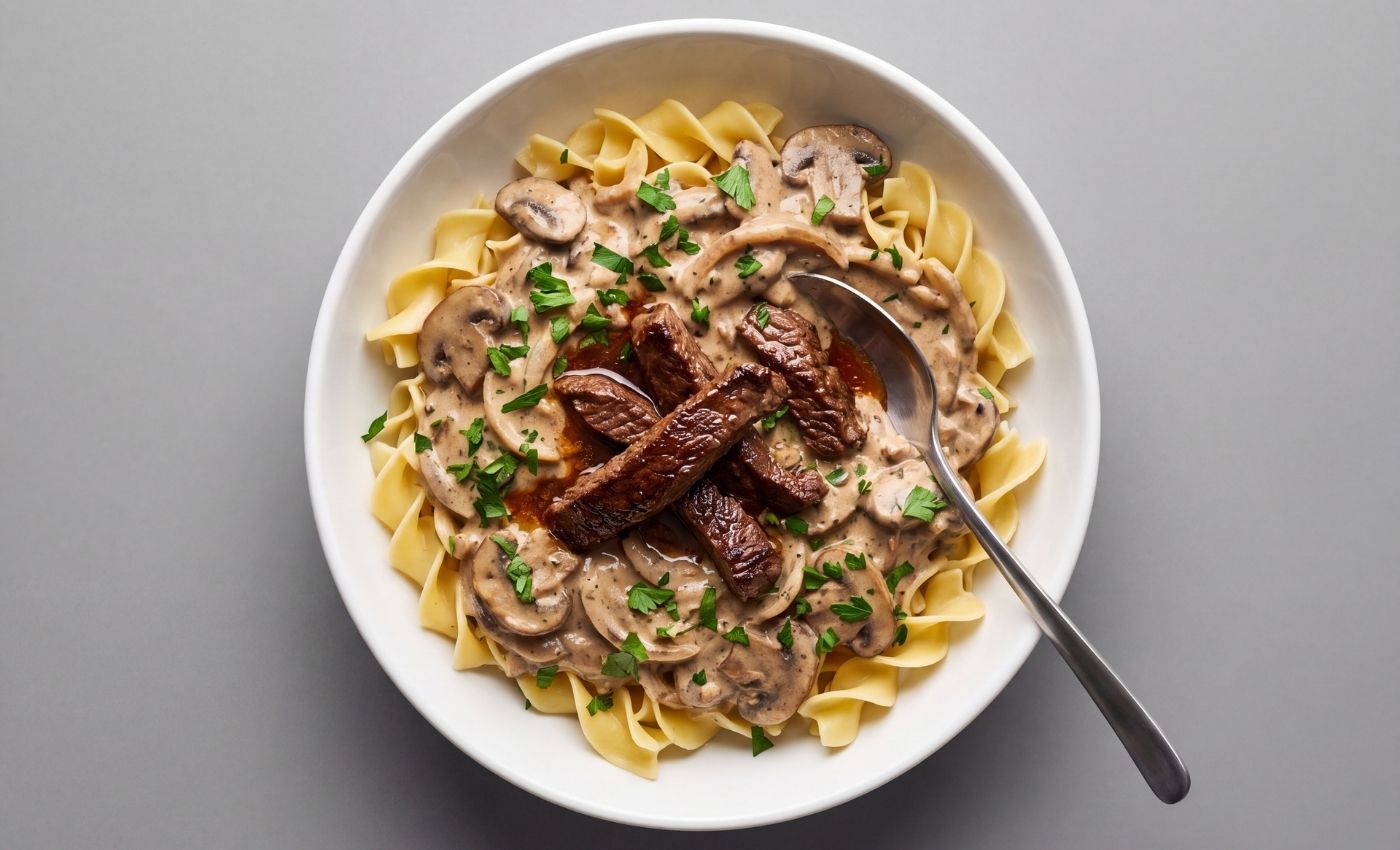
Beef stroganoff is one of those dinners that gets ruined by two things: overcooked beef and a broken sauce. Fix both and you get what this dish is supposed to be — strips of beef still pink in the middle, mushrooms browned rather than steamed, and a tangy, glossy sour cream sauce that clings to egg noodles instead of sliding off them.
This is the classic, from-scratch version. No canned soup, no packet of gravy mix, no slow cooker. It takes about 40 minutes, and most of that is prep. Below I’ve broken down the cut of beef to buy, the searing method that keeps it tender, and the one temperature rule that stops sour cream from splitting every single time.
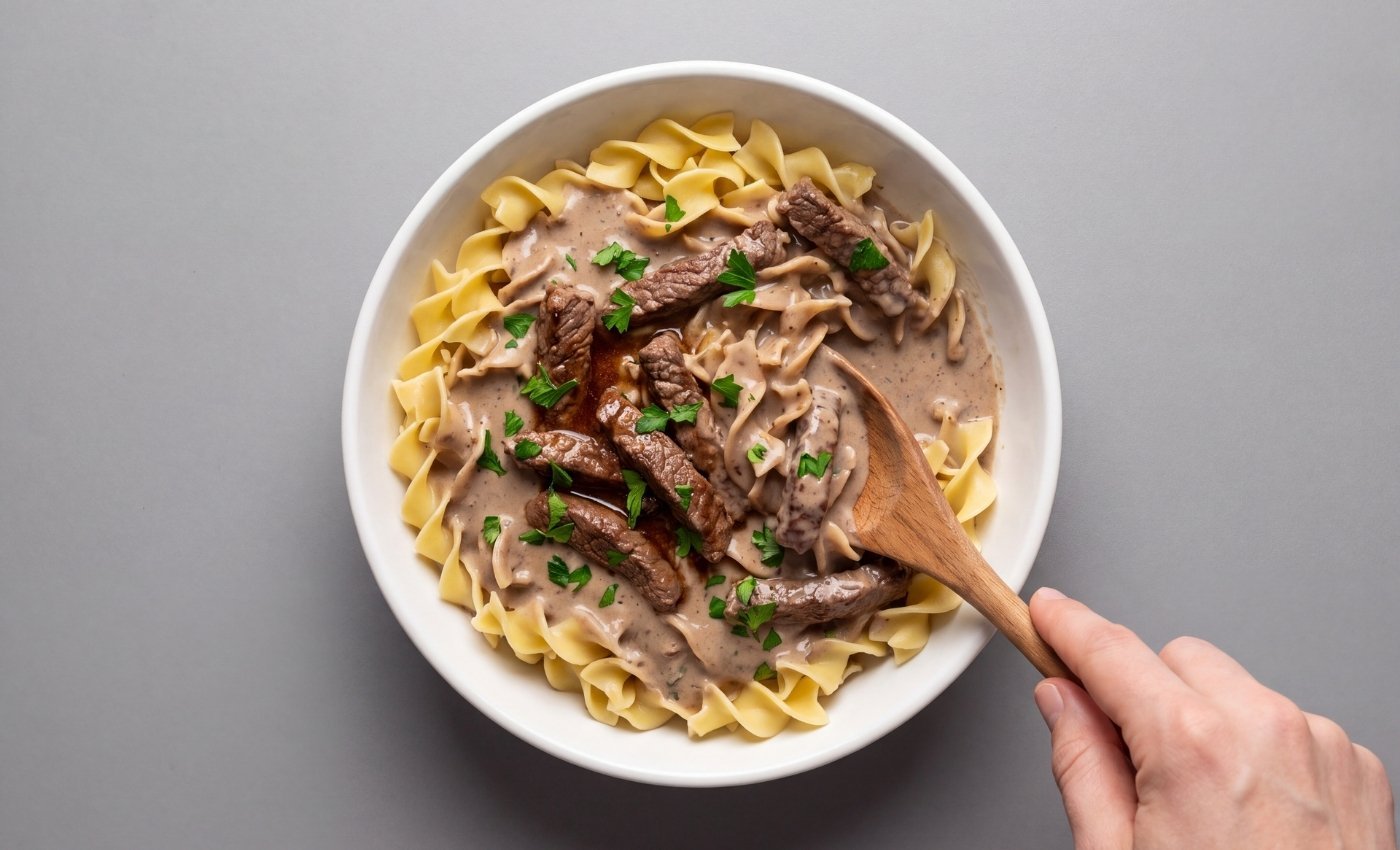
What Is Beef Stroganoff?
Beef stroganoff is a Russian dish that appeared in the 19th century, made from sautéed strips of beef in a sauce built on mustard and smetana — a thick, high-fat Russian sour cream. It’s named after the Stroganov family, a Russian noble house, following the old convention of naming a dish after the household it was created for.
The version most people in the US grew up with drifted a long way from the original. Mushrooms weren’t in the earliest recipes at all, and neither were egg noodles — that’s an American addition from the mid-20th century. What survived the journey is the core idea: quickly cooked beef, a mustard-sharpened sauce, and sour cream stirred in at the very end.
This recipe keeps the mustard and the sour cream, adds the mushrooms most people now expect, and serves it the way it’s actually eaten in American kitchens. If you want the French cousin of the dish instead — seared tenderloin in fresh cream, no sour cream at all — that’s Julia Child’s version, and it’s a genuinely different dinner.
The Best Cut of Beef for Stroganoff
The cooking method here is fast and hot, which rules out anything that needs time to break down. You want a tender cut that’s happy to be seared for 90 seconds and then left alone.
- Top sirloin — the best balance of flavor, tenderness, and price. This is what I use most often.
- Beef tenderloin — the most tender option and the most expensive. Wonderful, but slightly less beefy in flavor.
- Ribeye — excellent flavor and marbling. Trim the heavy fat seams before slicing or the sauce turns greasy.
- Flank or skirt — workable if you slice them very thin and strictly against the grain, but less forgiving.
Avoid chuck, round, and stew meat. Those cuts are full of connective tissue that only softens after an hour or more of moist cooking. Seared for two minutes, they come out tough. If chuck is what you have, don’t force it into this recipe — cook it low and slow instead with the slow cooker beef stroganoff method, which is built for exactly that cut.
How to Slice It
Firm the beef in the freezer for 20 to 30 minutes first. Cold meat is far easier to cut cleanly. Then find the direction the muscle fibers run and cut across them, not with them, into strips about ¼ inch thick and 2 inches long. Slicing against the grain shortens the fibers, and that’s most of what makes a strip of beef feel tender in your mouth.

Classic Beef Stroganoff From Scratch
Strips of beef still pink in the middle, mushrooms browned rather than steamed, and a tangy, glossy sour cream sauce that clings to egg noodles.
Ingredients
For the beef:
- 1 ½ lb top sirloin, sliced ¼-inch thick against the grain
- 1 teaspoon kosher salt
- ½ teaspoon freshly ground black pepper
- 2 tablespoon neutral oil (avocado, canola, or grapeseed)
For the sauce:
- 3 tablespoon unsalted butter
- 10 oz cremini mushrooms, sliced ¼-inch thick
- 1 medium yellow onion, finely diced
- 3 cloves garlic, minced
- 3 tablespoon all-purpose flour
- 2 cups low-sodium beef broth
- 1 tablespoon Dijon mustard
- 2 teaspoon Worcestershire sauce
- 1 teaspoon sweet paprika
- 1 cup full-fat sour cream, at room temperature
- 2 tablespoon fresh flat-leaf parsley, chopped
To serve:
- 12 oz wide egg noodles
- 1 tablespoon butter, for tossing the noodles
Instructions
- Dry and Season the Beef: Pat the sliced beef thoroughly dry with paper towels. Season with the salt and pepper right before cooking.
- Sear in Batches: Heat the oil in a large skillet over high heat until it just begins to shimmer. Add the beef in a single layer, working in batches. Sear undisturbed for about 60 to 90 seconds, flip, and give it another 30 seconds (it should still be pink inside). Transfer to a plate.
- Brown the Mushrooms: Lower the heat to medium-high and melt 2 tablespoons of butter in the same pan. Add mushrooms and leave alone for 3 to 4 minutes before stirring, cooking until deeply golden (about 7 minutes total).
- Build the Base: Add the remaining tablespoon of butter and diced onion. Cook 4 to 5 minutes until softened, then stir in garlic for 30 seconds. Sprinkle flour over everything and stir constantly for a full minute.
- Deglaze and Simmer: Pour in beef broth slowly, whisking to keep flour from lumping, and scrape up browned bits. Stir in Dijon, Worcestershire, and paprika. Bring to a gentle simmer and cook 5 to 8 minutes until thickened.
- Temper the Sour Cream: Take the pan off the heat and let sit for 2 minutes. Scoop about half a cup of hot sauce into a bowl with the sour cream and whisk together. Pour that mixture back into the pan and stir until smooth.
- Finish: Return the beef and its resting juices to the pan. Warm through over low heat for 2 to 3 minutes (do not let it boil). Taste, adjust salt, stir in parsley, and serve over buttered egg noodles.
Notes
Nutrition Information
Yield 4 Serving Size 1Amount Per Serving Calories 519Total Fat 34gSaturated Fat 14gUnsaturated Fat 20gCholesterol 103mgSodium 1186mgCarbohydrates 41gFiber 3gSugar 5gProtein 17g
Nutritional data is estimated
How to Make Beef Stroganoff
1. Dry and Season the Beef
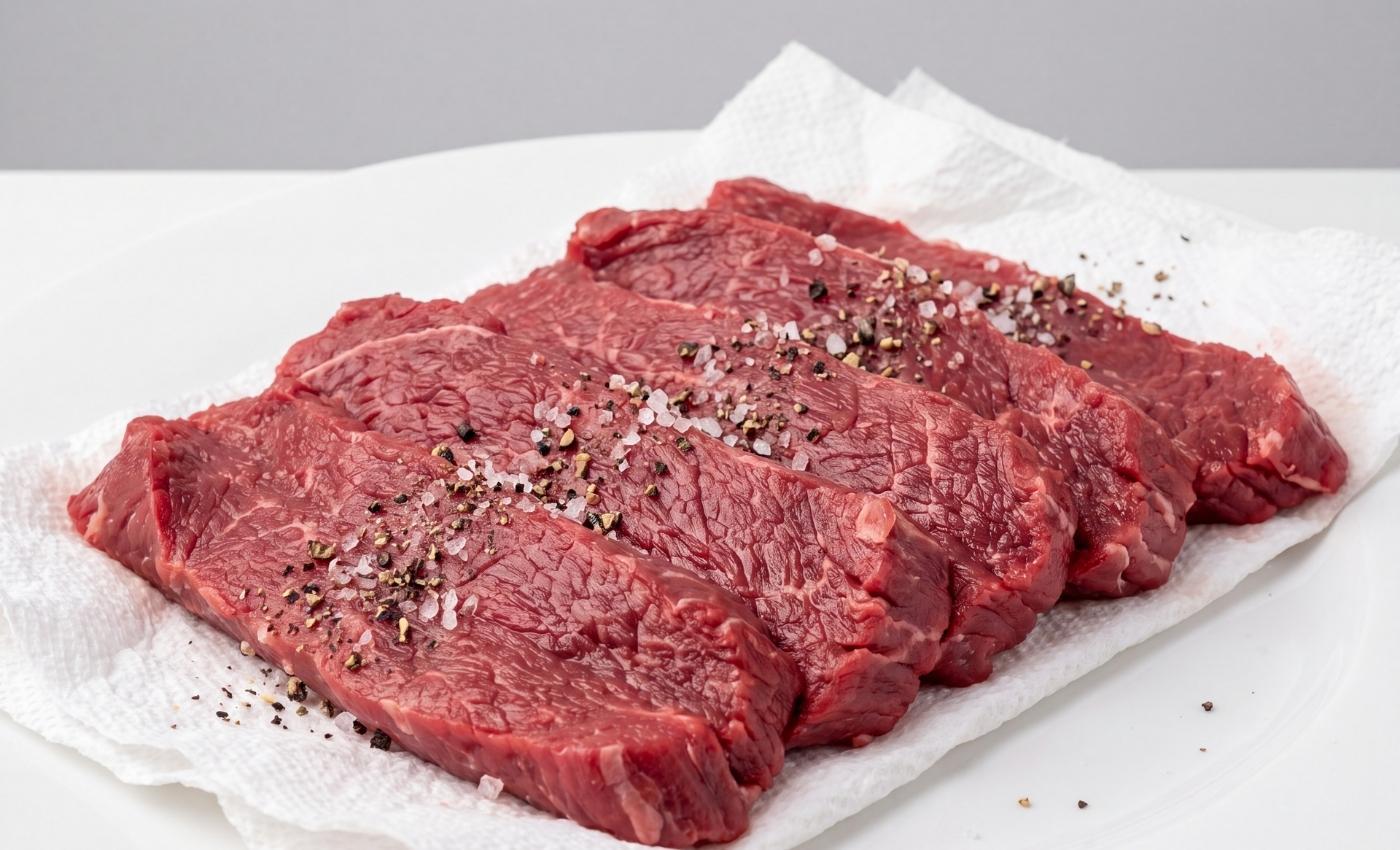
Pat the sliced beef thoroughly dry with paper towels — this matters more than almost anything else in the recipe. Wet meat steams instead of searing, and steamed beef never develops the browned crust that flavors the whole sauce. Season with the salt and pepper right before cooking.
2. Sear in Batches
Heat the oil in a large skillet over high heat until it just begins to shimmer. Add the beef in a single layer with space between the pieces, working in two or three batches. Sear undisturbed for about 60 to 90 seconds, flip, and give it another 30 seconds. It should still be pink inside — it finishes cooking in the sauce later. Transfer to a plate and leave any accumulated juices there; they go back in at the end.
Crowding the pan is the single most common mistake here. Too much meat at once drops the pan temperature, moisture pools, and you end up with gray boiled beef. Two extra minutes of batching is worth it.
3. Brown the Mushrooms
Lower the heat to medium-high and melt 2 tablespoons of the butter in the same pan. Add the mushrooms in one layer and leave them alone for 3 to 4 minutes before stirring. They’ll release liquid, then reabsorb it and start to brown. Cook until they’re deeply golden, about 7 minutes total. Don’t salt them at the start — it draws water out early and delays browning.
4. Build the Base
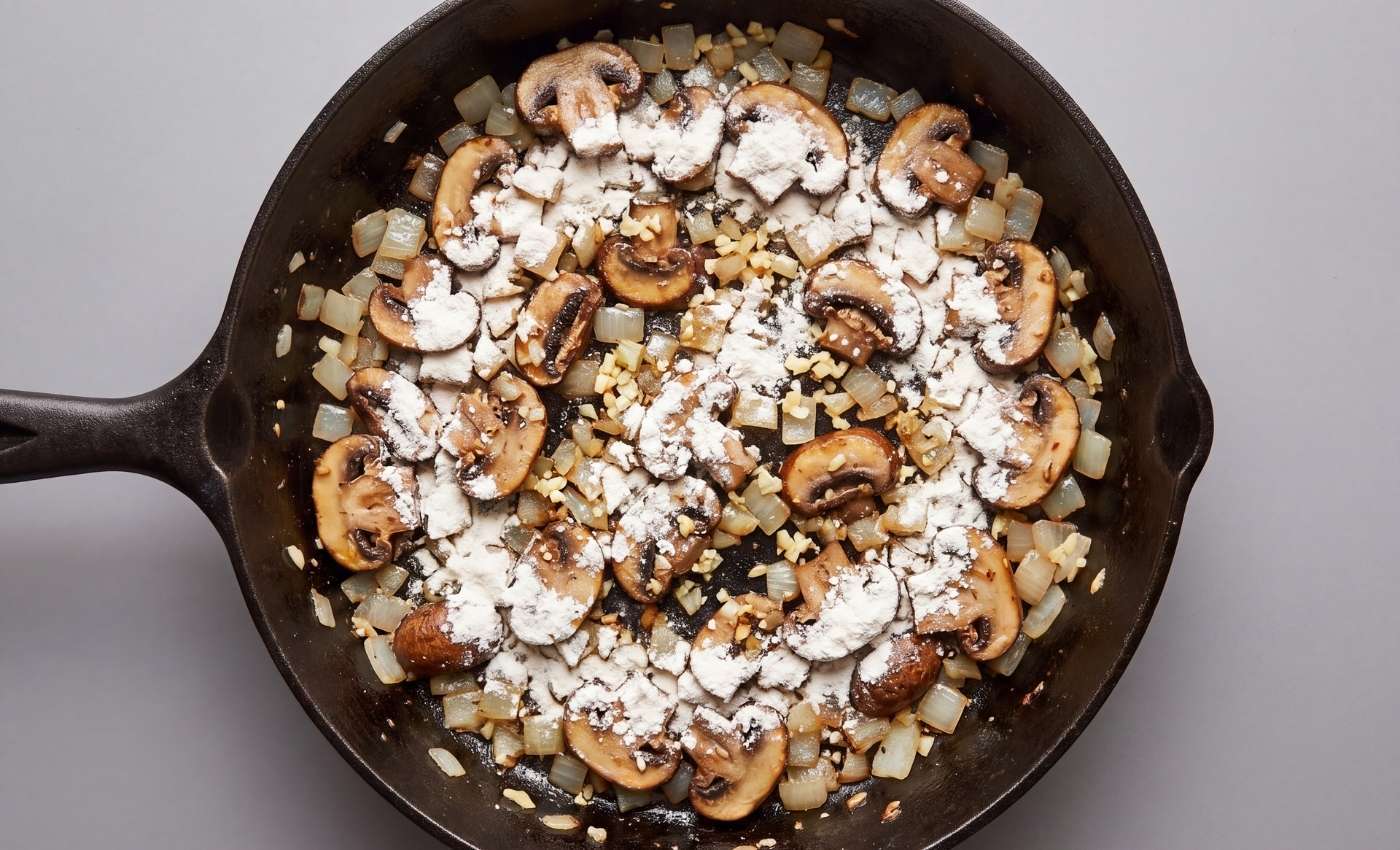
Add the remaining tablespoon of butter and the diced onion. Cook 4 to 5 minutes until softened and translucent, then stir in the garlic and cook 30 seconds more, just until fragrant. Sprinkle the flour over everything and stir constantly for a full minute — this cooks out the raw flour taste and is what will thicken your sauce.
5. Deglaze and Simmer
Pour in the beef broth slowly, whisking as you go to keep the flour from lumping, and scrape up every browned bit stuck to the bottom of the pan. That fond is concentrated flavor. Stir in the Dijon, Worcestershire, and paprika. Bring to a gentle simmer and cook 5 to 8 minutes, until the sauce coats the back of a spoon.
6. Temper the Sour Cream
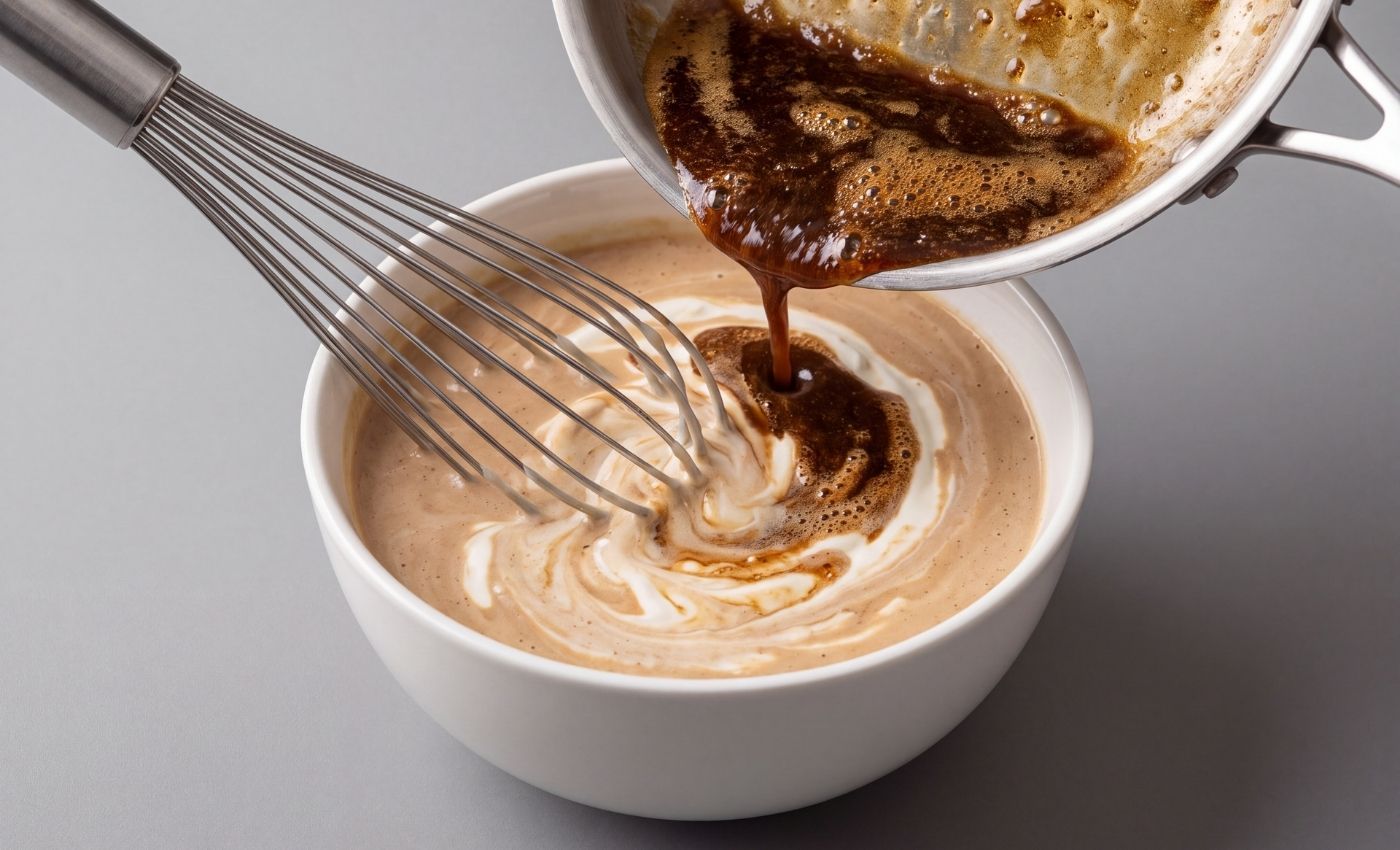
Take the pan off the heat and let it sit for 2 minutes. Then scoop about half a cup of the hot sauce into a bowl with the sour cream and whisk them together. Pour that mixture back into the pan and stir until smooth.
This step is the whole game, and I’ve written it up in detail in the beef stroganoff sauce guide if you want the full explanation of why it works.
7. Finish
Return the beef and its resting juices to the pan. Warm through over low heat for 2 to 3 minutes — do not let it boil. Taste, adjust the salt, and stir in the parsley. Serve over buttered egg noodles.
The Secret to a Sauce That Never Curdles
Sour cream splits for one reason: heat shock. The proteins in dairy tighten and clump when they hit a temperature that’s too high too fast, and once they’ve separated into grainy curds and watery whey, you can’t put them back together.
Three rules prevent it completely:
- Room temperature sour cream. Pull it out of the fridge when you start prepping. Cold dairy hitting a hot pan is the fastest route to a broken sauce.
- Temper it first. Whisking a little hot sauce into the sour cream before it goes in the pan raises its temperature gradually instead of all at once.
- Never boil after it’s added. Once the sour cream is in, the sauce should stay below a simmer. Gentle steam, no bubbles.
If it does split, all is not lost — pull the pan off the heat immediately and whisk in a tablespoon of cold heavy cream. It won’t be perfect, but it’s usually recoverable.
What to Serve With Beef Stroganoff
Wide egg noodles are the standard and the best choice — the ruffled edges hold sauce better than any other shape. Cook them in well-salted water, drain, and toss with a tablespoon of butter so they don’t clump while the sauce finishes.
Other options that work:
- Mashed potatoes — closer to how it’s often served in Russia
- Steamed white rice — soaks up sauce well, lighter than noodles
- Buttered kasha or barley — nuttier, more traditional
For a vegetable, keep it sharp to cut the richness: quick-pickled cucumbers, steamed green beans with lemon, or a simple dill and cucumber salad. Skip anything creamy — you already have plenty of that on the plate.
Variations Worth Making
Once you’ve made the classic version, these are the ones I go back to:
- Ground beef version. Faster, cheaper, and genuinely good — no slicing, no searing in batches. Full method in ground beef stroganoff.
- 30-minute weeknight version. A tightened-up stovetop method that cuts the mushroom browning time and skips the roux. See easy beef stroganoff.
- Pressure cooker version. Best if you’re starting with a tougher cut. The timing is in Instant Pot beef stroganoff.
- Canned soup shortcut. The pantry version many people grew up with, using cream of mushroom soup in place of the from-scratch sauce.
- Add a splash of brandy or dry white wine after the mushrooms, before the flour. Cook it down almost completely. Adds real depth.
Make Ahead, Storage, and Reheating
Make ahead: Prepare the sauce through step 5, cool, and refrigerate up to 2 days. On the night, reheat gently, add the sour cream and the freshly seared beef, and serve.
Storing leftovers: Refrigerate in an airtight container up to 3 days. Store the noodles separately if you can — they absorb sauce overnight and turn mushy.
Reheating: Low heat on the stovetop, with a splash of broth or milk to loosen the sauce. Stir often and stop before it simmers. The microwave works if you go in 30-second bursts at half power, but it’s easy to overheat and split the sauce.
Freezing: I don’t recommend it. Sour cream sauces separate badly on thawing. If you must, freeze the sauce base before the sour cream goes in, then finish it fresh.
Common Mistakes
- Using stew meat. Chuck and round need an hour of moist heat, not two minutes of searing.
- Skipping the paper towel. Wet beef steams. Dry it properly.
- Crowding the pan. Sear in batches even though it’s annoying.
- Adding sour cream over heat. Off the burner, tempered, always.
- Under-seasoning the sauce. Sour cream mutes salt. Taste and adjust after it goes in, not before.
- Overcooking the beef in the sauce. It’s already cooked. Two or three minutes to warm through is all it needs.
Frequently Asked Questions
What is the best cut of beef for stroganoff?
Top sirloin is the best all-around choice — tender enough for fast searing, beefy in flavor, and reasonably priced. Beef tenderloin is more tender but costs considerably more, and ribeye works well if you trim the heavy fat seams first. Avoid chuck, round, and pre-cut stew meat, which need long, slow cooking to become tender.
Why did my beef stroganoff sauce curdle?
The sour cream was added to a sauce that was too hot, or it went in straight from the refrigerator. To prevent it, bring the sour cream to room temperature, take the pan off the heat for two minutes, whisk a little hot sauce into the sour cream first, then stir that mixture back into the pan. Never let the sauce boil once the sour cream is in.
Can I make beef stroganoff without sour cream?
Yes. Full-fat Greek yogurt works if you temper it the same way, though it’s tangier. Heavy cream is the most stable substitute and won’t curdle at all, but you lose the characteristic tang — add a teaspoon of lemon juice at the end to compensate. Crème fraîche is the closest match in both texture and flavor.
How long does beef stroganoff take to make?
About 40 minutes total: roughly 15 minutes of prep for slicing the beef and mushrooms, and 25 minutes of cooking. Freezing the beef for 20 minutes beforehand to make slicing easier adds to that, but it’s inactive time you can spend on the rest of the prep.
Should beef stroganoff be served over noodles or rice?
Wide egg noodles are the standard American pairing and hold the sauce best thanks to their ruffled edges. Mashed potatoes are closer to how the dish is traditionally served in Russia, and steamed rice works well if you want something lighter. All three are good — noodles are simply the most common.
Can I make this ahead of time?
Yes, with one adjustment. Make the sauce through the simmering stage, cool it, and refrigerate for up to two days. When you’re ready to serve, reheat the sauce gently, sear the beef fresh, and stir in the sour cream at the last moment. Making the whole dish ahead and reheating it tends to overcook the beef.
Looking for more dinners like this one? Browse all of our classic beef dinners.

Leave a Reply