
A good Traeger brisket has three things: a dark, peppery bark, a pink smoke ring, and slices that bend over your finger without falling apart. The good news is that a pellet grill does most of the hard work for you. You set the temperature, it holds it, and you focus on the few moments that actually matter.
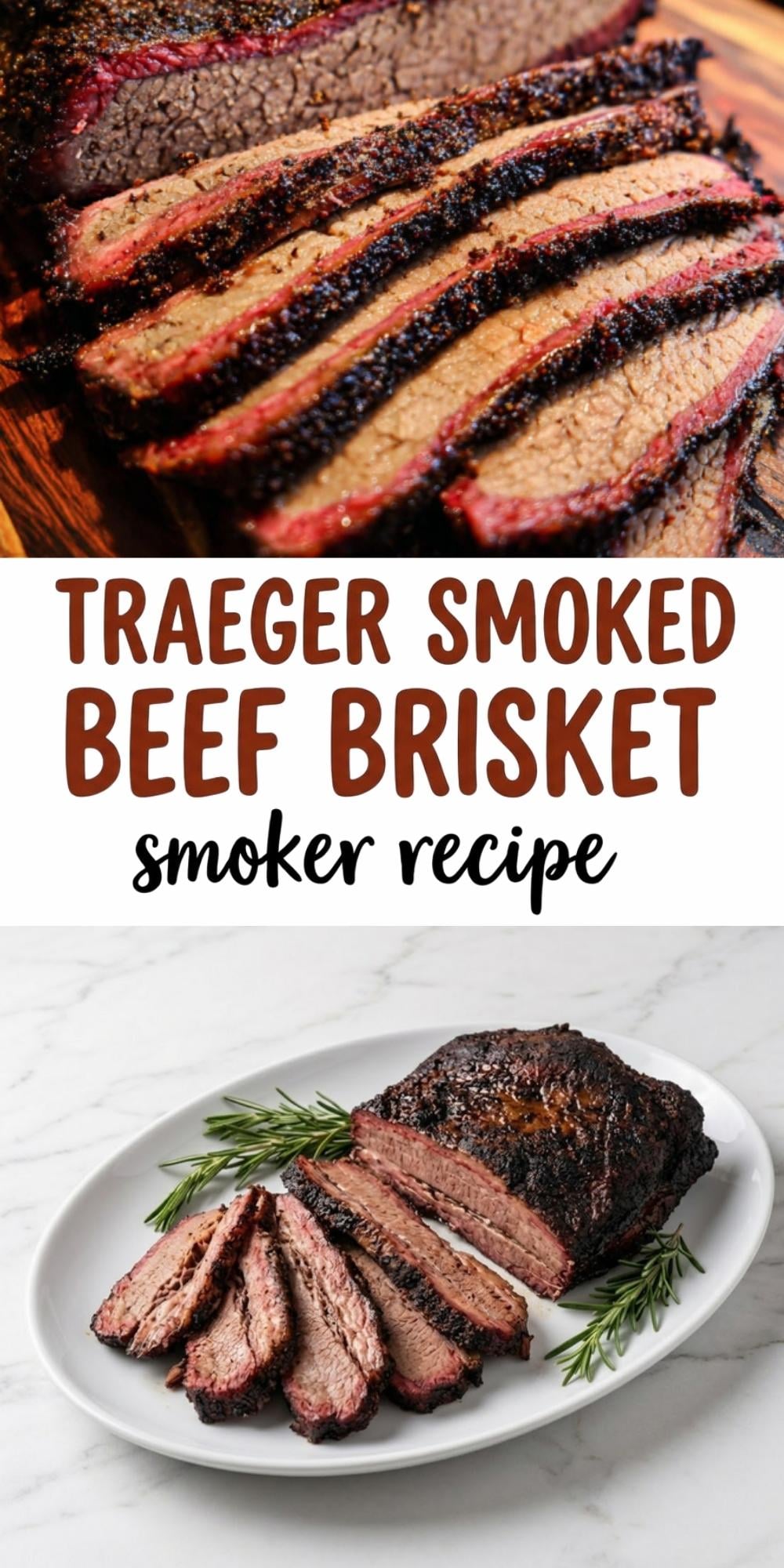
This Traeger brisket recipe is built around a 5 lb brisket flat, the easiest size for beginners, with full notes for 2–4 lb mini flats and 10–22 lb whole packers. You’ll get a cook time chart by pound, the exact wrap and pull temperatures, which Traeger setting to use, and how to rest and slice it so it stays juicy.
Quick answer: Smoke brisket on your Traeger at 250°F (121°C) fat side up until it hits 165°F (74°C) inside, about 3–4 hours for a 5 lb flat. Wrap it in butcher paper, then keep cooking until it reads 200–205°F (93–96°C) and a probe slides in like butter. Rest at least 1 hour before slicing against the grain. Plan on 1 to 1.5 hours per pound at 250°F.
Why a Traeger Is Great for Brisket
- Steady temperature. Brisket needs hours of low, even heat. A pellet grill holds 225–275°F without you babysitting a fire.
- Clean, gentle smoke. Hardwood pellets give a mild smoke flavor that won’t turn bitter, even on a 14-hour cook.
- Set it and sleep. WiFIRE and probe alerts make overnight brisket realistic, even for a first-timer.
- Works on any model. This method works the same on a Pro 22, Pro 34, Pro 575, Ironwood, Timberline or Ranger. Only fuel capacity and cooking space change.
If you’ve already mastered pellet smoker ribs, brisket is the natural next step. It uses the same low-and-slow idea, just with more patience.
Ingredients — Simple, Reliable, and Testable
- Brisket flat, trimmed with a fat cap
- Brisket rub made with coarse salt, cracked black pepper, smoked paprika, garlic powder, onion powder, and optional brown sugar
- Apple cider vinegar for spritzing
- Wood pellets such as oak, hickory, or a blend for beef
- Butcher paper or foil for wrapping
For precise amounts, check the recipe card at the end of the post.
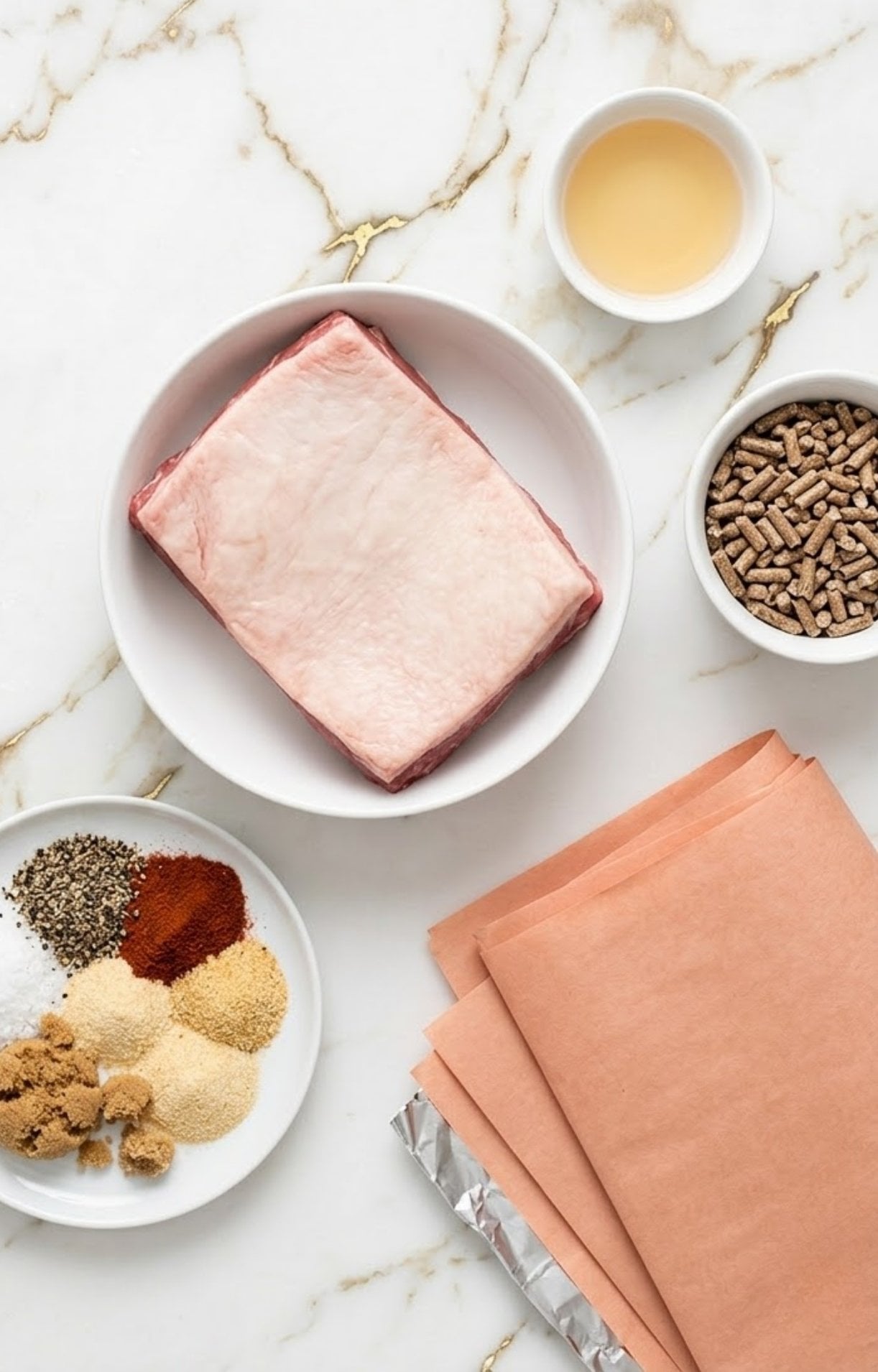
Why these items: salt and pepper form the backbone of great brisket seasoning. Brown sugar adds a caramel note if you want sweetness. Apple cider vinegar helps loosen smoke particles and aids in moisture during the wrap stage.
Flat vs. Whole Packer vs. Mini Brisket: Which Should You Smoke?
| Cut | Typical weight | Best for | Notes |
|---|---|---|---|
| Mini flat | 2–4 lb | Small households, quick weekday cook | Dries out fastest. Wrap early and watch the temp closely. |
| Brisket flat | 4–6 lb | Beginners, 4–8 people | The one this recipe is built for. Even thickness, easy slicing. |
| Whole packer (point + flat) | 10–22 lb | Crowds, burnt ends, the most flavor | Longer cook but more forgiving thanks to the fatty point. |
Buying tip: Pick a flat that’s thick and even across the whole piece, with a flexible feel when you bend it. Thin, tapered ends overcook.
Trimming: the small work that pays off
Trim the fat cap down to about ¼ inch. Remove large, thick pieces of silver skin. Use a sharp boning or paring knife and shave small slices of fat at a time. Trimming opens the meat so smoke and rub can penetrate, and it helps you avoid uneven cooking. Keep the fat cap — you want it for flavor — just not a thick slab that will not render.
The Rub: a simple formula you can scale
- 2 parts kosher salt
- 2 parts coarse black pepper
- 1 part smoked paprika
- 1 part garlic powder
- 1 part onion powder
- Optional: ½ part brown sugar for a touch of sweetness
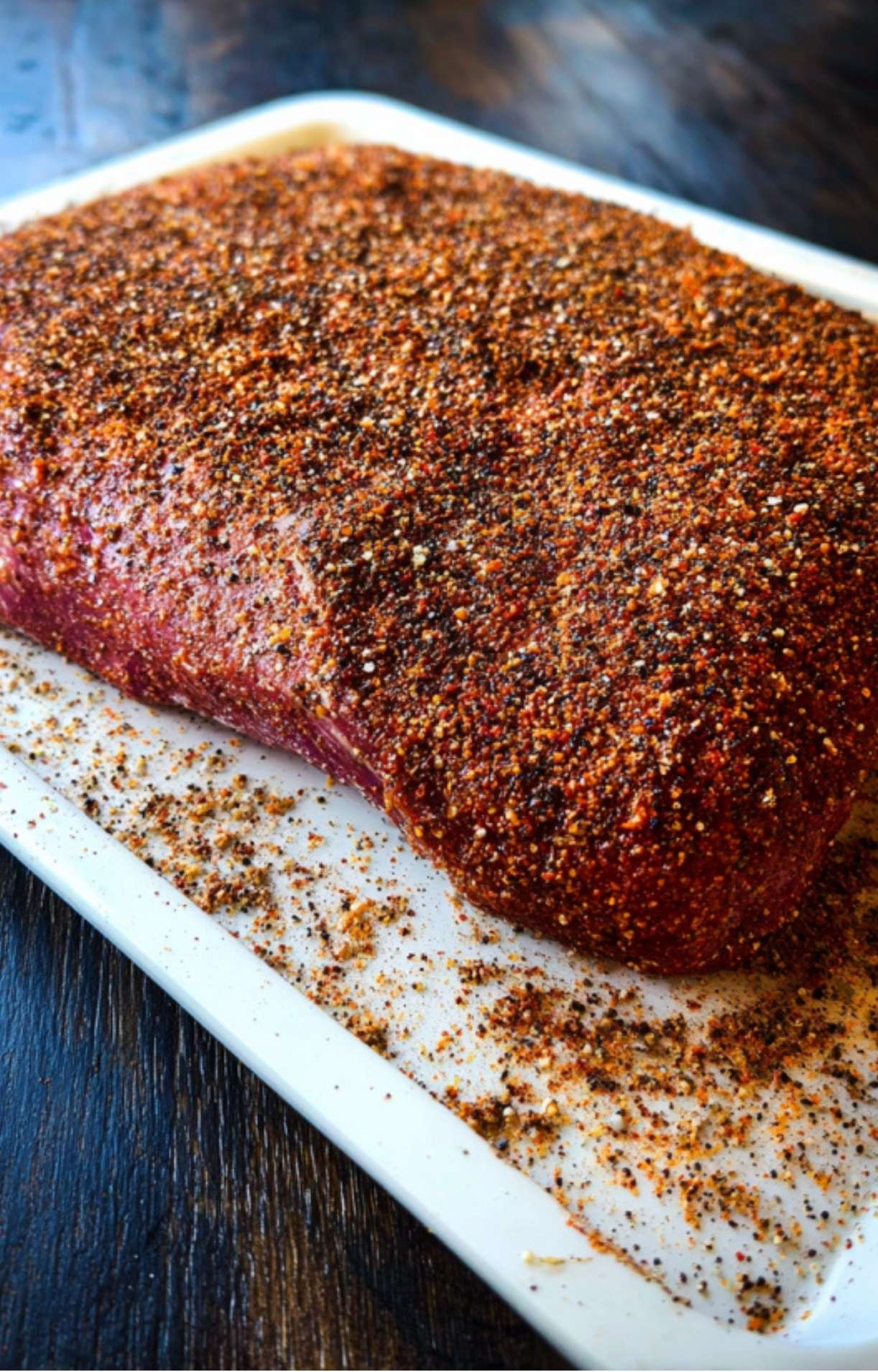
Massage the rub into all sides. Let the brisket sit at room temp for 20–30 minutes before it hits the pellet grill. If you want deeper flavor, you can refrigerate overnight loosely wrapped and bring back to room temp before smoking.
Smoking Strategy — clear goals, simple steps
Follow these steps in order — they take you from a cold grill to sliced, rested brisket with no guesswork.
- Preheat the Traeger to 250°F with pellets loaded and the lid closed for at least 10 minutes.
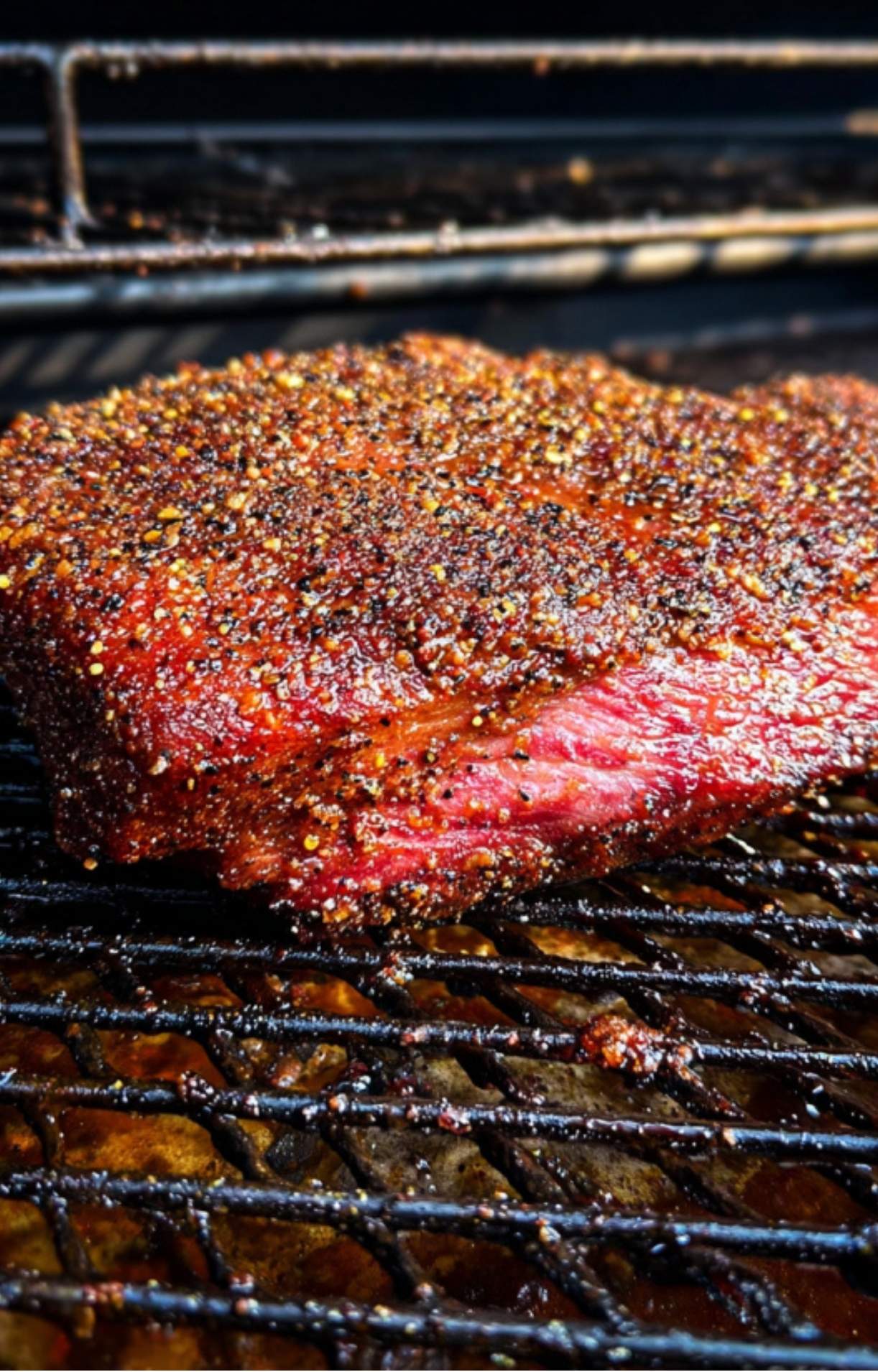
- Place brisket fat side up directly on the grates. Close the lid.
- Smoke until the internal temp reaches 160–170°F. This is usually about 3 to 4 hours for a 5 lb flat but temp is the guide.
- Remove brisket from grill and wrap tightly in butcher paper. Before sealing, spritz with apple cider vinegar.
- Return wrapped brisket to the grill and maintain 250°F until internal temp reaches 200–205°F.
- Remove, keep wrapped, and rest for at least 30 minutes, ideally an hour.
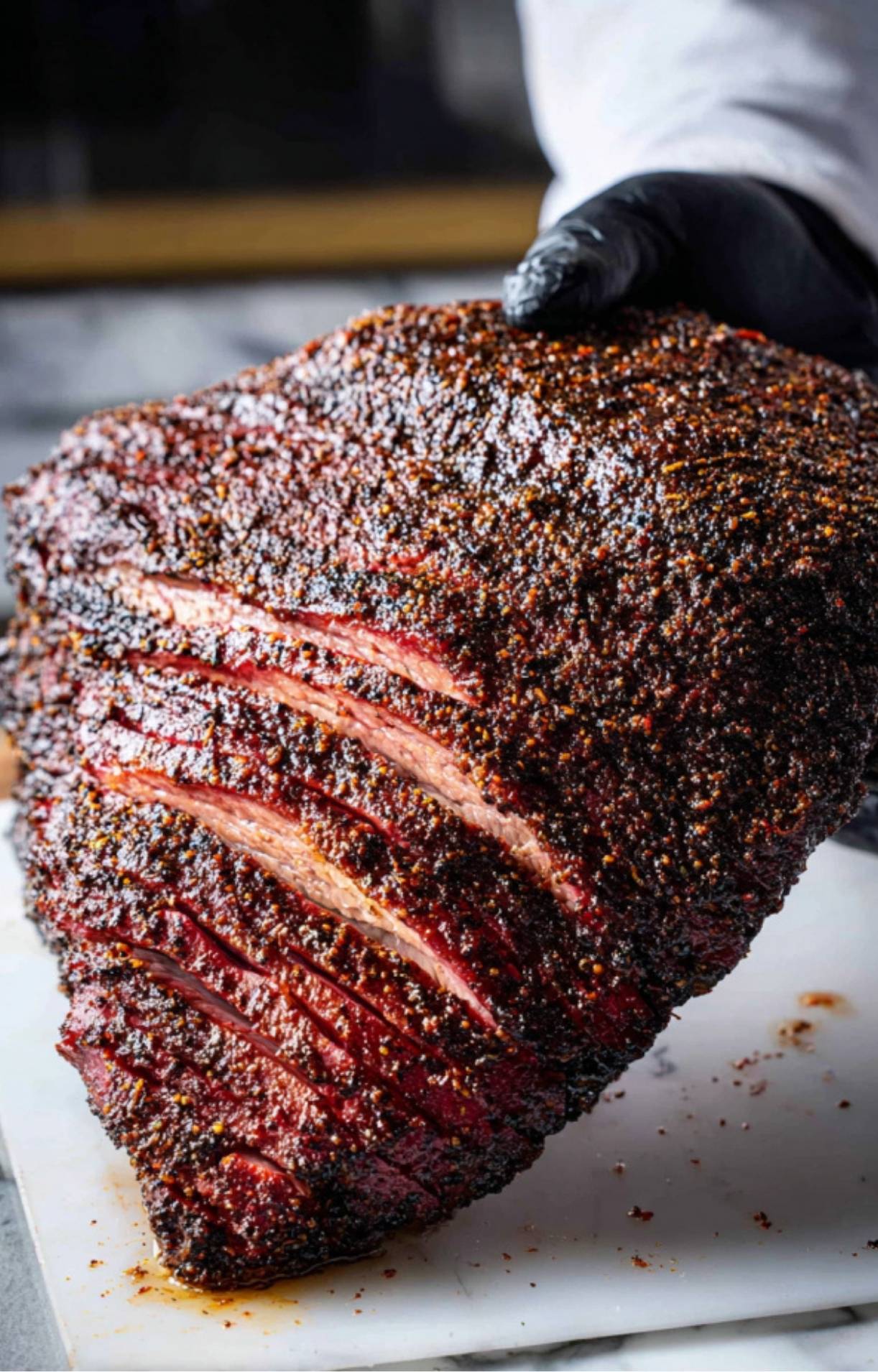
- Slice against the grain and serve.
Dealing with the Stall and Wrapping Options
During the stall, internal temp may plateau. Wrapping in butcher paper (a method many pros use) or foil helps push through the stall and preserves moisture. Butcher paper breathes a bit and keeps bark intact. Foil moves heat faster and gives a softer bark. For beginners, butcher paper is an excellent middle ground.
Target Temperatures and How to Temp Correctly
- 160–170°F: when you wrap
- 200–205°F: target for tenderness
- Probe test: The meat should feel like warm butter when probed. If it resists, keep cooking and check internal temp again.
- Use a leave-in probe thermometer if possible. If using an instant-read, check multiple spots in the thickest part.
Traeger Brisket Cook Time Chart (by Pound)
Times are cook time only, not including rest, at 250°F (121°C) with a butcher paper wrap. Every brisket is different. Use this chart to plan, and use temperature and feel to decide when it’s done.
| Brisket size | Cut | Cook time at 250°F | At 225°F | At 275°F (faster) |
|---|---|---|---|---|
| 2 lb (0.9 kg) | Mini flat | 3.5–4.5 hrs | 4.5–5.5 hrs | 3–4 hrs |
| 3 lb (1.4 kg) | Flat | 4–5.5 hrs | 5–6.5 hrs | 3.5–4.5 hrs |
| 4 lb (1.8 kg) | Flat | 5–6.5 hrs | 6–8 hrs | 4–5 hrs |
| 5 lb (2.3 kg) | Flat | 6–8 hrs | 7.5–9.5 hrs | 5–6 hrs |
| 6 lb (2.7 kg) | Flat | 7–9 hrs | 8.5–11 hrs | 5.5–7 hrs |
| 10 lb (4.5 kg) | Small packer | 10–12 hrs | 12–15 hrs | 8–10 hrs |
| 12 lb (5.4 kg) | Whole packer | 11–14 hrs | 14–17 hrs | 9–11 hrs |
| 14 lb (6.4 kg) | Whole packer | 13–16 hrs | 16–19 hrs | 10–12 hrs |
| 16 lb (7.3 kg) | Whole packer | 15–18 hrs | 18–21 hrs | 12–14 hrs |
| 18–22 lb (8–10 kg) | Large packer | 17–22 hrs | 20–26 hrs | 14–17 hrs |
Rule of thumb: about 1–1.5 hours per pound at 250°F, 1.5–2 hours per pound at 225°F. Add 1–4 hours of rest on top, and always build in 2 extra hours of buffer. A brisket that finishes early can rest for hours, but a late one can’t be rushed.
Brisket Temperature Guide
| Stage | Internal temp | What’s happening |
|---|---|---|
| Smoke phase | Up to 150°F (66°C) | Smoke ring and bark forming |
| Stall | 150–170°F (66–77°C) | Temp plateaus; don’t panic |
| Wrap | 160–170°F (71–77°C) | Bark is set; wrap in paper or foil |
| Collagen breakdown | 180–195°F (82–91°C) | Getting tender, not there yet |
| Pull | 200–205°F (93–96°C) | Probe tender = done |
| Rest | Let it fall to ~150–160°F (66–71°C) | Then slice and serve |
Fast Brisket, Overnight Brisket, and Finishing in the Oven
Short on time (hot and fast): Smoke at 275–300°F, wrap in foil at 165°F, and pull at 203°F. A 5 lb flat can be done in about 5 hours. The bark is a little softer, but it’s still very good.
Overnight brisket: Start a whole packer at 225°F in the evening with a full hopper and a probe alarm set to 165°F. Wrap in the morning, bump to 250°F, and finish by early afternoon, leaving time for a long rest.
Start on the Traeger, finish in the oven: After the brisket is wrapped (165–170°F), move it to a 250°F (121°C) oven on a sheet pan. It won’t pick up much more smoke once wrapped anyway. Cook until probe tender at 200–205°F. This is perfect for older dial Traegers, running low on pellets, or bad weather.
Whole Packer Brisket vs. Flat
This recipe is written for a brisket flat, but a whole packer brisket (the flat and the point still attached, usually 10–16 lb) works with the same method — just budget more time. The point is thicker and fattier, so it finishes a bit later than the flat. If you’re working with a whole packer:
- Trim the same way — fat cap down to about ¼ inch, with extra attention to the thick fat seam between the point and flat.
- Use the same rub, same 250°F grill temp, and the same 160–170°F wrap target and 200–205°F finish target.
- Check the flat and the point separately when probing for tenderness — the point often needs 30–60 minutes longer.
- If you want burnt ends, separate the point after resting, cube it, toss with rub and a little sauce, and put it back on the smoker uncovered for 45–60 minutes at 250°F.
Resting and Slicing: the difference between good and great
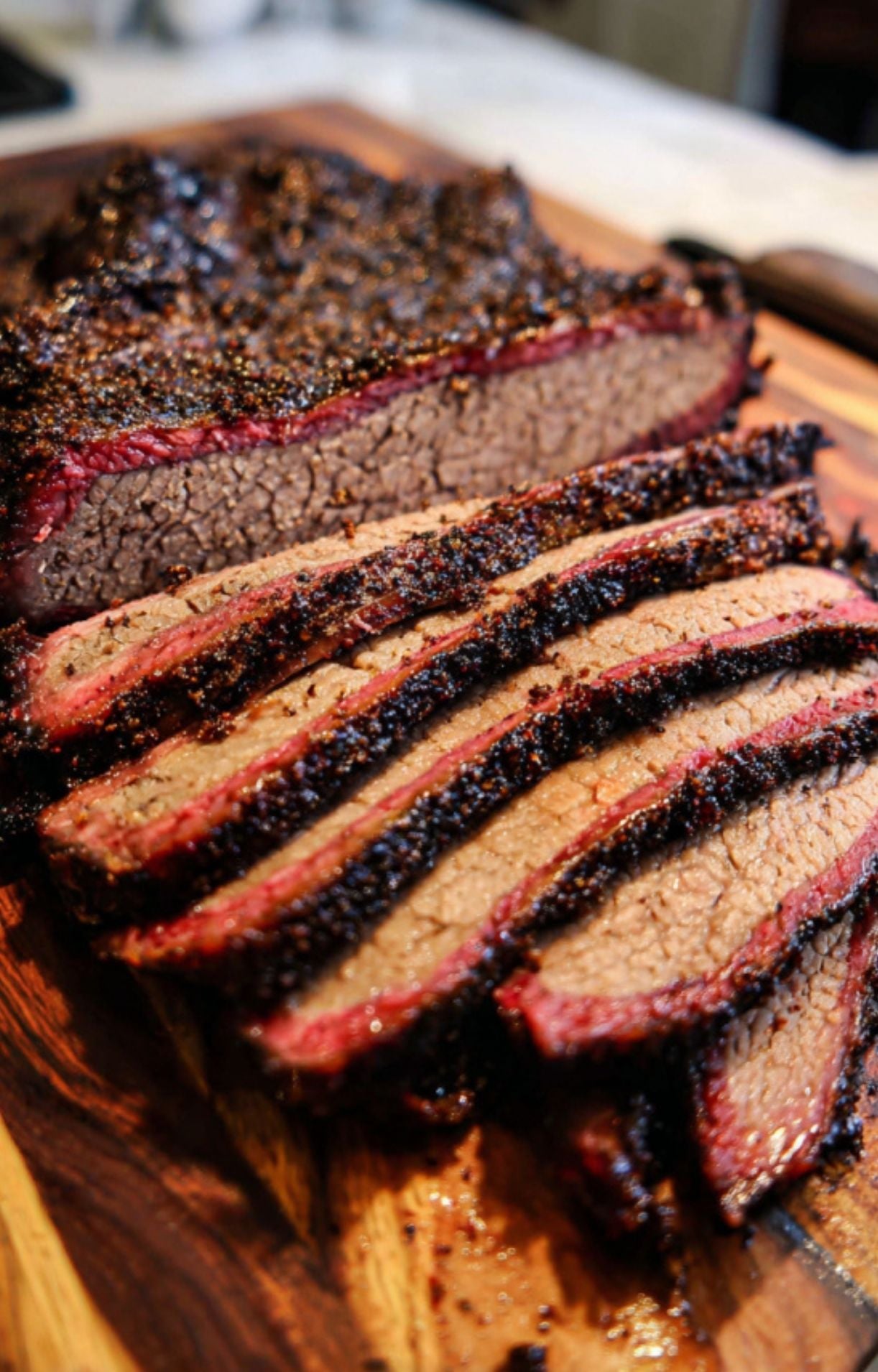
Let your brisket rest wrapped for at least 30 minutes. Resting redistributes juices and firms the meat slightly so you can slice cleanly. Slice against the grain, thin for sandwiches, or thicker for plated servings. If your brisket looks juicy and slices clean, you nailed it.
Building a Perfect Bark
Bark forms when rub, smoke, and rendered fat interact. To encourage bark:
- Use coarse salt and pepper in the rub.
- Avoid opening the lid frequently.
- If you want extra smoke, add short bursts of a smoking hardwood or mix in some hickory pellets.

Traeger Smoked Beef Brisket
A beginner friendly Traeger Smoked Beef Brisket recipe designed for home cooks who want juicy, tender brisket with rich smoky bark. This method focuses on a manageable brisket flat, simple seasoning, steady pellet grill heat, and clear temperature targets so every slice comes out flavorful and perfectly tender.
Ingredients
- 1 brisket flat, 4 to 6 lb, trimmed to about ¼ inch fat cap
- ½ to ¾ cup brisket rub
- ¼ cup apple cider vinegar for spritzing
- Wood pellets for pellet grill such as oak or hickory
- Butcher paper or foil for wrapping
- 2 parts kosher salt
- 2 parts coarse black pepper
- 1 part smoked paprika
- 1 part garlic powder
- 1 part onion powder
- Optional ½ part brown sugar
Instructions
- Preheat the pellet grill to 250°F with pellets loaded and lid closed for about 10 minutes.
- Trim brisket flat to about ¼ inch fat cap and remove thick silver skin. Pat dry.
- Mix rub ingredients and massage evenly over all sides of the brisket. Let rest 20 to 30 minutes at room temperature or refrigerate overnight.
- Place brisket fat side up directly on the grill grates and close the lid.
- Smoke until internal temperature reaches 160 to 170°F which usually takes about 3 to 4 hours for a 5 lb flat.
- Remove brisket, spritz lightly with apple cider vinegar, wrap tightly in butcher paper, and return to the grill.
- Continue smoking at 250°F until internal temperature reaches 200 to 205°F and the probe slides in easily.
- Remove from grill and rest wrapped for 30 to 60 minutes.
- Slice against the grain and serve.
Notes
Use a leave in probe thermometer for best results. Wrap in butcher paper to keep a firm bark or foil for a softer bark and slightly faster cooking. Always rest the brisket before slicing so juices redistribute. Save cooking juices for reheating leftover brisket.
Nutrition Information
Serving Size 1 servingAmount Per Serving Calories 420Total Fat 28gSaturated Fat 11gTrans Fat 0gUnsaturated Fat 15gCholesterol 115mgSodium 780mgCarbohydrates 4gFiber 1gSugar 2gProtein 38g
Serving Ideas and Pairings
- Classic: sliced brisket, pickles, white bread, and coleslaw.
- Elevated: brisket on toasted brioche with horseradish mayo and quick-pickled onions.
- Leftovers: smoked brisket nachos, brisket tacos, or chopped brisket for smoked pizza.
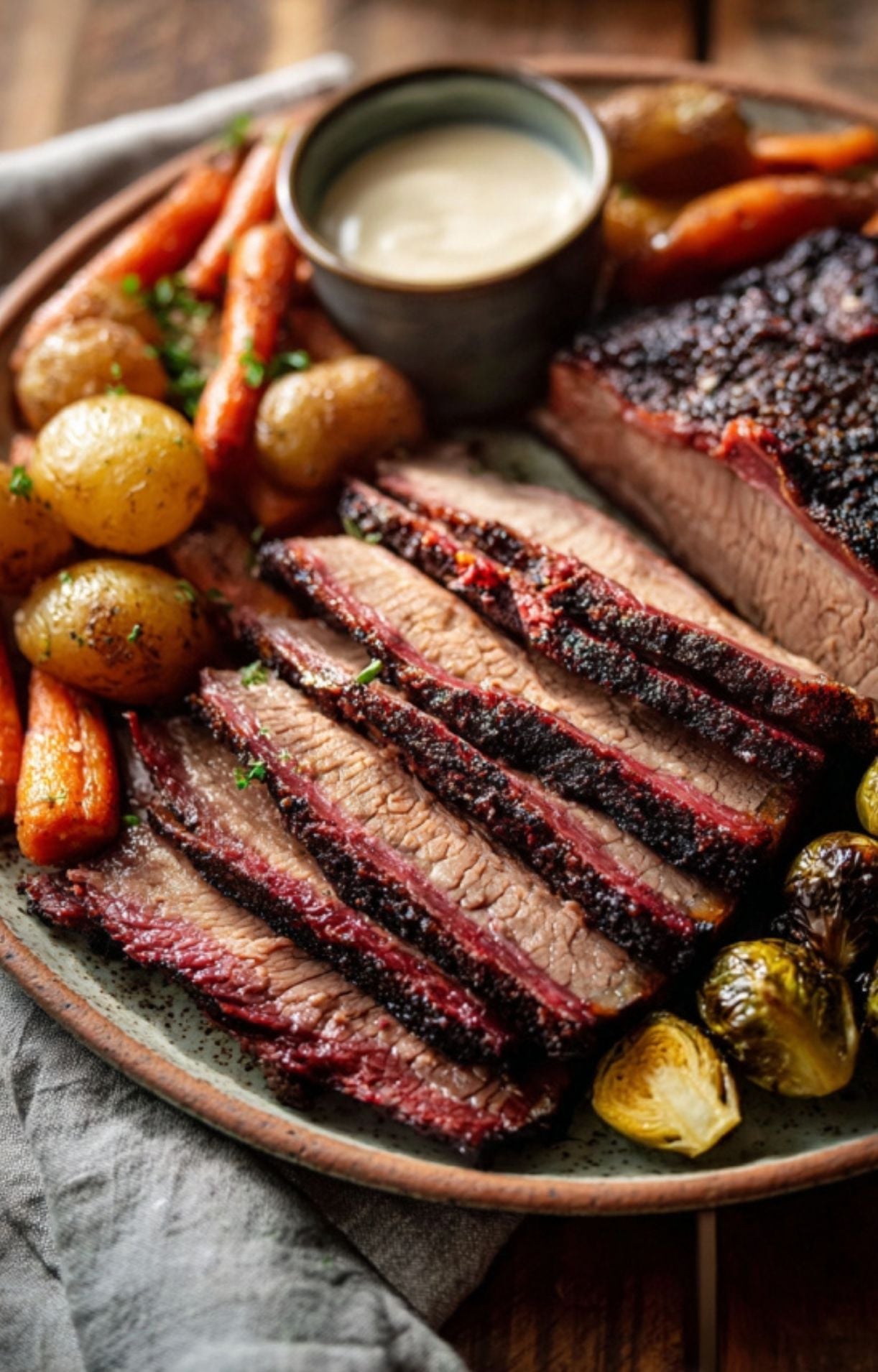
Sides that pair well: smoked baked beans, creamed corn, grilled corn on the cob, potato salad, and a crisp green salad to cut richness.
Storage, Reheating and Leftovers
- Fridge: Store unsliced chunks, wrapped tightly with any juices, for up to 4 days.
- Freezer: Vacuum-seal or double-wrap for up to 3 months. Thaw overnight in the fridge.
- Reheat: Wrap in foil with a splash of beef broth and warm in a 275°F oven (or on the Traeger) until 150–160°F inside, about 30–45 minutes.
Leftover ideas – Chopped brisket sandwiches: Chop the point or leftover slices, toss with a little BBQ sauce and pile onto buns. Our roast beef sandwich method works well with brisket too. – Sliced smoked meat sandwiches: Thin-sliced flat on rye with mustard, deli style. – Brisket tacos: Use it instead of chuck roast in these chuck roast tacos, or dunk it birria-style with our beef birria tacos. – Burnt ends: Cube the point, toss with sauce and a little brown sugar, and smoke 1–2 more hours. Same method as our chuck roast burnt ends.
Equipment Checklist
- Traeger or pellet grill with steady temp control
- Instant-read thermometer and, if possible, a probe thermometer
- Sharp boning or paring knife
- Butcher paper or foil
- Spray bottle with apple cider vinegar
How to Get Juicy, Tender Brisket with Great Bark
For juicy brisket – Trim to ¼ inch. Don’t strip off all the fat. – Cook fat side up on a Traeger. The heat comes from below, and the fat bastes the meat. – Use a water pan with smaller flats. – Wrap at 165°F with a little beef tallow inside the paper. – Rest at least 1 hour. This matters more than any other tip here.
For a thick bark – Use coarse black pepper and kosher salt, not fine table salt. – Pat the brisket dry before seasoning. – Don’t wrap until the bark is set and doesn’t smear. – Butcher paper over foil, or no wrap at all on a whole packer.
Troubleshooting
| Problem | Likely cause | Fix |
|---|---|---|
| Dry, crumbly slices | Overcooked, not rested, or a very thin flat | Pull at probe tender, rest longer, spoon juices over slices |
| Tough and chewy | Undercooked | Put it back on until probe tender, even past 205°F |
| Soggy bark | Wrapped too early or wrapped in foil | Wrap later; unwrap for the last 30 minutes |
| Bitter taste | Dirty grill or too much smoke at the start | Clean the firepot and grease tray before long cooks |
| Stuck at 160°F for hours | The stall | Wrap it; don’t raise the heat above 275°F |
| Finished way too early | Brisket cooked faster than expected | Hold it wrapped in a cooler or a 150°F oven for up to 4 hours |
A Few Flavor Variations
- Texas-style: keep it simple with just salt and coarse black pepper.
- Sweet and smoky: add brown sugar and smoked paprika.
- Coffee rub: add finely ground coffee to the rub for an earthy crust.
- Spicy: add cayenne or chili flakes to the rub.
Why This Method Works for Home Cooks
This Traeger approach gives consistent heat, predictable smoke, and practical steps to deal with the stall, wrap, and rest so you can plan cook day. The flat cut keeps things manageable, and the butcher paper wrap helps preserve moisture and speed up finishing without ruining the bark. Follow the temp targets and probe checks, and you will get reliably tender brisket.
What to Serve with Smoked Brisket
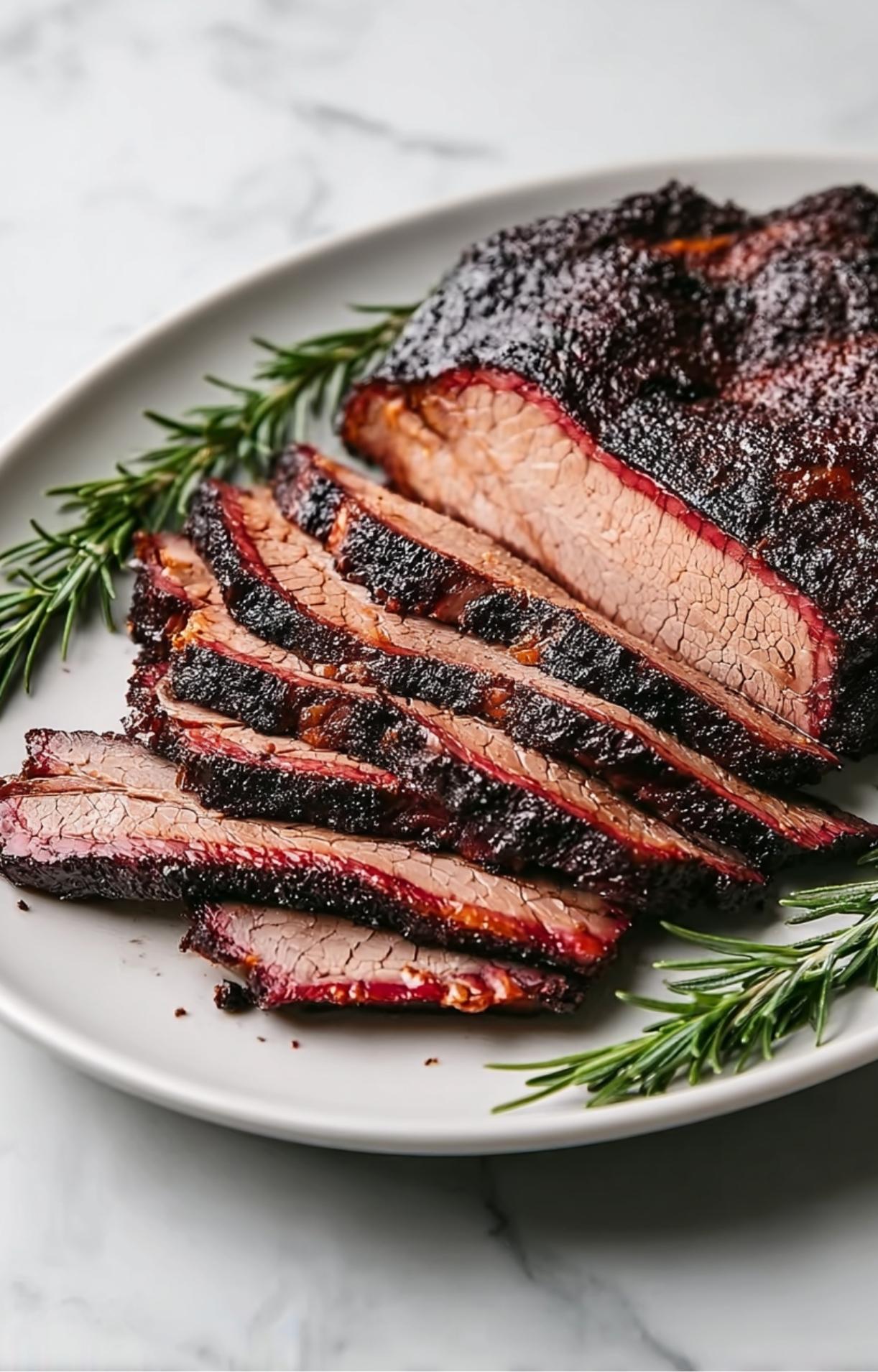
- Classic BBQ sides: cheesy corn casserole, coleslaw, pickles and white bread.
- Veggies: oven roasted vegetables or roasted zucchini and potatoes.
- Sauce: Good brisket doesn’t need sauce, but a thin, vinegary BBQ sauce on the side is nice. Browse our homemade sauces.
- Make it a BBQ feast: add smoked beef ribs or Traeger beer can chicken for a crowd.
More Pellet Smoker Recipes
- Smoked Chuck Roast: “poor man’s brisket,” done in half the time
- Tender Wagyu Beef Brisket
- Beef Short Ribs on a Pellet Smoker
- Prime Rib on a Pellet Smoker
- Best Smoked Ribs on a Pellet Grill
FAQ
How long does it take to smoke a brisket on a Traeger?
At 250°F, plan on about 1–1.5 hours per pound: 6–8 hours for a 5 lb flat and 13–16 hours for a 14 lb whole packer, plus at least 1 hour of rest. Check the cook time chart above for your exact size.
What temperature should I smoke brisket at on a Traeger?
250°F (121°C) is the best all-around temperature. 225°F (107°C) gives a little more smoke but takes longer. 275°F works when you’re short on time.
Should I use the Smoke setting or a set temperature for brisket?
Use a set temperature of 225–250°F for the whole cook. On older Traegers with a Smoke/Medium/High dial, use Smoke for the first 2–3 hours, then finish in a 250°F oven. Medium (about 350°F) is too hot for brisket.
When should I wrap brisket on a Traeger?
Wrap when the internal temperature reaches 160–170°F and the bark is dark and set, usually 3–4 hours into a 5 lb flat.
Should brisket be fat side up or down on a Traeger?
Fat side up. The heat on a Traeger comes from below, and fat on top slowly bastes the meat as it renders.
How long will a 5 lb brisket flat take on a Traeger?
About 6–8 hours at 250°F, plus a 1-hour rest. Start it at least 10 hours before you want to eat.
How do I smoke a small 2–3 lb brisket on a Traeger?
Smoke at 250°F, use a water pan, wrap in foil or paper as soon as the bark sets (around 160°F), and pull at probe tender. Expect 3.5–5.5 hours. Small flats dry out fast, so rest them wrapped for at least 45 minutes.
Can I use foil instead of butcher paper?
Yes. Foil cooks faster and keeps the brisket very moist, but the bark will be softer. Butcher paper is the better balance of bark and juiciness.
Do I need to spritz brisket?
It’s optional. Spritzing every 45–60 minutes after the first 2 hours helps dry edges and adds a little tang. Too much spritzing washes off the rub and slows the cook.
How many pellets do I need to smoke a brisket?
Roughly 1–2 lb of pellets per hour at 225–250°F, depending on your model and the weather. One 20 lb bag is enough for a flat; have two bags on hand for a whole packer.
Can I start brisket on the Traeger and finish it in the oven?
Yes. Once it’s wrapped at 165–170°F, it won’t absorb much more smoke. Move it to a 250°F oven and cook until probe tender at 200–205°F.
How do I know brisket is done besides temperature?
A probe should slide into the thickest part like it’s going into warm butter. When you lift the wrapped brisket in the middle, it should feel soft and jiggly.

Leave a Reply