
Hey, I’m Chloe! If you want a show-stopping main dish that fills your yard with mouthwatering smoke and rewards patience with fork-tender slices, this smoked beef brisket recipe is the one to try. It walks you through choosing the right brisket, building a simple rub, managing the smoker, and finishing with a resting and slicing technique that makes every bite juicy and flavorful. I tuned the classic approach to be approachable for home cooks while sharing plating and serving ideas that make it perfect for family dinners and weekend gatherings.
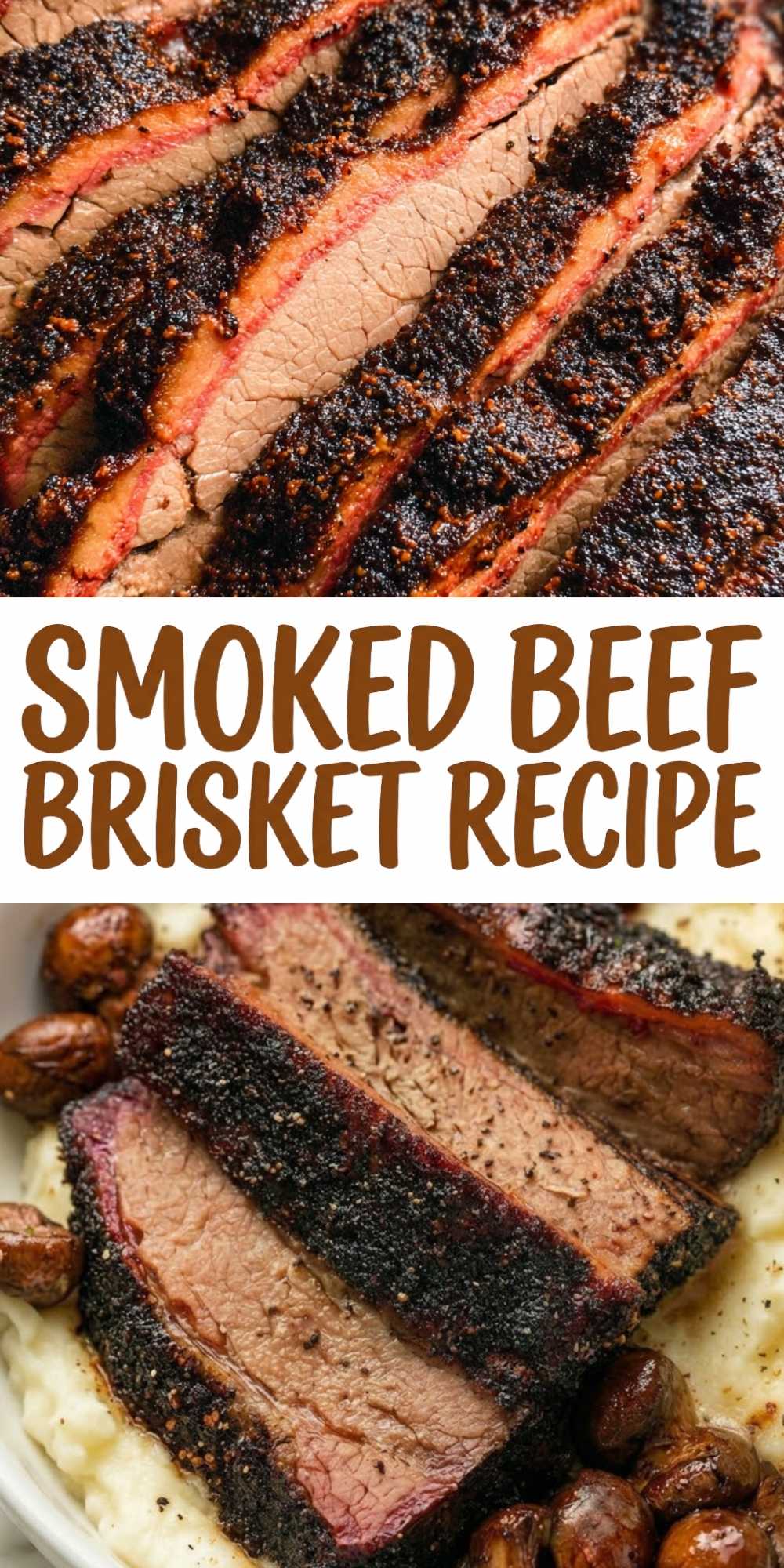
Why this smoked beef brisket works
Smoked brisket shines because of three simple things:
- A generous seasoning rub that forms a flavorful bark.
- Low and steady heat that breaks down connective tissue into tender gelatin.
- A patient rest that lets juices redistribute so slices stay moist.
This recipe uses Dijon mustard as a binder for the rub, a steady 250 F smoking temperature, a stall-aware wrap step, and a finishing rest that makes slicing easy. I include tips for pellet smokers, offset smokers, and charcoal setups plus an oven method for when smoking is not possible.
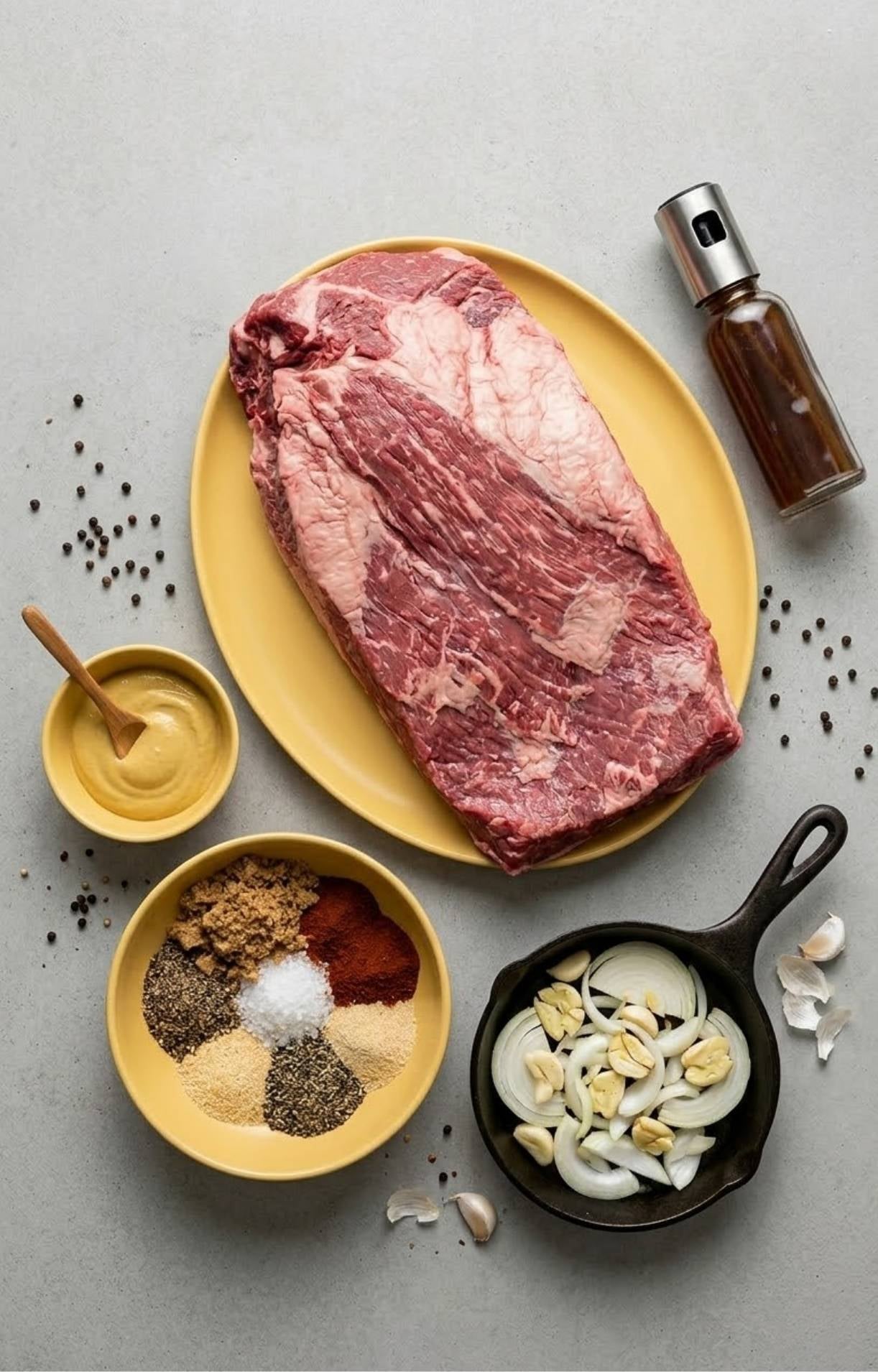
Ingredients
- Whole brisket
- Dijon mustard
- Bold barbecue rub or homemade rub
Simple Homemade Rub
- Brown sugar
- Kosher salt
- Coarse black pepper
- Paprika
- Garlic powder
- Onion powder
- Cayenne
For the Pan
- Onions
- Garlic
Optional for Spritzing: Beef broth or water
For precise amounts, check the recipe card at the end of the post.
Tools that help
- Smoker or pellet grill capable of holding a steady 225 to 250 F. Hickory or oak pellets create a classic smoke profile. Fruit woods like apple or cherry are milder and work well too.
- Instant-read meat thermometer and probe thermometer. Knowing the internal temperature is far more reliable than timing.
- Heavy duty aluminum foil or butcher paper for wrapping during the stall. Use foil for moisture retention and faster finish, or pink butcher paper for a firmer bark.
- Disposable pan for water, onions, and garlic to place near the brisket if you want extra moisture.
- Sharp slicing knife or brisket knife for final carving.
The full smoking process
Prep the brisket
- Pull the brisket from the fridge about 45 minutes before smoking so it comes closer to room temperature. Pat it dry with paper towels.
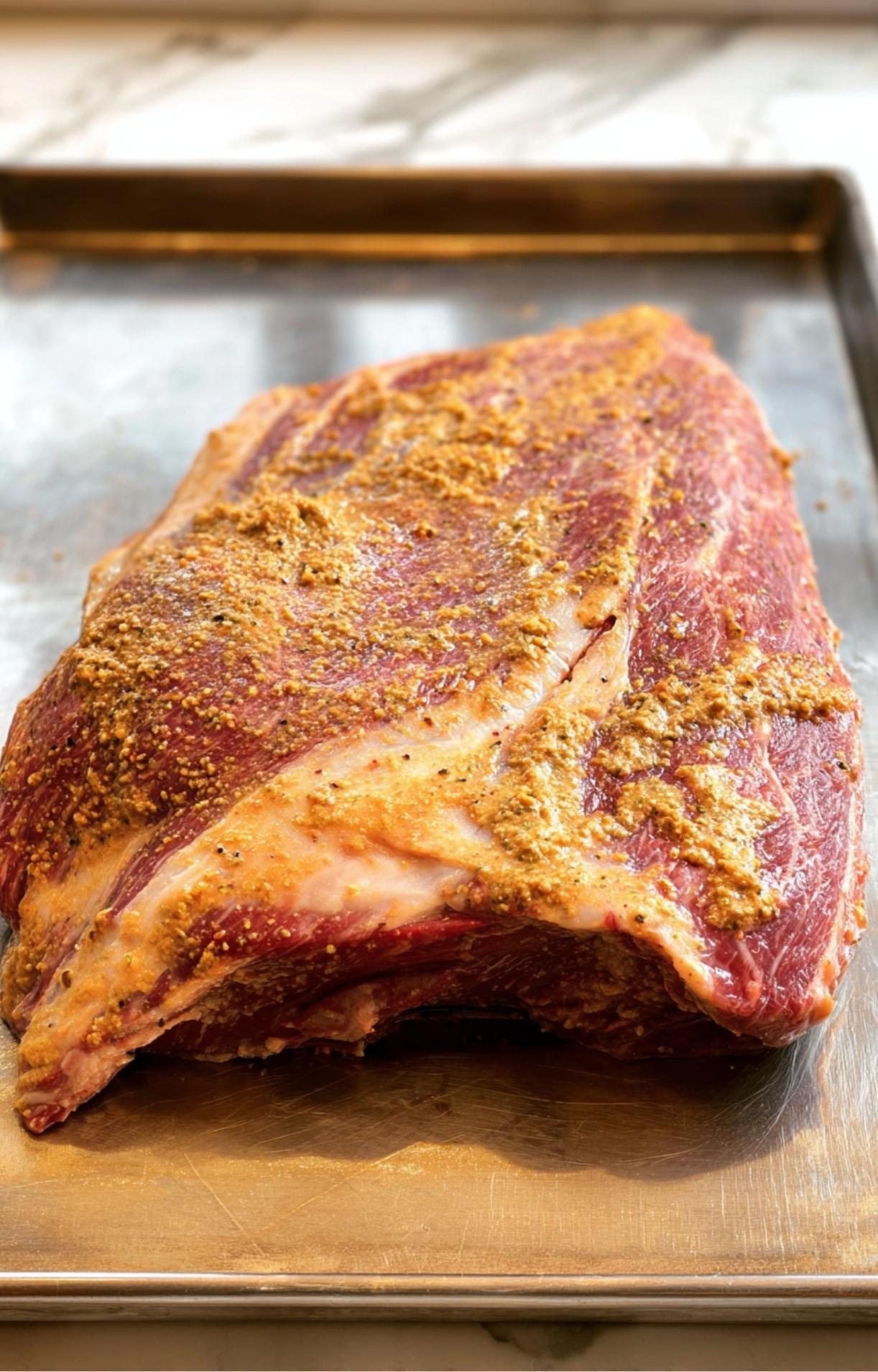
- Slather the entire surface with Dijon mustard. The mustard helps the rub adhere and develops a beautiful bark during smoking.
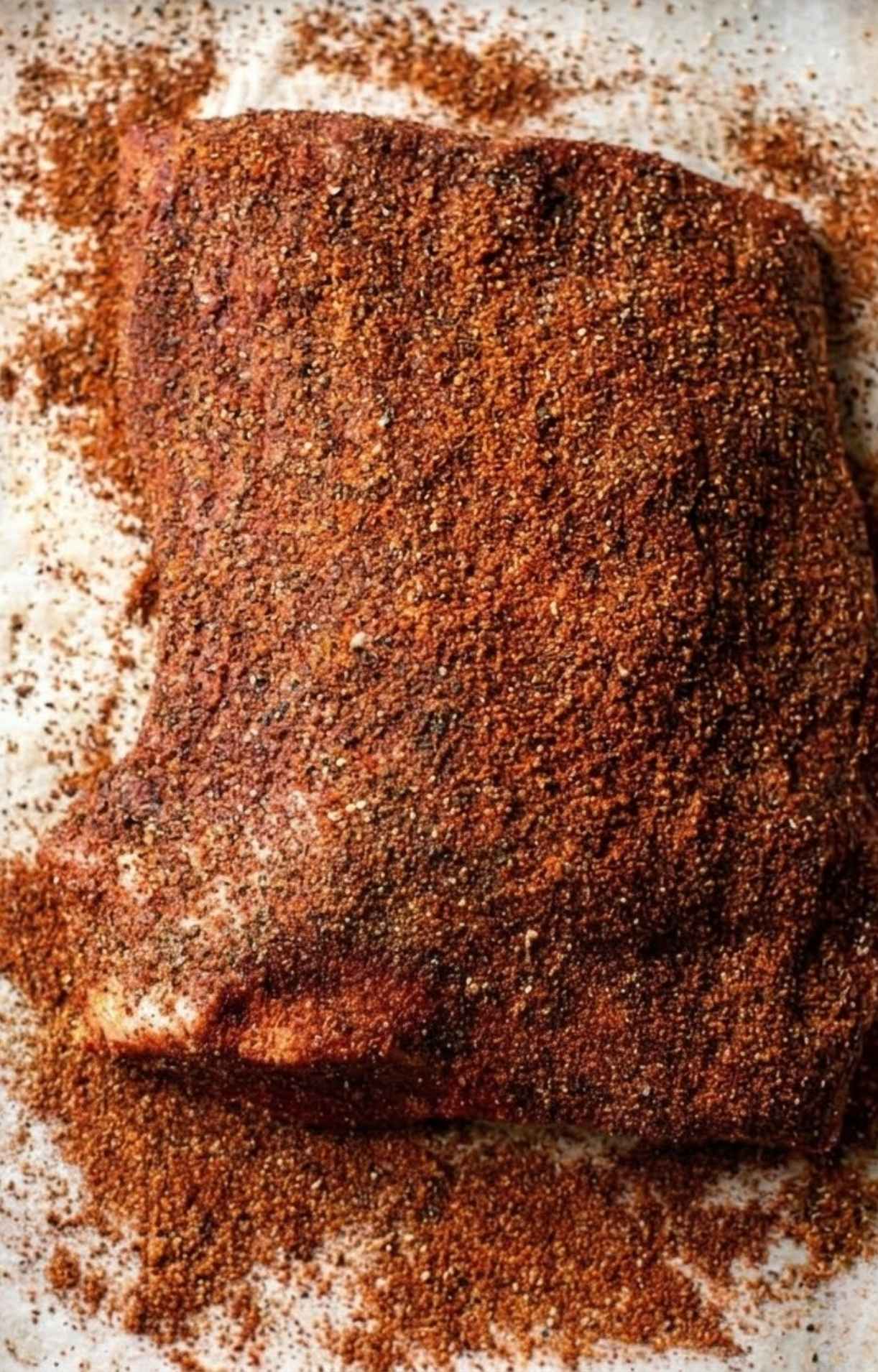
- Apply a generous coating of rub on all sides. Press the rub into the meat so it adheres well. Let the seasoned brisket rest while you get the smoker ready.
Prep the smoker
- Preheat your smoker to a steady 250 F. For pellet smokers use oak or hickory pellets. For charcoal or wood smokers build a small, steady fire and stabilize the temperature.
- Place a disposable pan with sliced onions and peeled garlic cloves and fill it with about 1 cup of water or beef broth. Put the pan near the brisket on the grate. This adds moisture and subtle aromatics.
- Insert probe thermometers into the thickest part of the flat and, if possible, the point. Monitoring two zones helps you track progress.
Smoke low and slow
- Place the brisket fat side down on the smoker grate. Close the lid and smoke undisturbed for the first few hours. Resist the urge to peek too often.
- Every hour or two check temperature and the smoker fuel. If you like, spritz the brisket lightly with beef broth or water, but do this sparingly to avoid heat loss.
- Expect the brisket to hit a stall between 165 F and 175 F where internal temperature may pause for a while as moisture evaporates. This is normal.
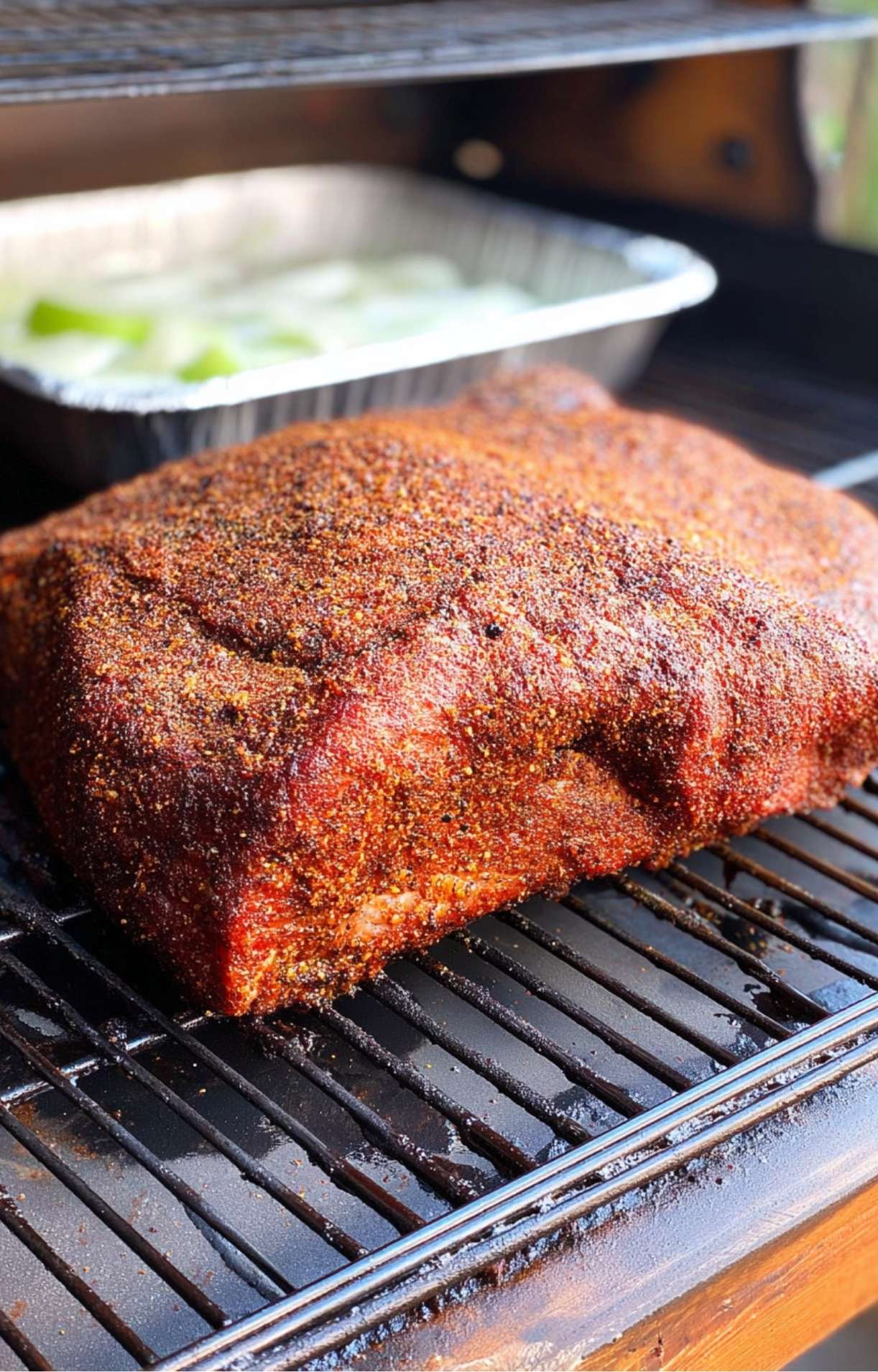
Wrap at the stall
- When the brisket enters the stall and the surface has a desirable color, wrap it tightly in aluminum foil or pink butcher paper. Foil speeds the cook and locks in moisture. Butcher paper preserves more bark texture.
- Place the wrapped brisket back on the smoker and continue cooking until internal temperature reaches about 200 F. This typically yields tender meat where collagen has broken down into gelatin.
Rest before slicing
- Remove the wrapped brisket from the smoker and transfer it to a cooler or an insulated container. Let it rest for at least 30 to 60 minutes. For best results rest for up to two hours; this helps the juices redistribute and makes slicing neater.
- Keep the brisket wrapped while resting. If you want to serve it sooner, a 30 minute rest still gives good results.
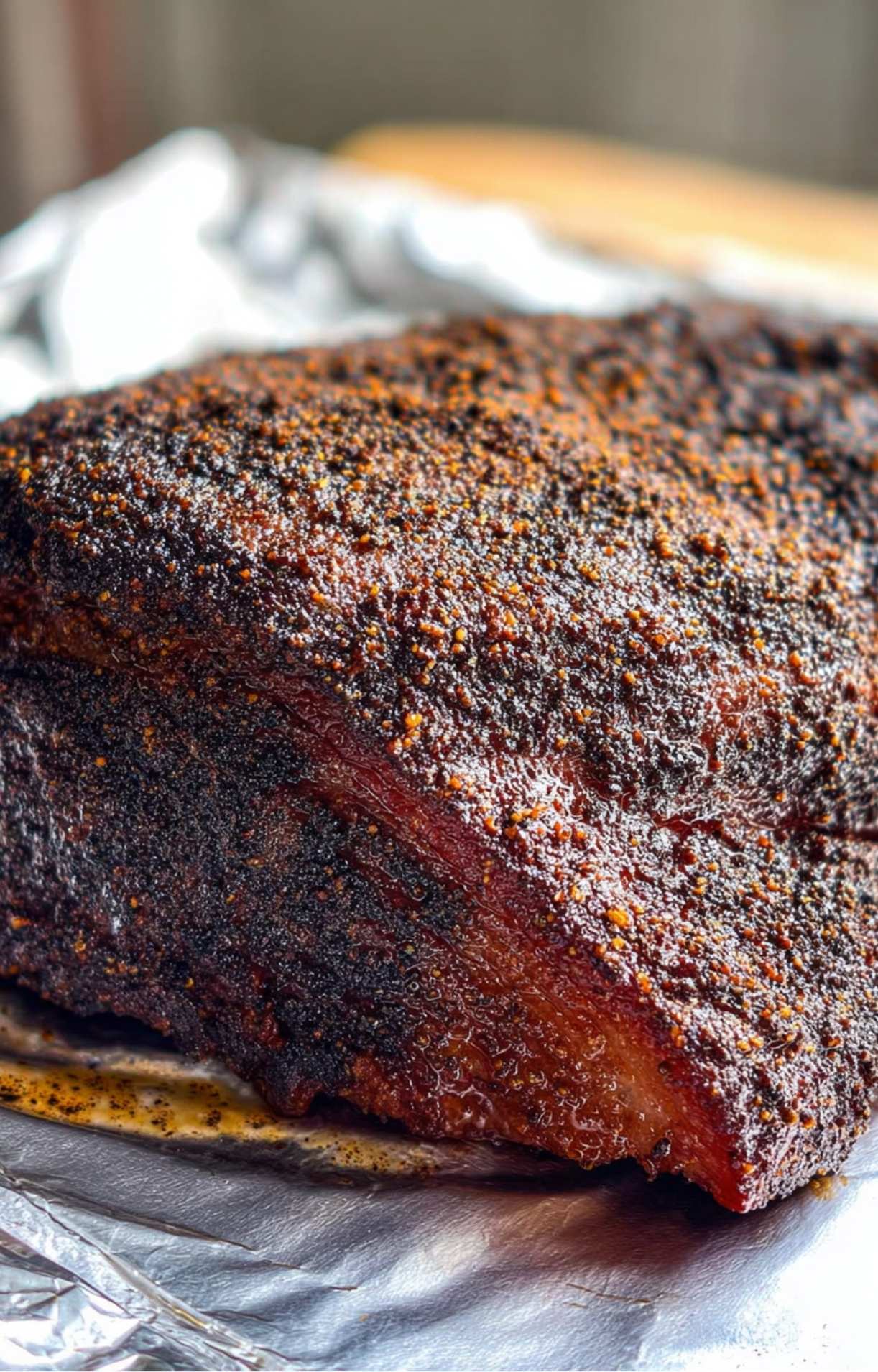
Slice and serve
- Separate the point and flat by cutting into the natural seam. Slice the flat against the grain into ¼ inch slices for sandwiches or plated service. The point may be sliced across the grain or chopped for burnt ends.
- Serve with classic barbecue sides such as baked beans, potato salad, coleslaw, or brioche rolls for brisket sandwiches.
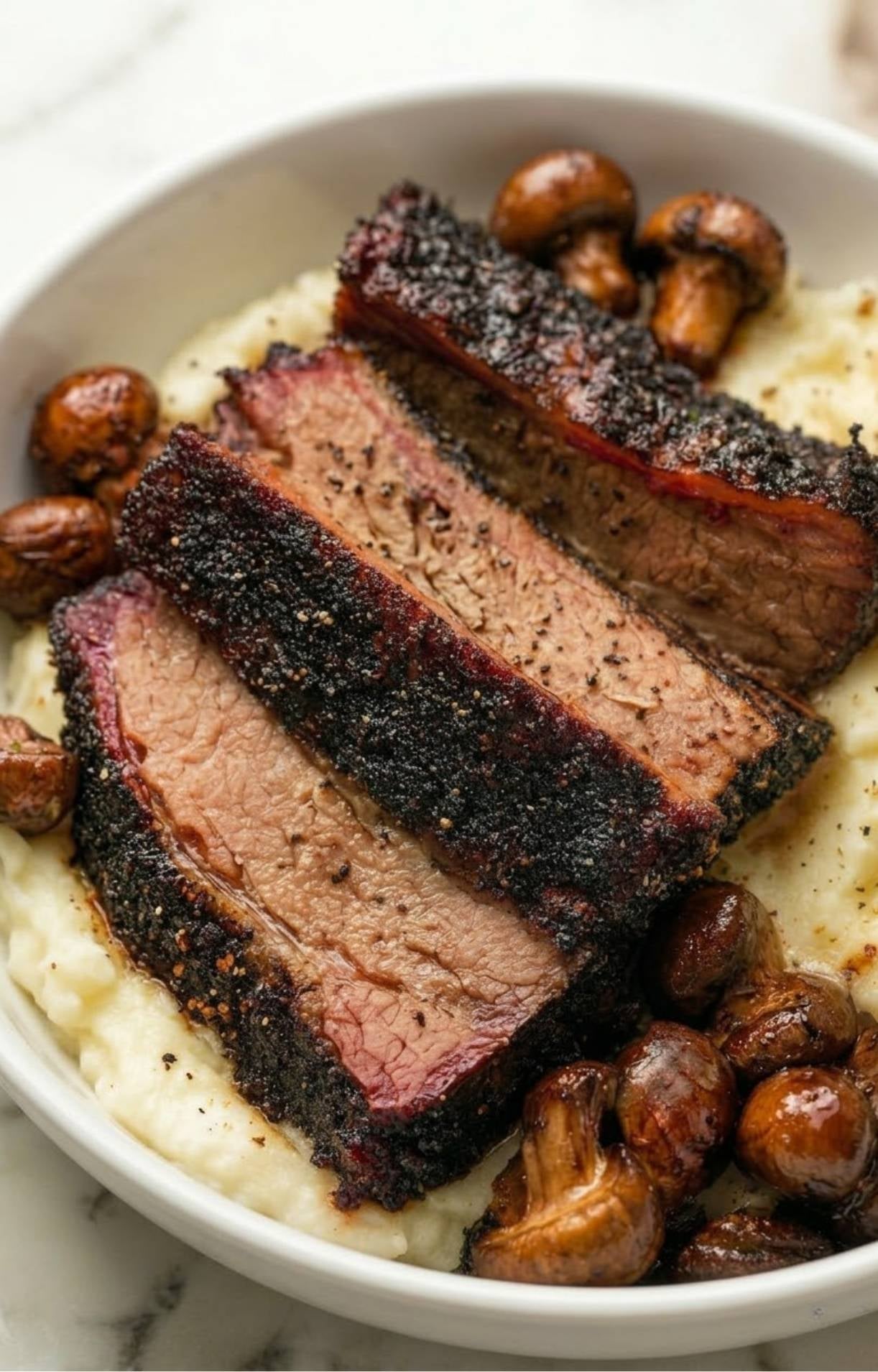
Timing and temperature guide
Smoking times vary by brisket size and smoker performance. Use internal temperature as your guide rather than clock time.
- Target smoker temperature: 225 to 250 F.
- Expect roughly 1 to 1.25 hours per pound at 250 F, though variations are common.
- Wrap when internal temp stalls around 165 to 175 F.
- Goal pull temperature: about 200 F for tender slices. Some cooks prefer 198 to 203 F. Use feel and probe resistance as a final check. If a probe slides into the meat like butter, it is done.

Smoked Beef Brisket
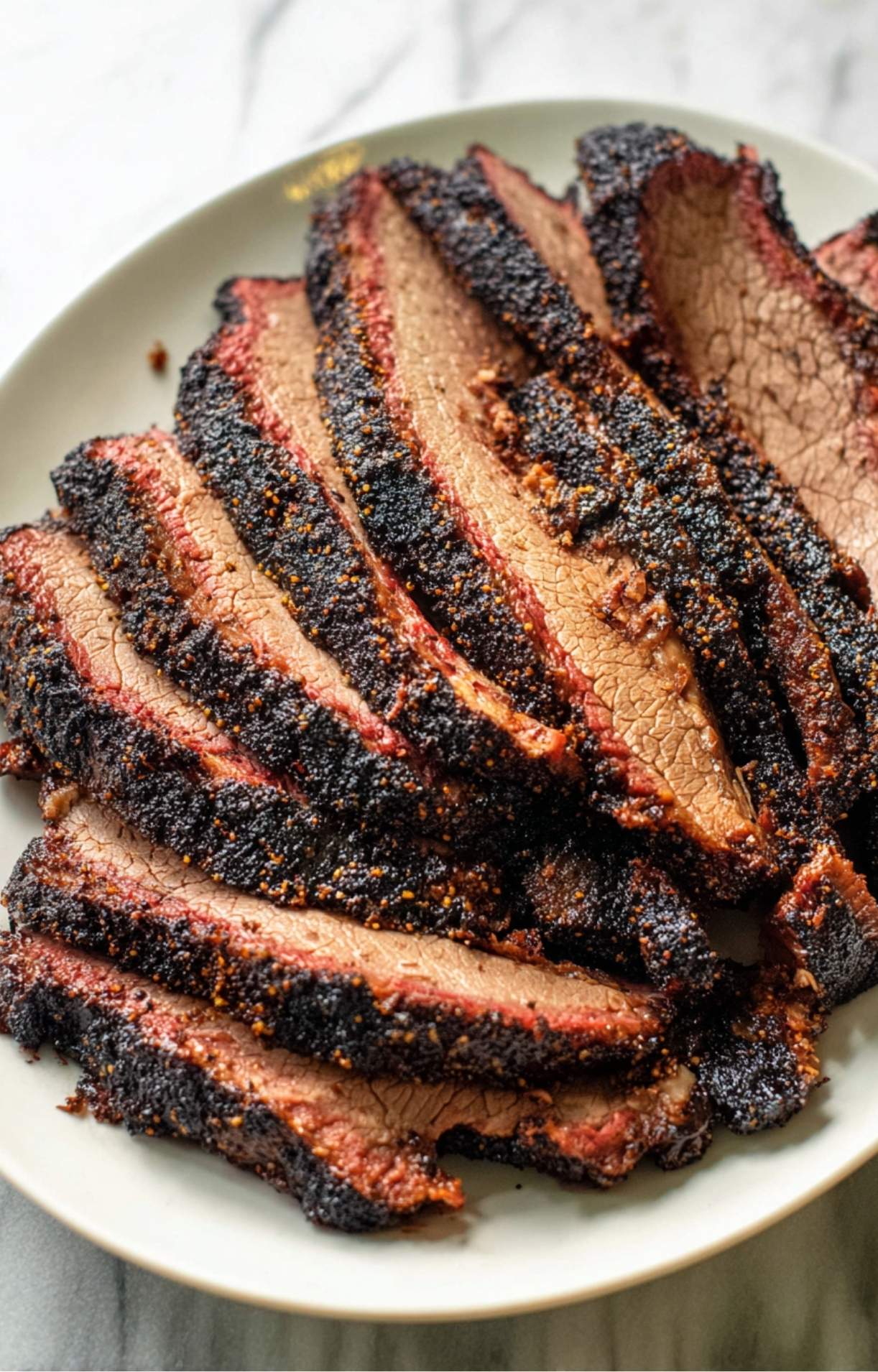
Tender smoked beef brisket with a rich bark, deep smoky flavor, and juicy slices that fall apart with every bite. This low and slow brisket recipe walks you through seasoning, smoking, wrapping at the stall, and resting for perfectly tender barbecue brisket.
Ingredients
- 8 to 10 pounds whole beef brisket trimmed to about ¼ inch fat cap
- ½ cup Dijon mustard for coating
- ¼ cup brown sugar
- ¼ cup kosher salt
- ¼ cup coarse black pepper
- 2 tablespoons paprika
- 1 tablespoon garlic powder
- 1 tablespoon onion powder
- ½ teaspoon cayenne pepper optional
- 1 large yellow onion sliced
- 1 bulb garlic cloves peeled
- 2 cups beef broth optional for spritzing or pan liquid
- Wood for smoking such as hickory oak or fruit wood
Instructions
- Remove brisket from the refrigerator about 45 minutes before cooking and pat dry with paper towels.
- Coat the brisket evenly with Dijon mustard. In a bowl mix brown sugar, kosher salt, black pepper, paprika, garlic powder, onion powder, and cayenne then press the rub generously onto all sides of the brisket.
- Preheat a smoker to 225 to 250 degrees Fahrenheit using hickory or oak wood for classic smoke flavor.
- Place a disposable pan with sliced onion, garlic, and about 1 cup water or beef broth in the smoker for moisture.
- Insert a probe thermometer into the thickest part of the brisket flat. Place the brisket fat side down on the smoker grate and close the lid.
- Smoke the brisket while maintaining steady temperature. Optionally spritz lightly with beef broth or water every 1 to 2 hours.
- When the brisket reaches the stall around 165 to 175 degrees Fahrenheit wrap it tightly in heavy foil or butcher paper and return it to the smoker.
- Continue cooking until the internal temperature reaches about 200 degrees Fahrenheit and the meat feels probe tender.
- Remove the wrapped brisket and rest it in an insulated cooler or warm place for at least 30 to 60 minutes before slicing.
- Separate the point from the flat and slice the brisket across the grain into ¼ inch slices. Serve immediately.
Notes
Use a reliable thermometer because internal temperature determines doneness more accurately than time. Maintain steady smoker heat between 225 and 250 degrees Fahrenheit. For juicier brisket wrap in foil at the stall; for firmer bark use butcher paper. Resting the brisket for at least one hour improves moisture and slicing texture.
Nutrition Information
Serving Size 1 servingAmount Per Serving Calories 420Total Fat 28gSaturated Fat 11gTrans Fat 0gUnsaturated Fat 15gCholesterol 95mgSodium 720mgCarbohydrates 8gFiber 1gSugar 6gProtein 34g
Tips for a great bark and moisture control
- Use a generous rub and press it firmly into the meat. Sugar in the rub helps caramelize and form crust.
- Keep the smoker at a steady heat. Fluctuations cost time and can impact smoke flavor.
- Avoid over-spraying. Too much liquid on the surface cools the meat and delays cooking. A light mist every two hours is enough.
- If the bark looks pale, you can unwrap briefly, rotate, and return to the smoker. Avoid doing this often.
- Consider finishing with a glaze or mop in the last 30 minutes for extra shine. Use a simple mix of beef broth, a touch of brown sugar, and a splash of vinegar.
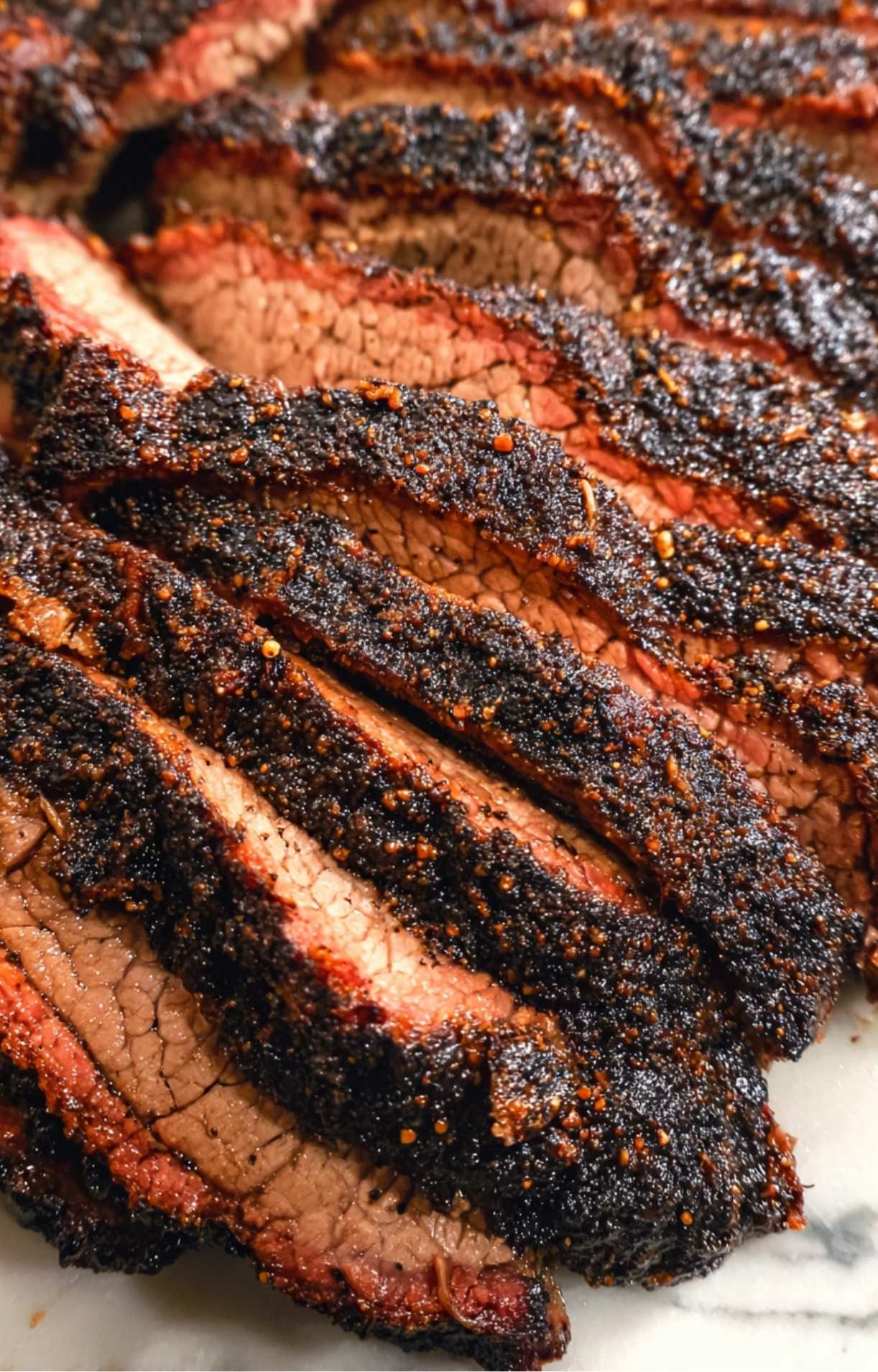
Alternatives to smoking for safety or convenience
If you do not have a smoker or cannot use one safely, these options give brisket with similar tenderness.
Oven method
- Preheat oven to 275 F.
- Apply mustard and rub, then sear brisket fat side down in a hot pan for 3 to 5 minutes to develop color.
- Place brisket in a roasting pan with onions, garlic, and 1 cup beef broth. Cover tightly with foil.
- Roast until internal temperature is 195 to 200 F, about 1 hour and 15 minutes per 3 pounds depending on your oven. Let rest and slice. This method yields tender brisket with less smoke flavor.
Slow cooker method
- Season as directed and place brisket in a large slow cooker with onions, garlic, and beef broth.
- Cook on low for 8 to 10 hours until fork tender. Remove and rest before slicing. The slow cooker is hands-off but does not produce a bark.
If you are under 18, these alternatives are safer to use at home with minimal supervision.
Serving ideas and leftover uses
- Brisket sandwiches with pickles and a swipe of barbecue sauce on a soft bun.
- Brisket tacos with chopped onion, cilantro, and a squeeze of lime.
- Brisket hash with diced potatoes and eggs for a hearty brunch.
- Brisket pizza with barbecue sauce, red onion, and mozzarella.
Leftovers keep well and often taste even better after a day in the fridge because flavors meld.
Storage and reheating
- Refrigerate brisket in airtight containers for up to four days.
- Freeze in portions for up to three months. Thaw in the refrigerator overnight before reheating.
- Reheat gently in a low oven or covered skillet with a splash of beef broth to keep slices moist. For crisped edges reheat in a hot pan briefly.
Common troubleshooting
- Brisket is tough: You likely pulled it before collagen fully converted. Return to heat and cook until probe-friendly tenderness, or slice thin and serve with sauce.
- Bark turned too salty: Reduce salt in the rub next time and use a milder rub blend.
- Brisket took longer than expected: Smoker temperature dips, brisket size, and ambient conditions affect timing. Rely on internal temperature not clock time.
FAQ
Rest for at least 30 minutes. For best results rest 1 to 2 hours wrapped in foil in a cooler. Resting redistributes juices and firms the meat for slicing.
The stall is a phase where internal temperature can plateau, typically between 165 F and 175 F. Moisture evaporation cools the meat surface and prevents temperature rise. Wrapping in foil or butcher paper helps push through the stall faster.
Foil locks in moisture and shortens cook time. Butcher paper allows some moisture escape and gives a firmer bark. For the juiciest result choose foil. For a chewier bark choose butcher paper.
Yes. Reserve the point, cube it after the brisket is done, toss with sauce and extra rub, and place back on the smoker or in the oven until caramelized and sticky.

Leave a Reply