
Every other version of Mississippi Pot Roast gives you fall-apart beef. This one gives you fall-apart beef with a smoke ring, a bark crust, and a depth of flavour that no slow cooker can touch. It takes longer. It requires a smoker. It is absolutely worth it.
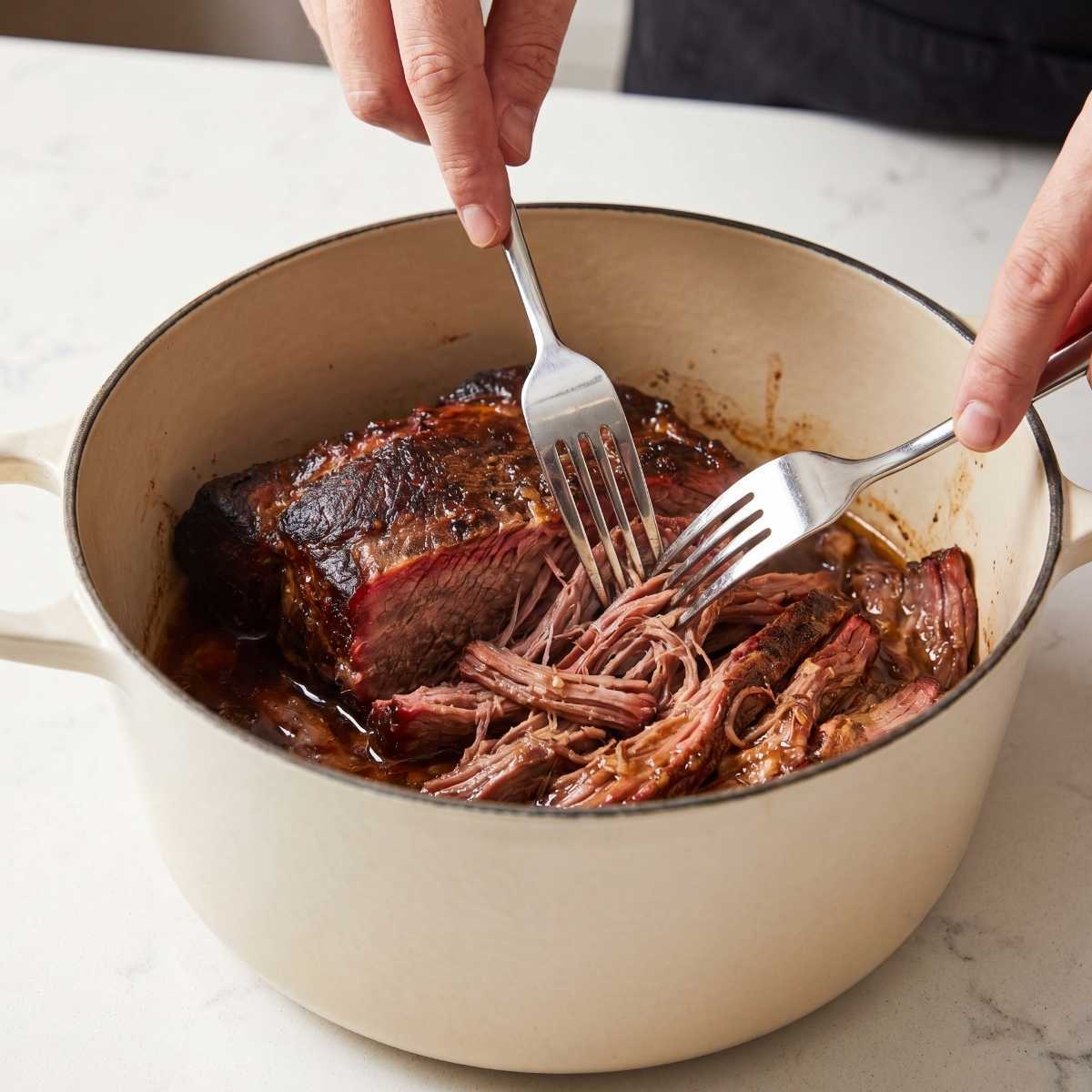
This is the two-phase method: smoke the chuck roast unwrapped at 225°F to build a bark and absorb smoke, then braise it in the original five-ingredient Mississippi formula inside a Dutch oven or foil pan on the smoker. The result is every good thing about the classic dish plus everything a proper smoke can add.
If you are new to the dish, start with the original Mississippi Pot Roast recipe to understand the base before adding the smoking phase.
Jump to:
- Why Smoke Mississippi Pot Roast?
- Equipment and Wood Choice
- Ingredients
- Step-by-Step Instructions
- Temperature and Time Guide
- Smoked Mississippi Pot Roast (Pellet Grill Recipe)
- Tips for the Best Smoked Mississippi Pot Roast
- What to Serve with Smoked Mississippi Pot Roast
- How Smoked Compares to Other Methods
- Frequently Asked Questions
Why Smoke Mississippi Pot Roast?
The original recipe is great because of three things: the seasoning packets create a savourylayer, the butter creates richness, and the pepperoncini add acidity. Smoking adds a fourth dimension that none of the other cooking methods can replicate: a bark crust on the outside of the beef and smoke penetration into the meat that changes the flavour from the inside out.
Here is what smoking specifically adds:
- Bark: the dry surface of an unwrapped chuck roast at 225°F develops a dark, slightly crispy exterior crust from the combination of dry heat, smoke, and the Maillard reaction. When that bark goes into the braising liquid with the butter and pepperoncini, it dissolves slightly and creates a smoky, deeply complex sauce that no slow cooker can produce.
- Smoke ring: a pink smoke ring just beneath the bark is the visual marker of proper smoke penetration. It does not change the texture but it signals that the smoke flavour has absorbed into the meat.
- Layered flavour: the combination of smoke, ranch seasoning, au jus, and pepperoncini creates something more complex than any single-method version of this dish.
The trade-off is time. This recipe takes 7 to 9 hours total versus 8 hours set-and-forget in the slow cooker. But most of that time is hands-off. You are not babysitting the smoker.
Equipment and Wood Choice
Smoker types
- Pellet grill (Traeger, Pit Boss, Weber SmokeFire): the easiest option for this recipe. Set-and-forget temperature control means you can walk away during the smoke phase exactly as you would with a slow cooker. Recommended for anyone new to smoking.
- Offset smoker: produces the most authentic smoke flavour but requires more active management to maintain temperature. Best for experienced smokers.
- Kettle grill (indirect setup): works with a two-zone fire and wood chunks added to the coals. Harder to maintain a consistent 225°F over several hours but achievable.
- Electric smoker: the most hands-off option after a pellet grill. Less smoke intensity than an offset but more than enough for this recipe.
Best wood for this recipe
| Wood | Flavour | Works with the dish? |
|---|---|---|
| Oak | Medium, classic BBQ smoke | Yes, best all-round choice |
| Hickory | Strong, bacon-like | Yes, pairs especially well with the ranch seasoning |
| Pecan | Medium, slightly sweet and nutty | Yes, adds complexity without overpowering |
| Cherry | Mild, slightly sweet, dark colour | Yes, blends well with hickory or oak |
| Mesquite | Very strong, earthy | Use sparingly, can overpower the seasoning |
| Apple or fruit wood | Mild and sweet | Too mild for this recipe, not enough smoke character |
Recommended blend: 70% oak or hickory, 30% cherry. This gives a strong smoke base with a dark, appealing colour on the bark.
Ingredients
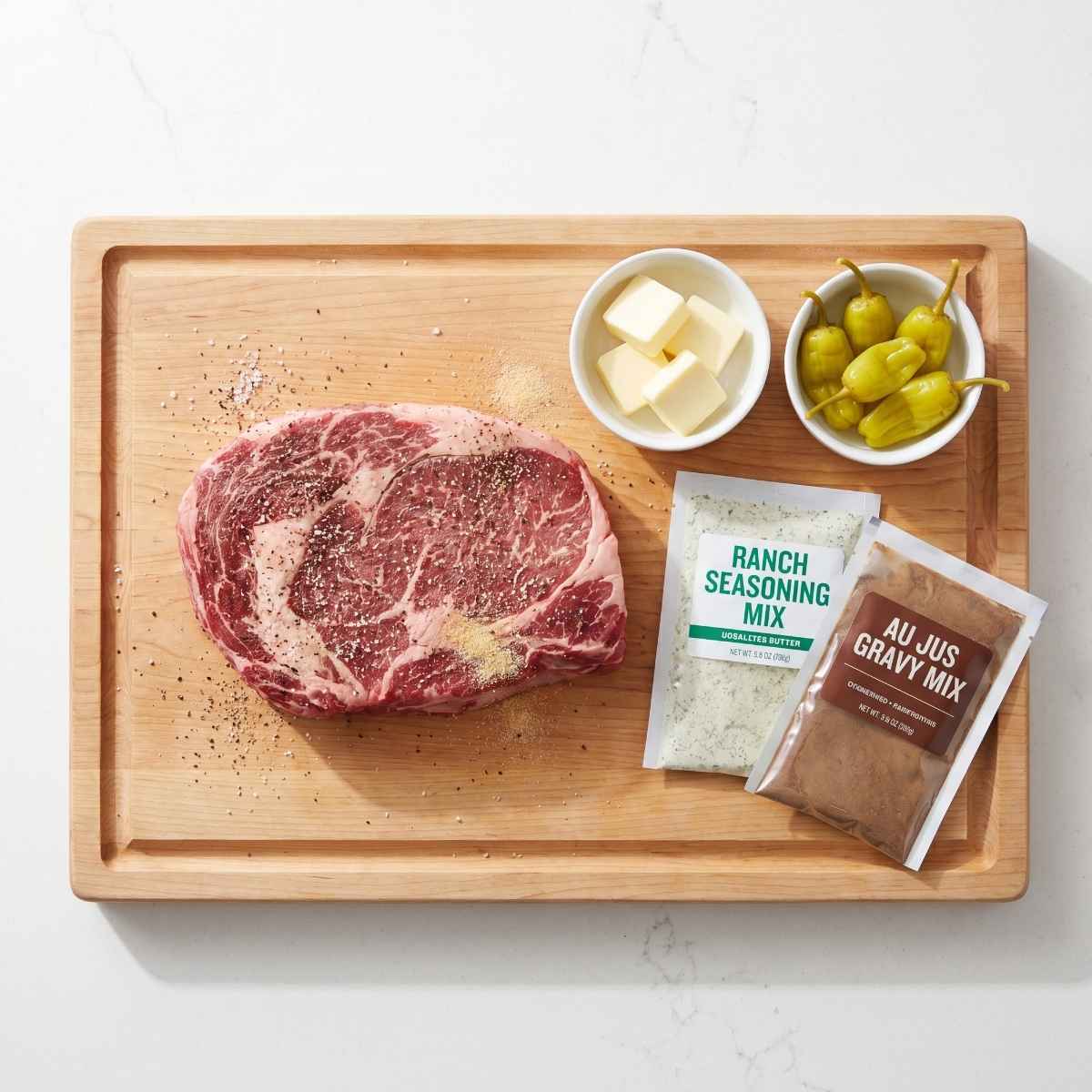
For the smoke phase
- 3 to 4 lb chuck roast – the best cut for this recipe because of its fat and collagen content. Full cut guide: best cut of meat for Mississippi Pot Roast.
- 1 tablespoon coarse kosher salt – applied the night before or at least 1 hour ahead of smoking to dry-brine the surface and help the bark form.
- 1 tablespoon coarse black pepper – a simple salt and pepper rub is all you need for the smoke phase. The seasoning packets provide the complex flavour during the braise.
- 1 teaspoon garlic powder – optional but complements the ranch seasoning that comes later.
For the braise phase (original Mississippi formula)
- 1 packet (1 oz) dry ranch seasoning mix
- 1 packet (1 oz) au jus gravy mix
- 4 tablespoons unsalted butter
- 6 to 8 whole pepperoncini peppers plus 2 tablespoons brine
Dry-brine the night before for a better bark. Season the chuck roast with the salt, pepper, and garlic powder, place it uncovered on a wire rack over a sheet pan, and refrigerate overnight. The surface will dry out slightly, which helps the smoke adhere and the bark form faster during the smoke phase. This step is optional but noticeably improves the result.
Step-by-Step Instructions
Phase 1: The smoke (2 to 3 hours)
Step 1 – Preheat the smoker
Preheat your smoker to 225°F (107°C). Add your wood pellets, chunks, or chips depending on your smoker type. Allow the smoker to reach temperature and produce clean, thin blue smoke before adding the meat. Thick white smoke can make the bark bitter.
Step 2 – Season the roast
If you did not dry-brine overnight, pat the chuck roast very dry with paper towels and apply the salt, pepper, and garlic powder rub generously to all surfaces. Let it sit at room temperature for 30 to 45 minutes while the smoker preheats. A dry surface is essential for bark formation.
Step 3 – Smoke unwrapped
Place the chuck roast directly on the smoker grate, fat-side up. Insert a leave-in meat thermometer into the thickest part of the roast. Smoke at 225°F, unwrapped and uncovered, until the internal temperature reaches 160°F to 165°F. This takes approximately 2 to 3 hours depending on the thickness of the roast.
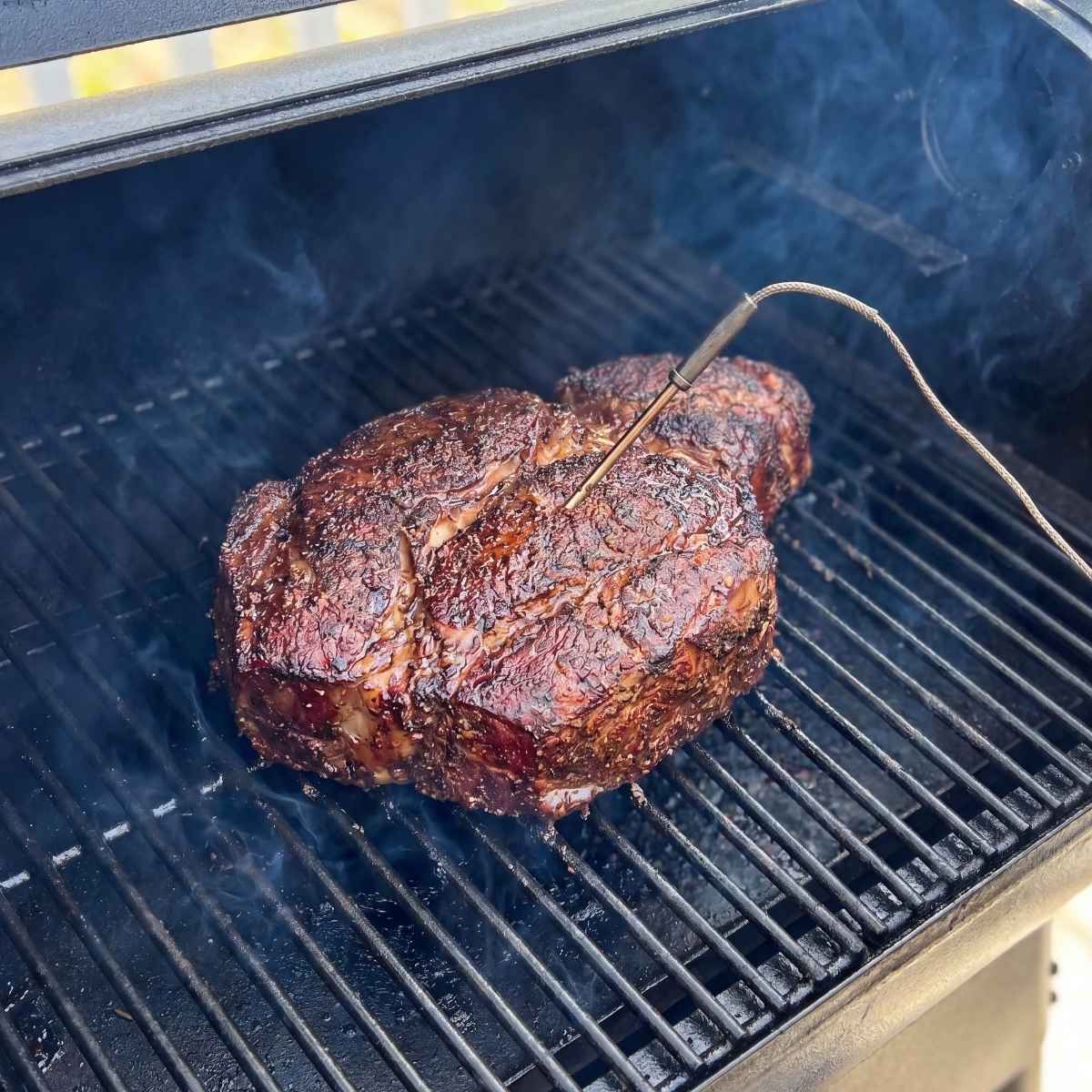
At this internal temperature, the bark will have formed on the outside and the roast will have taken on significant smoke colour. This is your transition point to the braise phase.
The stall: around 150°F to 160°F the internal temperature of the roast will plateau for 30 to 60 minutes as evaporative cooling slows the temperature rise. This is normal. Do not increase the smoker temperature. The stall ends on its own and the temperature will continue rising. For this recipe the stall does not matter because you are moving to the braise phase at 160°F regardless.
Phase 2: The braise (4 to 5 hours)
Step 4 – Transfer to a Dutch oven or foil pan
When the roast hits 160°F to 165°F, remove it from the smoker grate and place it in a Dutch oven or deep disposable foil pan that fits on your smoker grate.
Step 5 – Add the Mississippi Pot Roast formula
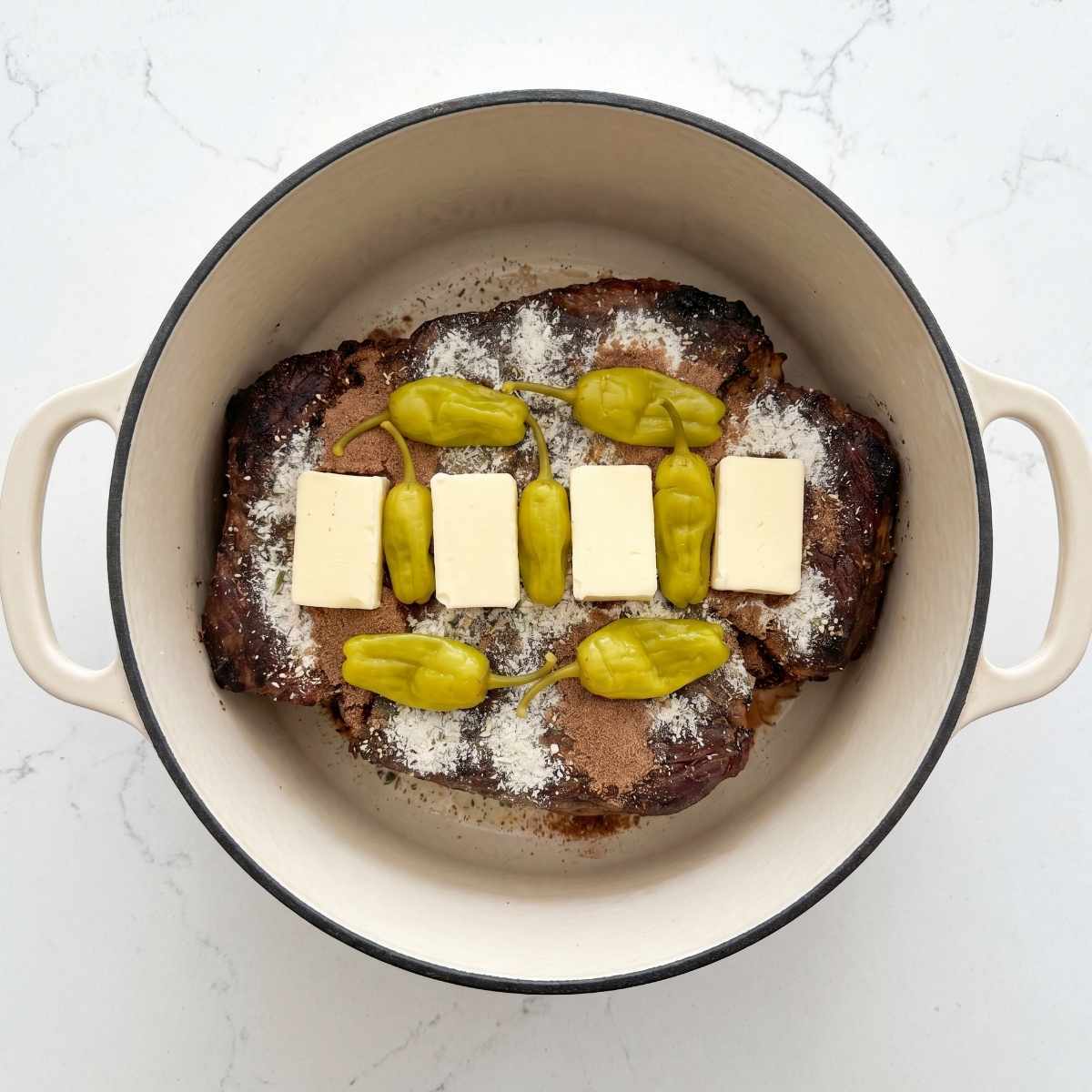
Sprinkle the ranch seasoning packet evenly over the smoked roast, then the au jus packet. Place the butter pats on top. Arrange the pepperoncini peppers around the roast and add the 2 tablespoons of brine. Do not add water.
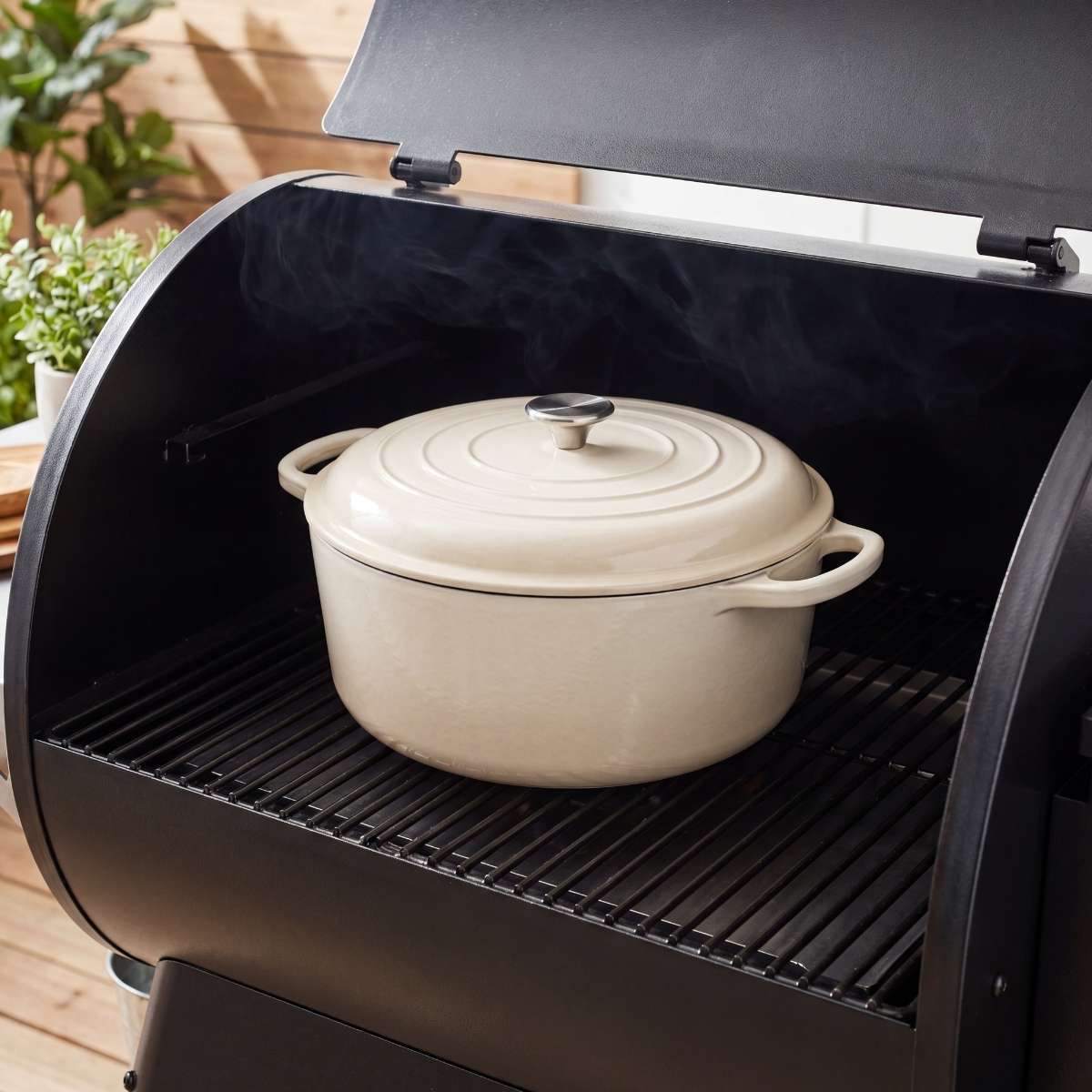
Step 6 – Cover and braise on the smoker
Cover the Dutch oven with its lid, or cover the foil pan tightly with two layers of heavy-duty aluminium foil. Place back on the smoker grate. Increase the smoker temperature to 275°F (135°C). Braise for 3 to 4 hours until the internal temperature reaches 203°F to 210°F and the beef pulls apart easily with two forks.
Step 7 – Rest before shredding
Remove the Dutch oven from the smoker and allow the roast to rest, still covered, for 20 to 30 minutes. This resting period lets the juices redistribute through the meat. Do not skip it. The beef will be noticeably juicier for having rested.
Step 8 – Shred and serve
Shred the beef directly in the Dutch oven with two forks. Toss through the smoky, buttery cooking juices. Taste and adjust salt if needed. Serve immediately over mashed potatoes or smashed potatoes with plenty of the jus spooned over the top.
Temperature and Time Guide
| Phase | Smoker temp | Target internal temp | Approximate time |
|---|---|---|---|
| Phase 1: Smoke (unwrapped) | 225°F (107°C) | 160°F to 165°F (71 to 74°C) | 2 to 3 hours |
| Phase 2: Braise (covered) | 275°F (135°C) | 203°F to 210°F (95 to 99°C) | 3 to 4 hours |
| Rest (off heat, covered) | n/a | n/a | 20 to 30 minutes |
| Total time | 5.5 to 7.5 hours |
Times vary based on the thickness of the roast and how consistently your smoker maintains temperature. Always cook to internal temperature, not to time.

Smoked Mississippi Pot Roast (Pellet Grill Recipe)
Smoked Mississippi Pot Roast on a pellet grill or smoker. Two-phase method: smoke the chuck roast at 225°F to build a bark, then braise with ranch, au jus, butter and pepperoncini at 275°F until fall-apart tender.
Ingredients
- 3-4 lbs (1.4-1.8 kg) chuck roast
- 1 tablespoon coarse kosher salt
- 1 tablespoon coarse black pepper
- 1 teaspoon garlic powder
- 1 oz packet dry ranch seasoning mix
- 1 oz packet au jus gravy mix
- 4 tablespoons (56g) unsalted butter, cut into pats
- 6-8 whole pepperoncini peppers plus 2 tablespoons brine
Instructions
- Preheat smoker: Preheat smoker to 225°F (107°C) with oak or hickory wood until producing thin blue smoke.
- Season and smoke: Pat the chuck roast dry. Apply salt, pepper, and garlic powder rub to all surfaces. Smoke unwrapped at 225°F until internal temperature reaches 160°F to 165°F, approximately 2 to 3 hours.
- Add Mississippi formula and braise: Transfer roast to a Dutch oven or foil pan. Add ranch seasoning, au jus mix, butter pats, and pepperoncini peppers. Cover tightly. Increase smoker temperature to 275°F and braise for 3 to 4 hours until internal temperature reaches 203°F to 210°F.
- Rest: Remove from smoker and rest covered for 20 to 30 minutes.
- Shred and serve: Shred the beef with two forks, toss through the smoky cooking juices, and serve over mashed potatoes with jus spooned over the top.
Notes
Pro Tip: Always cook to internal temperature rather than checking the clock, as every chuck roast and smoker behaves differently. Do not push through the stall by raising the smoker temperature during Phase 1—let the bark form naturally. For the best braise results, utilize a cast-iron Dutch oven directly on your smoker grates rather than a disposable foil pan to ensure even heat retention.
Nutrition Information
Yield 1 Serving Size 1Amount Per Serving Calories 632Total Fat 47gSaturated Fat 30gUnsaturated Fat 18gCholesterol 122mgSodium 8951mgCarbohydrates 47gFiber 7gSugar 5gProtein 11g
Nutritional data is estimated
Tips for the Best Smoked Mississippi Pot Roast
Cook to temperature, not to time
Every chuck roast is a different thickness and every smoker runs slightly differently. The times above are guides. Your leave-in thermometer is the only reliable indicator. Pull to the braise phase at 160°F to 165°F. Pull off the smoker at 203°F to 210°F. These are the numbers that matter, not the clock.
Thin blue smoke only
Thick white or grey smoke contains incomplete combustion products that deposit bitter compounds on the meat surface. You want thin, barely visible blue smoke during the unwrapped phase. If your smoker is producing thick white smoke, let it run with the lid open for a few minutes until the smoke thins and clears before adding the meat.
Keep the lid closed
Every time you open the smoker lid during the smoke phase, you drop the temperature by 25 to 50°F and let smoke escape. Check through the temperature probe readout rather than lifting the lid. Only open the smoker to transition the roast from Phase 1 to Phase 2.
Do not skip the rest
Resting the covered Dutch oven off the heat for 20 to 30 minutes allows the muscle fibres to relax and reabsorb the juices they pushed out during cooking. A rested roast shreds into juicier, more tender pieces than one cut open immediately. This applies more to smoked meat than any other method because the higher heat of Phase 2 at 275°F tightens the fibres more than a slow cooker at 190°F would.
Save every drop of the braising liquid
The cooking jus from a smoked Mississippi Pot Roast is the best version of the sauce this recipe produces. The smoke compounds from Phase 1 dissolve into the butter and seasoning liquid during Phase 2, creating a deeply complex sauce you cannot achieve any other way. Strain it if needed, skim the fat, and serve as a dipping sauce alongside the beef.
Use the Dutch oven on the smoker for Phase 2
If you own a Dutch oven, use it rather than a foil pan for Phase 2. The cast iron retains heat more evenly and helps the braising liquid stay at a consistent temperature throughout the covered phase. The foil pan works but can develop hot spots near the edges, especially on offset smokers.
What to Serve with Smoked Mississippi Pot Roast
The smoky, buttery jus is the centrepiece. Every side dish should complement or absorb it:
- Smashed potatoes – boil baby potatoes, smash flat, then roast at high heat until crispy on the outside. The crispy edges absorb the jus without turning soggy. A natural pairing for smoked beef.
- Creamy mashed potatoes – the classic. Spoon the smoky jus directly over the top as a gravy.
- Texas toast or thick-cut garlic bread – grilled or toasted, for mopping up the sauce. A natural match for anything coming off a smoker.
- Coleslaw – the cool, creamy crunch cuts through the richness of the smoked beef. A vinegar-forward slaw works particularly well here.
- Grilled corn on the cob – while the smoker is running, throw corn on the grate for the last 20 minutes. Brush with butter and the cooking jus for an easy side.
Full side dish guide with 15 options: What to Serve with Mississippi Pot Roast.
Leftover smoked Mississippi Pot Roast makes exceptional sandwiches and sliders. The smoky beef in a toasted hoagie roll with the jus for dipping is one of the best sandwiches you can make. Full ideas: Mississippi Pot Roast Sandwiches, Sliders and Tacos.
How Smoked Compares to Other Methods
| Method | Total time | Bark? | Smoke flavour? | Hands-on time |
|---|---|---|---|---|
| Slow cooker (LOW) | 8 hours | No | No | 5 minutes |
| Dutch oven / oven | 3.5 to 4 hours | If seared first | No | 15 minutes |
| Instant Pot | 90 minutes | If seared first | No | 10 minutes |
| Pellet grill / smoker | 6 to 8 hours | Yes | Yes | 20 minutes |
Other method guides: Slow Cooker Mississippi Pot Roast and Mississippi Pot Roast in the Oven.
Frequently Asked Questions
What temperature do you smoke Mississippi Pot Roast?
225°F (107°C) for the first smoke phase and 275°F (135°C) for the covered braise phase. Start low to maximise smoke absorption and bark development, then increase the temperature for the braise to finish the collagen breakdown efficiently.
How long does it take to smoke Mississippi Pot Roast?
The smoke phase takes 2 to 3 hours at 225°F until the internal temperature reaches 160°F to 165°F. The braise phase takes 3 to 4 hours at 275°F until the internal temperature reaches 203°F to 210°F. Including a 20 to 30 minute rest, total time is 5.5 to 7.5 hours. Always cook to internal temperature rather than time.
Do I need a pellet grill or will any smoker work?
Any smoker that can maintain 225°F consistently works. Pellet grills are the easiest because of their automated temperature control. Offset smokers produce the most smoke flavour intensity. Kettle grills with an indirect two-zone setup work but require more attention to maintain temperature over 2 to 3 hours.
Can I do the braise phase in the oven instead of on the smoker?
Yes. After the smoke phase at 225°F until the roast hits 160°F, transfer to a Dutch oven, add the Mississippi Pot Roast ingredients, and braise in the oven at 300°F for 3 to 3.5 hours. The smoke flavour from Phase 1 stays in the meat regardless of where Phase 2 happens. This approach also frees up the smoker for other things.
What wood is best for smoking Mississippi Pot Roast?
Oak or hickory are the top choices. Oak gives a clean, medium smoke that does not overpower the ranch and pepperoncini flavours. Hickory adds a stronger, bacon-like note that pairs well with the savoury seasoning profile. A blend of 70% oak or hickory and 30% cherry is an excellent combination that also gives the bark a deep, dark colour.
Do I need to wrap the roast in butcher paper or foil during the smoke phase?
No. For this recipe, there is no need to wrap during Phase 1. The goal of Phase 1 is bark development and smoke absorption. Wrapping in foil or butcher paper (the Texas crutch method) traps moisture and softens the bark. Since you are moving directly from the smoke phase to a covered braise with liquid, you want maximum bark formation before the liquid braising begins.
Can I make smoked Mississippi Pot Roast ahead of time?
Yes, and it reheats exceptionally well. Store the shredded beef and all the cooking jus together in an airtight container for up to 4 days in the refrigerator. Reheat in a covered saucepan over low heat with a splash of beef broth. The smoke flavour actually becomes more integrated and mellow on the second day, which most people prefer.

Leave a Reply