
The cut of meat you choose makes or breaks Mississippi Pot Roast. Use the right cut and you get fall-apart, silky beef in a glossy, rich sauce. Use the wrong cut and you get dry, stringy meat in thin, watery liquid no matter how carefully you follow the rest of the recipe.
This guide ranks every cut you might consider, explains the science behind why some work and others do not, and gives you exact cook times for each one so you get the result right every time.
Short answer: chuck roast. Everything below explains why, and what to use if you cannot get it.
Jump to:
Why the Cut of Meat Matters So Much
Mississippi Pot Roast uses a long, low, moist-heat cooking method. The braising liquid (butter, seasoning, and the beef’s own juices) surrounds the meat for 8 hours in the slow cooker. During that time, something specific needs to happen inside the meat for it to become tender: collagen must convert to gelatin.
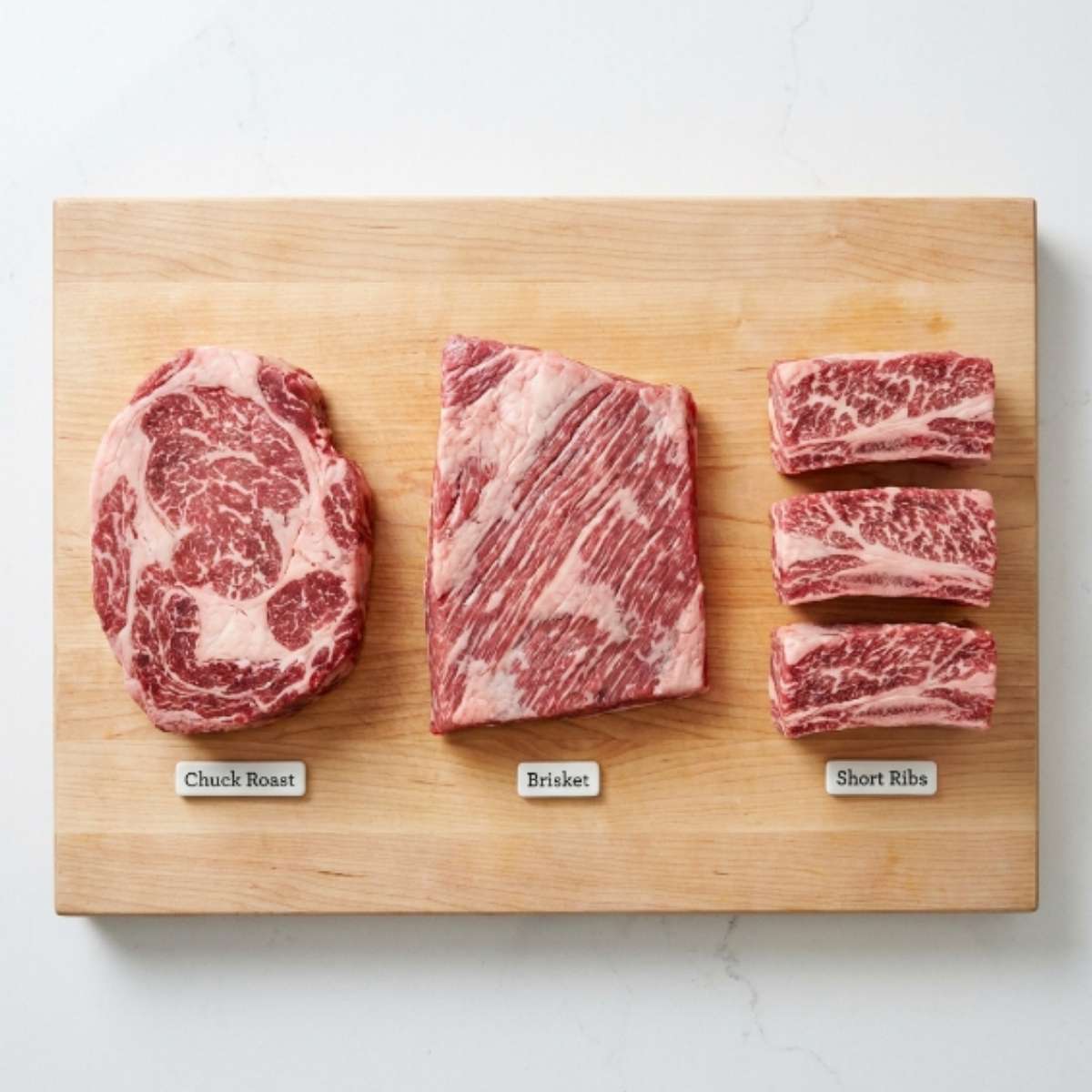
Collagen is the connective tissue found in working muscles. Cuts from parts of the animal that move a lot (shoulder, neck, leg) have high collagen content. When cooked at low temperatures for a long time, collagen dissolves into gelatin, which is what gives braised beef its silky, sticky, fall-apart texture and what thickens the braising liquid into a glossy sauce.
Cuts with low collagen content (lean cuts from less active muscles) do not have this conversion to give. No matter how long you cook them, they will not become silky or fall-apart tender. They will just dry out.
This is the entire reason cut selection matters for this recipe. You need a high-collagen, well-marbled cut that is built for long, slow cooking.
Chuck Roast: The Best Cut for Mississippi Pot Roast
Chuck roast comes from the shoulder of the cow. It is one of the most worked muscles on the animal, which means it is loaded with collagen and intramuscular fat (marbling). Both of those things are exactly what you want for a long braise.
After 8 hours on LOW in the slow cooker, the collagen in a chuck roast fully converts to gelatin. The marbling renders out and mixes with the cooking liquid. The result is beef that shreds into tender, moist strands and a sauce that is naturally thick, glossy, and rich without any thickening agents.
Chuck roast is also widely available, moderately priced, and consistently sized. A 3 to 4 lb chuck roast fits perfectly in a 6-quart slow cooker and serves 6 to 8 people comfortably.
What to look for when buying chuck roast
- Marbling: look for visible white fat running through the red meat in thin streaks. More marbling means more flavour and a richer sauce.
- Thickness: aim for a roast that is at least 2 inches thick at the thinnest point. Very thin cuts cook faster and can dry out before the collagen has fully broken down.
- Labels to look for: chuck roast, chuck pot roast, blade roast, shoulder roast. These are all variations of the same primal cut and all work equally well.
- Bone-in vs boneless: both work. Bone-in adds a little extra richness to the sauce but requires you to remove the bone before shredding. Boneless is easier to handle.
Chuck roast goes by several names depending on your butcher and region. Chuck pot roast, blade roast, shoulder roast, and cross-rib roast are all from the same general area of the animal and all work well in this recipe. If you are not sure, show your butcher the original Mississippi Pot Roast recipe and ask for their recommendation.
Alternative Cuts That Work
Chuck roast is the best choice but not the only one. These cuts also produce excellent results:
Brisket
Brisket is another high-collagen, well-marbled cut from the chest of the cow. It produces a similarly rich, fall-apart result in Mississippi Pot Roast, though the texture is slightly different: brisket tends to pull apart in longer, more defined strands rather than the chunky shreds you get from chuck roast.
The main practical difference is size. Brisket is often sold as a large, flat cut (4 to 8 lbs) which may not fit in a standard 6-quart slow cooker without trimming. It is also more expensive per pound than chuck roast. If you can get a smaller flat-cut brisket in the 3 to 4 lb range, it is an excellent alternative.
Cook time: same as chuck roast. 8 hours on LOW, 4 to 5 hours on HIGH.
Bottom Round Roast
Bottom round is leaner than chuck roast and has less marbling, which means the sauce will be slightly thinner and the beef slightly less rich. That said, it still has enough collagen to become tender over a long braise and it is a perfectly acceptable choice if chuck roast is not available.
The key with bottom round is not to overcook it. Because it is leaner, it has less fat to protect it from drying out. Check at the 7-hour mark on LOW rather than going the full 8 hours.
Cook time: 7 to 8 hours on LOW, 4 hours on HIGH.
Short Ribs (boneless)
Boneless short ribs are an indulgent alternative that produce an exceptionally rich, deeply flavoured result. Short ribs have very high fat content and a lot of connective tissue, which means the sauce becomes even more glossy and concentrated than with chuck roast.
The trade-off is cost. Short ribs are significantly more expensive than chuck roast. They also produce more fat than chuck roast, so skimming the cooking liquid before serving is important. Consider this the premium version of the recipe for a special occasion.
Cook time: 7 to 8 hours on LOW.
Pork Shoulder (Bone-In or Boneless)
Pork shoulder works beautifully with the Mississippi seasoning formula. The ranch and au jus flavours translate directly, and pork shoulder has similar collagen and fat content to chuck roast so the textures are comparable. The result is slightly lighter in colour and flavour but still very good.
This is the basis for the pork variation covered in the Mississippi Pot Roast variations guide.
Cook time: 8 to 9 hours on LOW for bone-in, 7 to 8 hours for boneless.
Cuts to Avoid
These cuts are not suited to long, slow braising and will produce disappointing results regardless of how carefully you follow the recipe:
Eye of Round
Eye of round is one of the leanest cuts on the animal. It has almost no marbling and very little connective tissue. In a slow cooker for 8 hours it will become dry and tough, not tender. The sauce will be thin and lack the richness that comes from rendered fat and dissolved collagen. Do not use eye of round for Mississippi Pot Roast.
Sirloin Roast
Sirloin is a lean, tender cut that is best cooked quickly to medium-rare, not braised for 8 hours. Long slow cooking makes sirloin dry and stringy. It is the wrong tool for this job.
Tenderloin
Beef tenderloin is the most tender cut on the animal but it achieves that tenderness through a lack of connective tissue, not through collagen breakdown. In a slow cooker it will turn mushy and fall apart for the wrong reasons, and the flavour will be bland because it has almost no fat. It is also extremely expensive. Do not use it for braising.
Top Round
Similar to eye of round, top round is too lean for a long braise. It can be used in a pinch but the result will be noticeably drier and less flavourful than chuck roast. If top round is all that is available, cut the cook time to 6 to 7 hours on LOW and check early.
Full Cut Comparison Table
| Cut | Collagen | Marbling | Result | Recommended? |
|---|---|---|---|---|
| Chuck roast | High | High | Fall-apart, rich sauce | Yes, first choice |
| Brisket (flat cut) | High | Medium-high | Long strands, rich sauce | Yes, excellent |
| Short ribs (boneless) | Very high | Very high | Very rich, premium result | Yes, special occasions |
| Bottom round | Medium | Low-medium | Tender but leaner sauce | Yes, if chuck unavailable |
| Pork shoulder | High | High | Very tender, lighter colour | Yes, pork variation |
| Top round | Low-medium | Low | Slightly dry, thin sauce | Last resort only |
| Eye of round | Low | Very low | Dry, tough, thin sauce | No |
| Sirloin roast | Low | Low | Dry and stringy | No |
| Beef tenderloin | Very low | Low | Mushy and bland | No |
A Note on the Seasoning
The cut affects the texture and the richness of the sauce. The seasoning affects the flavour. The original Mississippi Pot Roast uses two dry packets:
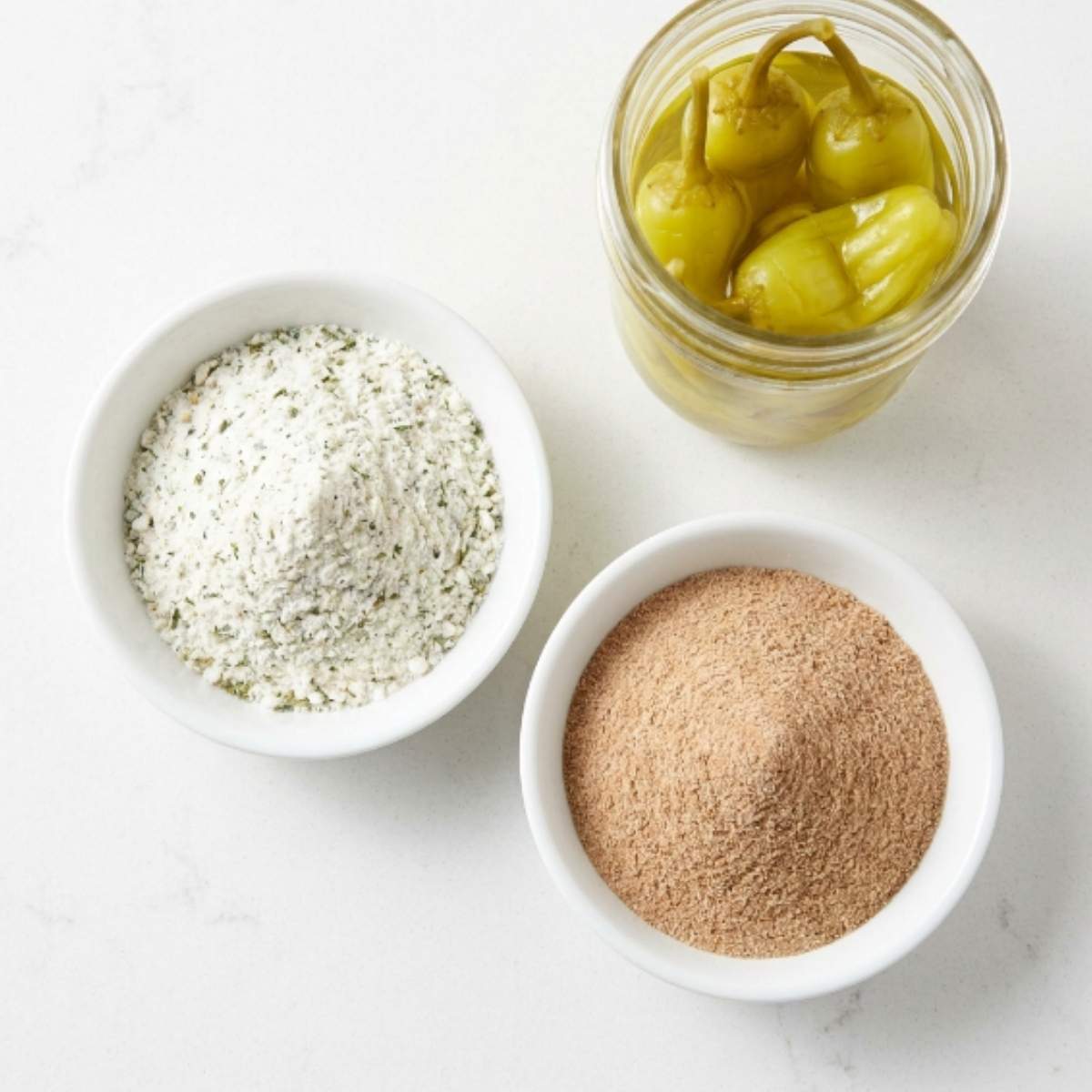
- 1 oz packet dry ranch seasoning mix – provides the herbaceous, tangy, slightly garlicky base flavour. Use a dry packet, not liquid ranch dressing. The dry version concentrates the seasoning rather than adding unwanted liquid.
- 1 oz packet au jus gravy mix – adds a deeply savoury, beefy depth to the braising liquid. This is not interchangeable with onion soup mix or beef broth powder. Au jus mix has a specific seasoning balance that is part of what makes the original recipe distinctive.
The seasoning packets are designed for a 3 to 4 lb roast. If you are cooking a smaller roast (under 2.5 lbs), use three-quarters of each packet. If you are cooking a larger roast (5 lbs or more), use one and a half packets of each. Scaling the seasoning to the size of the meat prevents the dish from being over or under seasoned.
Full seasoning and ingredient details are in the original recipe.
Cook Time by Cut and Method
| Cut | Slow cooker LOW | Slow cooker HIGH | Instant Pot | Oven at 300°F |
|---|---|---|---|---|
| Chuck roast (3 to 4 lb) | 8 hours | 4 to 5 hours | 60 to 70 min | 3.5 to 4 hours |
| Brisket flat (3 to 4 lb) | 8 hours | 4 to 5 hours | 70 to 80 min | 3.5 to 4 hours |
| Short ribs (boneless, 3 lb) | 7 to 8 hours | 4 hours | 45 to 55 min | 2.5 to 3 hours |
| Bottom round (3 to 4 lb) | 7 to 8 hours | 4 hours | 55 to 65 min | 3 to 3.5 hours |
| Pork shoulder (3 to 4 lb) | 8 to 9 hours | 5 hours | 60 to 70 min | 3.5 to 4 hours |
For detailed method guides with step-by-step instructions:
- Slow Cooker Mississippi Pot Roast – full LOW vs HIGH guide
- Instant Pot Mississippi Pot Roast – pressure cook times and natural release guide
- Mississippi Pot Roast in the Oven – Dutch oven method with searing instructions
Frequently Asked Questions
What is the best roast for Mississippi Pot Roast?
Chuck roast is the best choice by a clear margin. Its combination of high collagen content and heavy marbling makes it ideal for the long, low, moist-heat cooking method used in this recipe. After 8 hours on LOW, the collagen fully converts to gelatin and the marbling renders out, creating fall-apart beef and a rich, glossy sauce.
Can you use a different cut if you cannot find chuck roast?
Yes. Brisket (flat cut) and bottom round are the best alternatives. Short ribs produce an even richer result but are more expensive. Avoid lean cuts like eye of round, sirloin, and tenderloin as they will dry out during the long braise.
Does it matter if the chuck roast is bone-in or boneless?
Not significantly. Bone-in chuck roast adds a small amount of extra richness to the sauce because the marrow and bone contribute gelatin during cooking. Boneless is more convenient because you do not need to remove the bone before shredding. Either works well for this recipe.
How much chuck roast do I need per person?
Plan for 6 to 8 oz of raw chuck roast per person. A 3 lb roast serves 4 to 6 people comfortably. A 4 lb roast serves 6 to 8 people. The beef loses roughly 30 to 35% of its weight during cooking as moisture and fat render out, so the finished yield is less than the raw weight.
Can I use a frozen chuck roast?
Not directly in the slow cooker. The USDA advises against cooking frozen meat in a slow cooker because it takes too long to reach a safe internal temperature. Thaw the roast in the refrigerator for 24 to 48 hours before cooking. A fully frozen roast can be used in the Instant Pot with a 20-minute increase to the pressure cook time.
Why does my Mississippi Pot Roast turn out dry?
Three common causes: using a lean cut (eye of round, sirloin), cooking on HIGH for too long, or cooking on LOW past the 9 to 10 hour mark. Chuck roast can actually dry out if left in the slow cooker significantly beyond 8 hours on LOW. Check at the 8-hour mark and move to WARM once it shreds easily.
Can I use pork instead of beef for Mississippi Pot Roast?
Yes. Pork shoulder is the direct equivalent of chuck roast in terms of fat content and collagen. It produces a very similar result with the same seasoning formula. Full guide for pork and other protein variations: Mississippi Pot Roast Variations.
Does the size of the roast affect the cook time?
Yes, but less than most people expect with slow cooking. The size affects the cook time by about 30 to 60 minutes at most. A 2.5 lb chuck roast may be done at 7 to 7.5 hours on LOW while a 4 lb roast may need the full 8 to 8.5 hours. The thickness of the roast matters more than the total weight. A tall, thick roast takes longer than a flat, thin one of the same weight.
Is grass-fed beef better for Mississippi Pot Roast?
Grass-fed chuck roast works well but has a few differences to be aware of. Grass-fed beef is typically leaner than grain-fed, which means slightly less marbling and a slightly less rich sauce. It also has a stronger, more pronounced beef flavour which works well with the ranch and au jus seasoning. If using grass-fed chuck roast, check for doneness at the 7.5-hour mark on LOW as it can finish slightly earlier than grain-fed.
What does the keto version use for seasoning?
The chuck roast stays the same. For a fully keto version, the au jus packet is replaced with garlic powder, onion powder, and GF Worcestershire sauce to eliminate trace carbohydrates. Full guide: Keto Mississippi Pot Roast.

Leave a Reply