
This homemade jello with beef gelatin needs just two ingredients: fruit juice and unflavoured beef gelatin powder. It has no artificial dye, no pork and no packet mix, and it wobbles just like the boxed kind. It takes 10 minutes of hands-on time, and the fridge does the rest.
Below you’ll find the full recipe, the exact beef gelatin to juice ratio, how to make firm jigglers or soft spoonable jello, and what to do if your jello won’t set.
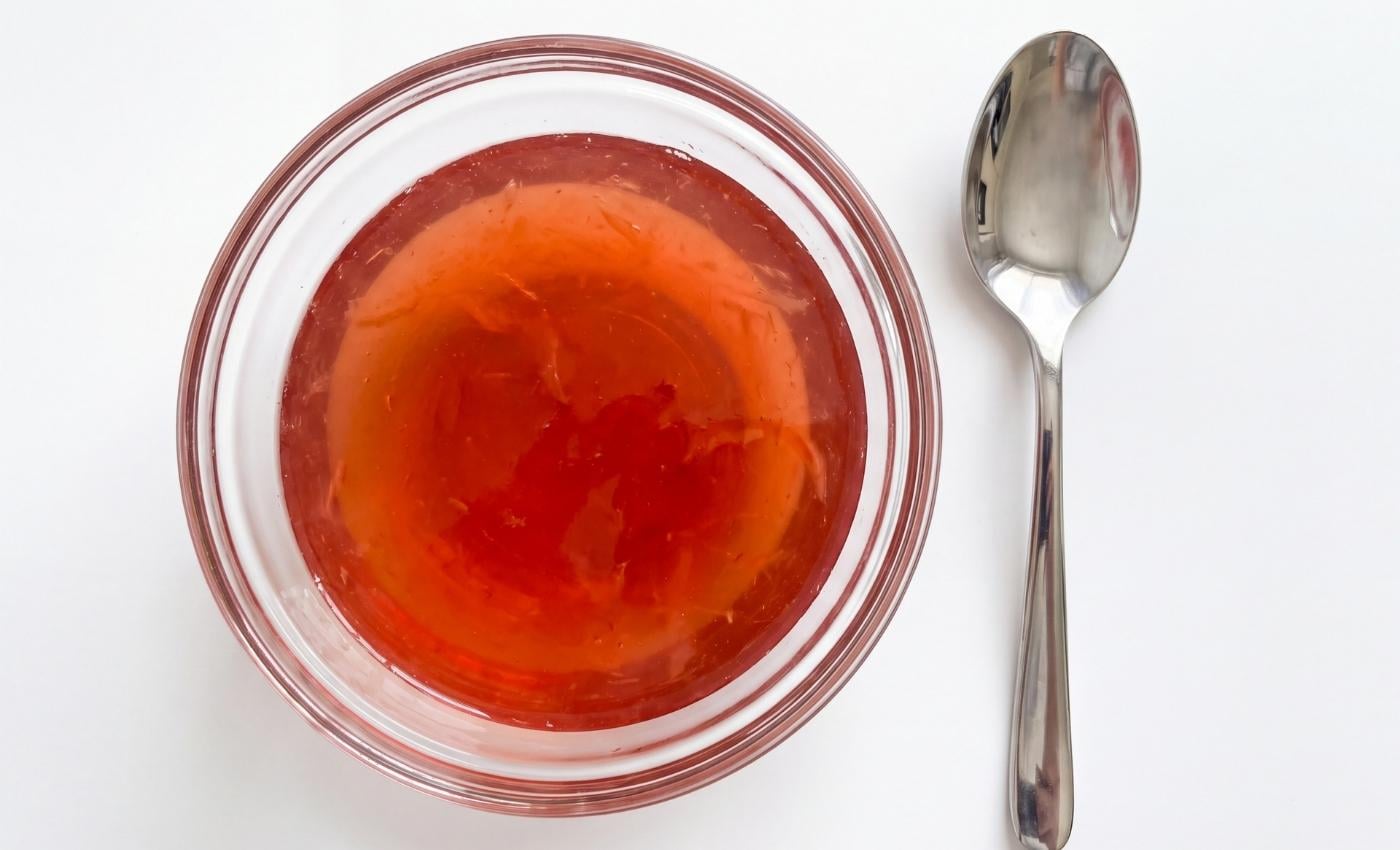
Quick answer: how much beef gelatin makes jello? Use 2 tablespoons of beef gelatin powder per 4 cups of juice (1½ teaspoons per cup) for a classic wobbly jello. Chill it for at least 4 hours.
Why Make Jello with Beef Gelatin?
Boxed jello is mostly sugar, artificial colour and pork gelatin. Making your own beef gelatin jello lets you:
- Skip the dyes and flavourings: the colour and taste come only from the juice
- Keep it pork-free: beef (bovine) gelatin works in exactly the same way
- Control the sugar: naturally sweet juice needs little or no added sweetener
- Get the amino acids: beef gelatin is rich in glycine and proline. Read more in our beef gelatin benefits guide.
New to it? Here’s what beef gelatin is and how it works.
How much beef gelatin do you need for jello?
This beef gelatin jello recipe uses 1 tablespoon of gelatin per 2 cups of juice. The table scales that same ratio for smaller or larger batches. Gelatin brands differ in strength, so check your powder’s directions and treat this as the recipe’s starting ratio rather than a universal setting guarantee.
| Total fruit juice | Beef gelatin powder | Approximate ½-cup servings |
|---|---|---|
| 1 US cup | ½ US tablespoon, or 1 ½ teaspoons | 2 |
| 2 US cups | 1 US tablespoon | 4 |
| 4 US cups | 2 US tablespoons | 8 |
Use level measuring spoons. A US tablespoon is 15 mL; an Australian tablespoon is commonly 20 mL, so use three 5 mL teaspoons for each tablespoon in this recipe. Four US cups are approximately 950 mL. Powder weight varies by product, so use your gelatin label if converting to grams.
Ingredients
- 4 cups (960 ml) pure fruit juice, divided: apple, grape, cranberry blend, pomegranate or orange
- 2 tablespoons unflavoured beef gelatin powder: halal-certified if needed (see our best beef gelatin powder picks)
- 1–2 tablespoons raw honey or maple syrup: optional
Equipment: an 8×8-inch dish (or 8 small cups), a medium saucepan, a whisk and measuring cups.ok great when served. Silicone moulds in novelty shapes are fun for children.
How to Make Jello with Beef Gelatin (Step by Step)
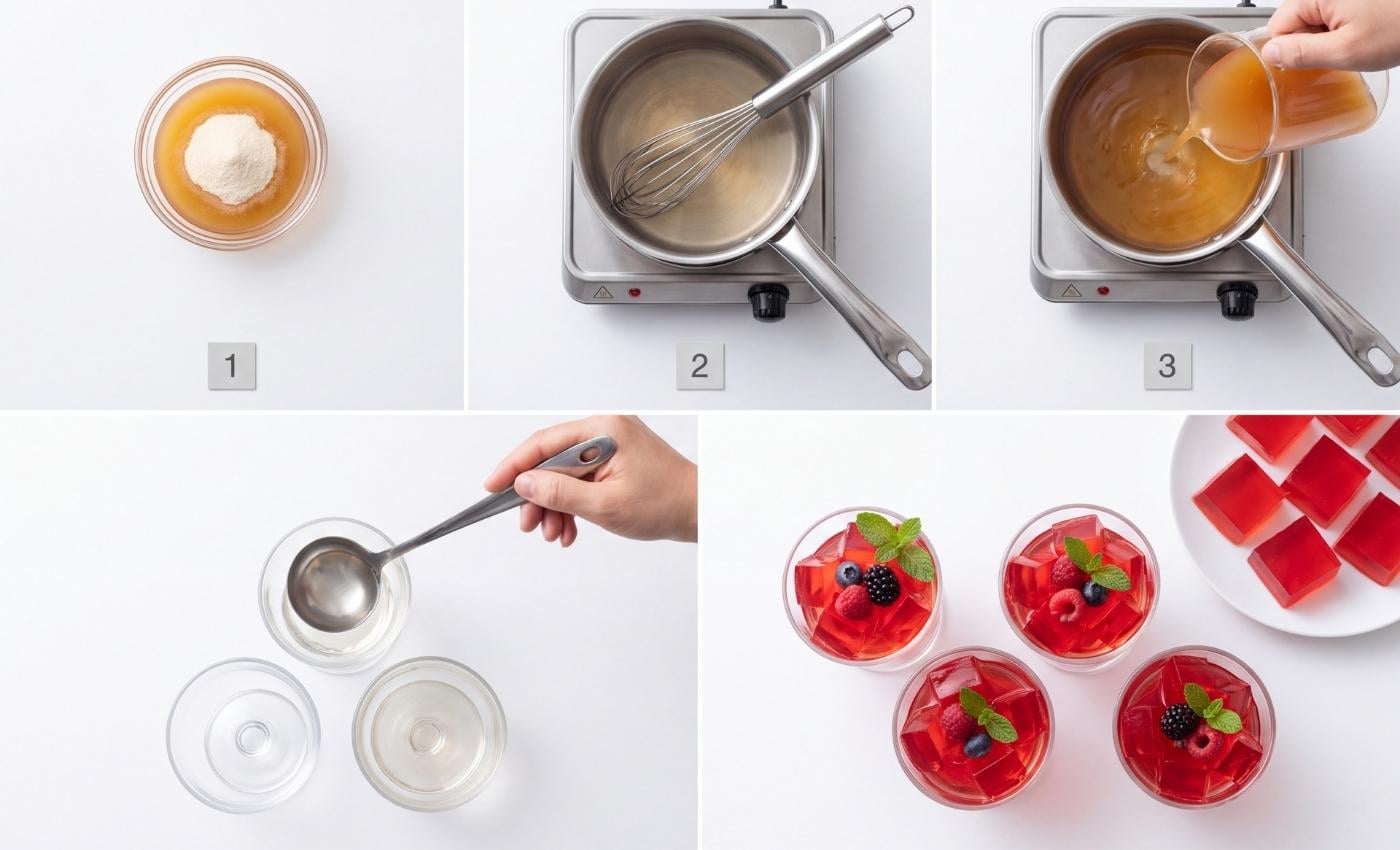
Step 1: Bloom the Gelatin
Pour 1 cup of cold juice into a saucepan and sprinkle the gelatin evenly over the top. Don’t stir. Leave it for 5 minutes until it looks wrinkled and spongy.
Step 2: Melt Gently
Warm the pan over low-medium heat for 2–3 minutes, whisking, until the liquid is completely smooth with no granules. Don’t boil it, because high heat weakens the set. Whisk in the honey now if you’re using it.
Step 3: Add the Cold Juice
Take the pan off the heat and stir in the remaining 3 cups of cold juice. Adding it cold cools the mixture quickly, so your jello sets faster.
Step 4: Pour and Chill
Pour into your dish or cups. Refrigerate uncovered for 1 hour, then cover loosely.
Step 5: Set and Serve
Chill for at least 4 hours, or overnight. Cut into squares or serve straight from the cups.
Beef Gelatin to Juice Ratio for Jello
| Juice | Beef gelatin | Texture |
|---|---|---|
| 1 cup (240 ml) | 1½ teaspoon (½ tbsp) | Classic wobble |
| 2 cups (480 ml) | 1 tbsp | Classic wobble |
| 3 cups (720 ml) | 1½ tbsp | Classic wobble |
| 4 cups (960 ml) | 2 tbsp | Classic wobble (this recipe) |
Firm Jigglers vs Soft Spoonable Jello
| Texture | Juice + 2 tablespoon beef gelatin | Best for |
|---|---|---|
| Firm finger jigglers | 3½ cups | Cutting shapes, lunchboxes, kids |
| Standard wobble | 4 cups | Squares or cups |
| Soft spoonable | 4½ cups | Serving in glasses with a spoon |
Want an even firmer, chewy bite? That’s a gummy. See our beef gelatin gummies recipe, which uses about 4× more gelatin per cup.
Best Juices for Beef Gelatin Jello
| Juice | Flavour | Tip |
|---|---|---|
| Apple | Mild, sweet | A clear pale-gold jello that works with any add-in |
| Grape | Bold, sweet | Deep purple, so no sweetener is needed |
| Cranberry blend | Tart | Add 1 tablespoon honey |
| Pomegranate | Rich, tangy | A jewel-red colour |
| Orange | Bright citrus | Strain out the pulp for a clear jello |
Never use fresh pineapple, kiwi, papaya, mango, fig or ginger juice. Their enzymes break down gelatin, so the jello stays liquid. Canned or pasteurised versions are fine.
Why Didn’t My Jello Set? (Troubleshooting)
| Problem | Cause | Fix |
|---|---|---|
| Still liquid after 4 hours | Fresh pineapple or kiwi juice, collagen peptides instead of gelatin, or too little gelatin | Use pasteurised juice and real gelatin, and check the ratio |
| Lumps or specks | Gelatin wasn’t bloomed, or was stirred too soon | Bloom in cold juice for 5 minutes without stirring |
| Collapses when unmoulded | Too much liquid | Use 3½ cups for jigglers |
| Rubbery | Too much gelatin | Go back to 2 tablespoon per 4 cups |
| Fruit sank to the bottom | Added while the mixture was too thin | Chill until syrupy (about 45 minutes), then fold the fruit in |
Collagen powder won’t work. Hydrolysed collagen peptides dissolve, but they never gel. Here’s the full explanation: beef gelatin vs collagen.
Flavour Variations
- Layered jello: set one colour for 30–40 minutes, then pour a cooled second layer on top
- Creamsicle jello: replace 1 cup of the orange juice with coconut milk
- Sparkling jello: replace 1 cup of the cold juice with chilled sparkling water
- Fruit-filled jello: fold in berries or mandarin segments once the mixture is syrupy
- Savoury version: use beef stock instead of juice to make a classic beef jelly (aspic)
Is Beef Gelatin Jello Halal?
Only when you use a halal-certified beef gelatin, which comes from cattle slaughtered according to Islamic guidelines. Boxed Jell-O uses pork gelatin and is not halal. Not every beef gelatin is halal either, so look for a certification logo. Read the full guide: Is beef gelatin halal and kosher?
How Many Calories Are in Beef Gelatin?
One tablespoon of unflavoured beef gelatin powder has roughly 30–35 calories and about 9 g of protein, with no fat, carbs or sugar (check your brand’s label). In this jello almost all the calories come from the juice, which works out to about 87 calories per serving.
Storage
- Fridge: up to 1 week, covered or in an airtight container
- Freezer: not recommended, because thawed jello turns watery and grainy
More Beef Gelatin Powder Recipes
Got a tub of beef gelatin? Here are more ways to use it:
- Beef gelatin gummies: chewy fruit gummies and gummy bears
- Beef gelatin marshmallows: fluffy and pork-free
- Beef collagen jello: why gelatin, not collagen, makes jello set
- Beef jelly (savoury aspic): an old-fashioned savoury jelly
- Bovine gelatin recipes: more ideas for beef gelatin
Or browse the full recipe index.
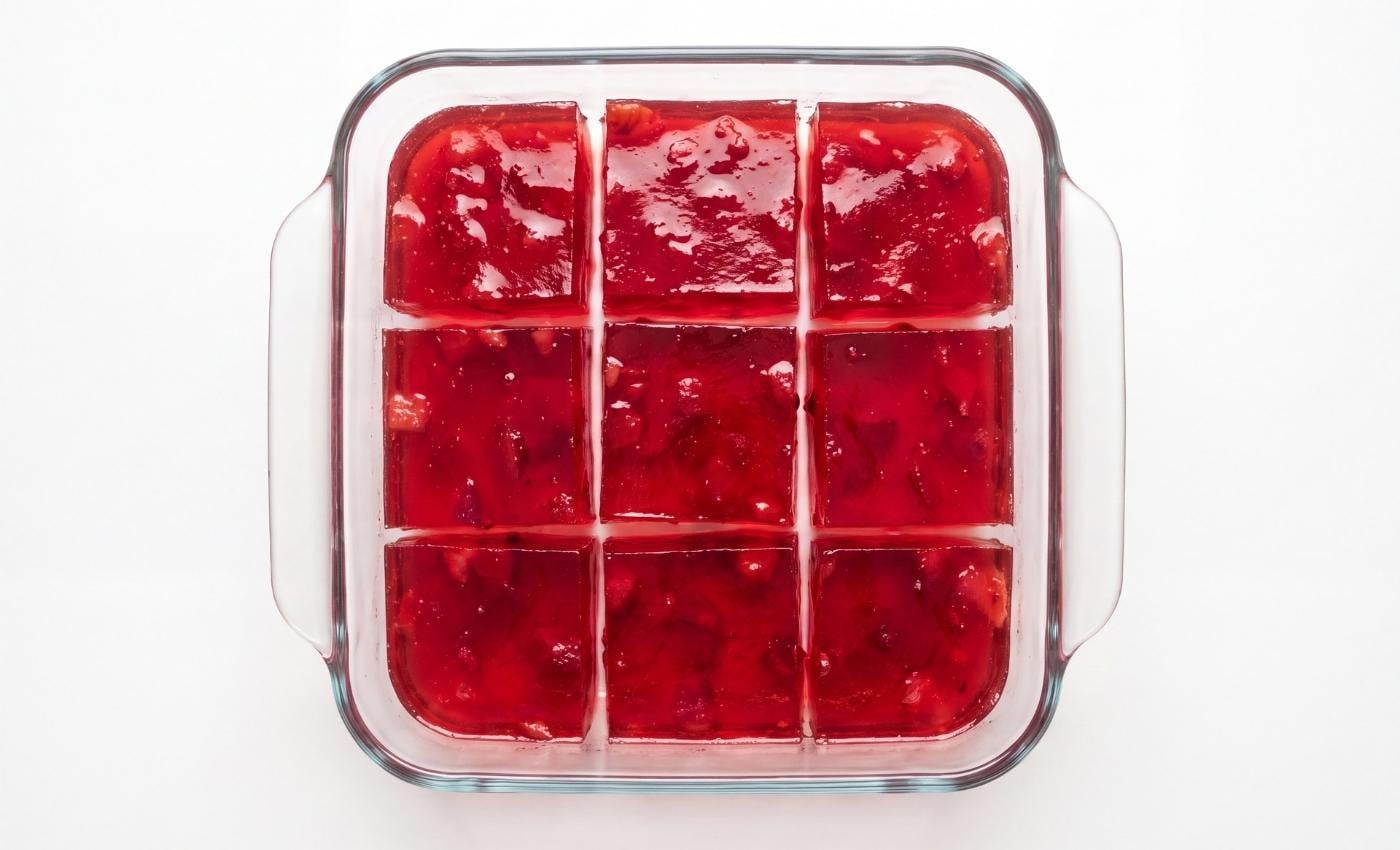

Homemade Jello with Beef Gelatin
Make homemade jello with beef gelatin and pure fruit juice in under 10 minutes. No artificial dye, no corn syrup, no mystery ingredients. Just two ingredients.
Ingredients
- 4 cups pure fruit juice, divided (e.g., grape, apple, cranberry, pomegranate, orange, or tart cherry)
- 2 tablespoons beef gelatin powder (halal certified if needed: NOW Foods or Hearthy Foods)
- 1 to 2 tablespoons raw honey or pure maple syrup (optional, only needed for tart juices)
Instructions
- Step 1: Bloom the Gelatin. Pour 1 cup of cold or room-temperature fruit juice into a medium saucepan. Sprinkle the 2 tablespoons of beef gelatin evenly over the surface. Do not stir yet. Leave it for 5 minutes until the gelatin absorbs the liquid and swells into a thick, wrinkled layer.
- Step 2: Gently Heat the Mixture. Place the saucepan with the bloomed gelatin over low to medium-low heat. Whisk gently and steadily for 2 to 3 minutes until the gelatin dissolves completely and the liquid is smooth. Do not let it boil.
- Step 3: Add the Remaining Juice. Remove the saucepan from the heat. Pour in the remaining 3 cups of cold juice and whisk to combine. If using honey or maple syrup to sweeten a tart juice, stir it in completely at this point.
- Step 4: Pour and Refrigerate. Pour the liquid mixture into an 8x8 inch glass dish, individual cups, ramekins, or decorative moulds. Use a spoon to skim any foam off the surface. Place in the refrigerator uncovered for the first hour, then cover loosely. Chill for a minimum of 4 hours (overnight is best for clean slices).
- Step 5: Serve. Run a thin knife around the edges of the dish and cut the set jello into squares. Serve directly from the dish or individual cups as is, or top with fresh fruit or whipped cream.
Notes
Nutrition Information
Yield 1 Serving Size 1Amount Per Serving Calories 698Sodium 677mgCarbohydrates 147gFiber 1gSugar 133gProtein 25g
Nutritional calculations are approximate estimates based on standard 100% unsweetened grape/apple juice values. Total sugar and carbohydrates will shift based on your juice choice and optional added sweeteners.
Which juice works best for homemade jello?
Apple and grape juice are straightforward starting choices for homemade beef gelatin jello. Choose a juice you enjoy drinking, because gelatin does not supply the fruit flavor.
| Juice | Flavor and appearance | What to check |
|---|---|---|
| Apple | Mild flavor and pale gold color | Use a juice whose sweetness you like. |
| Grape | Strong fruit flavor and purple color | Taste before adding a sweetener. |
| Cranberry blend | Tart flavor and red color | Check whether the blend already contains added sugar. |
| Pomegranate | Tart flavor and deep red color | Blend with apple juice if preferred. |
| Orange | Citrus flavor with a cloudier appearance | Strain pulp if you want a smoother texture. |
Avoid fresh pineapple, kiwi, or papaya in a first batch: their enzymes can interfere with gelatin setting. For pineapple, choose a canned product rather than assuming every bottled or cold-pressed juice behaves the same way.
Frequently Asked Questions
How much beef gelatin do I use to make jello?
2 tablespoons of beef gelatin powder per 4 cups of juice, which is 1½ teaspoons per cup. Use 3½ cups of juice for firmer jigglers, or 4½ cups for a soft, spoonable set.
How do you make jello with beef gelatin powder?
Bloom the gelatin in 1 cup of cold juice for 5 minutes, then warm it gently until dissolved. Stir in 3 cups of cold juice, pour into a dish and chill for at least 4 hours.
Why did my homemade jello not set?
The usual causes are collagen peptides used instead of gelatin, fresh pineapple, kiwi or papaya juice, too little gelatin, or not chilling for long enough.
Is jello made with beef gelatin?
Boxed Jell-O uses pork gelatin. Homemade jello can be made with beef gelatin instead, and it sets in exactly the same way.
Is beef gelatin jello halal?
Only if the beef gelatin is halal-certified. Boxed Jell-O is not halal because it contains pork gelatin.
Can you use collagen powder instead of beef gelatin?
No. Hydrolysed collagen peptides dissolve in liquid but will not gel, so the jello stays liquid.
How long does homemade beef gelatin jello last?
Up to 1 week in the fridge in a covered container. Don’t freeze it.
Can I make this without sugar?
Yes. The honey is optional. Naturally sweet juices like grape or apple are sweet enough on their own, but the juice itself still contains natural sugar.
Can you add fruit to beef gelatin jello?
Yes. Chill the mixture until it’s syrupy (about 45 minutes), then fold in berries or mandarin segments so they stay suspended. Avoid fresh pineapple and kiwi.
Can I use bone broth instead of juice?
Yes. That makes a savoury aspic rather than a sweet jello. See our beef jelly recipe.
Make Your Jello Tonight
Two ingredients, 10 minutes and an overnight chill are all it takes. Start with the 2 tablespoons per 4 cups ratio, then adjust for firmer jigglers or softer spoonable jello. If you make it, leave a star rating below. It helps other readers find the recipe.

Leave a Reply