
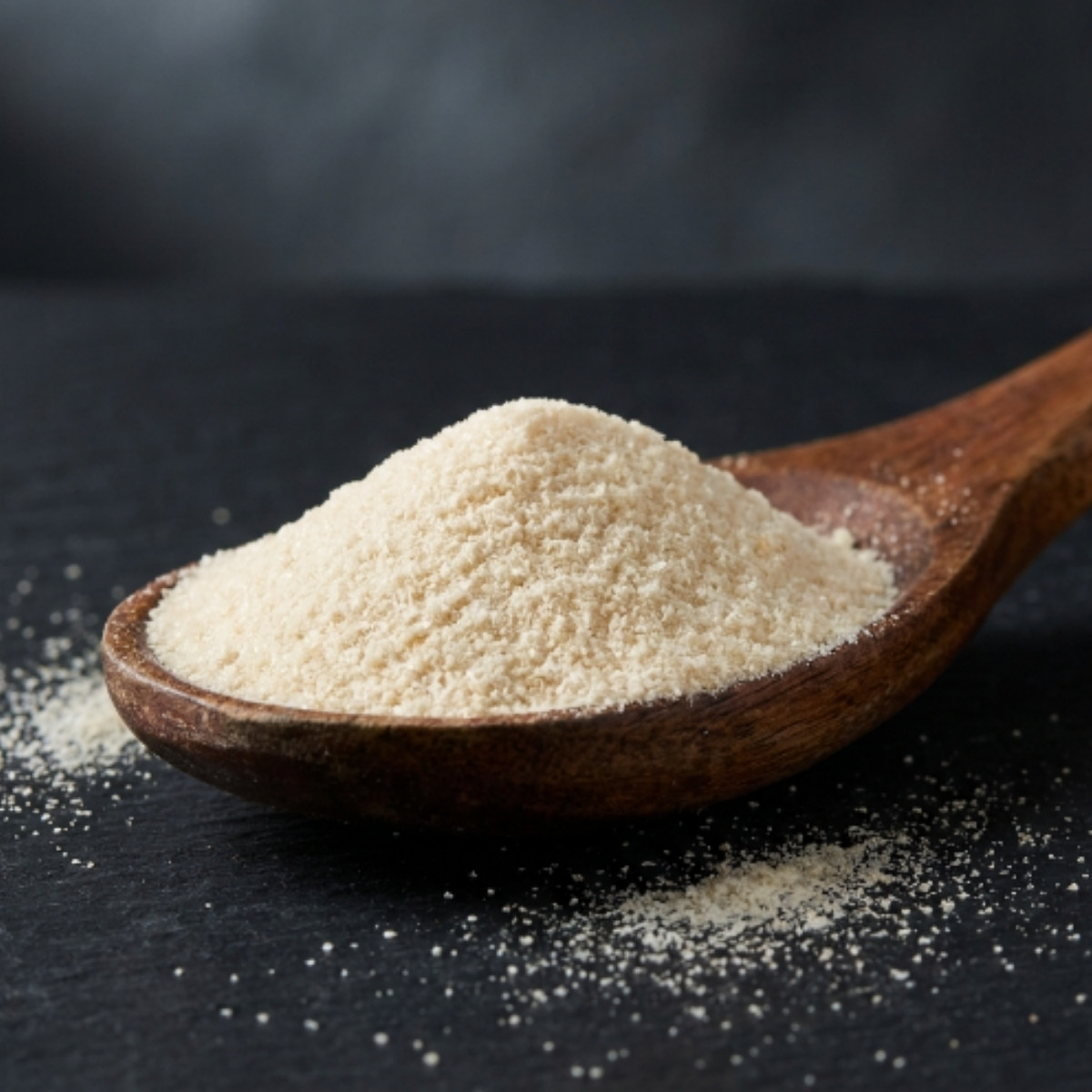
Beef gelatin is a flavorless, odorless protein powder made from the collagen found in cattle. Specifically, it is extracted from the hides, bones, and connective tissue of cows through a controlled heating and processing method. The result is a fine, pale powder that dissolves in hot liquid and sets into a firm gel when cooled.
It is the same fundamental ingredient that has been used in kitchens for hundreds of years in the form of bone broth and aspic. The modern powdered version is simply a more concentrated, convenient form of the same thing. When you make a beef stock that turns solid in the refrigerator overnight, that natural jelly is beef gelatin at work.
Beef gelatin is not the same as pork gelatin. Most commercial gelatin sold in supermarkets, including the Knox brand, is derived from pork. Beef gelatin is specifically sourced from cattle, which makes it acceptable for people following halal or kosher dietary guidelines, subject to the slaughter method used. More on that below.
Jump to:
- What Is Beef Gelatin Made Of?
- How Is Beef Gelatin Made?
- Beef Gelatin vs Pork Gelatin
- Nutritional Profile of Beef Gelatin
- Top Benefits of Beef Gelatin
- How to Use Beef Gelatin in Cooking
- Is Beef Gelatin Halal?
- Beef Gelatin vs Collagen: What Is the Difference?
- Best Beef Gelatin Powders to Buy
- Is Beef Gelatin Good for You?
- Is Beef Gelatin Gluten Free?
- Frequently Asked Questions
- The Bottom Line
What Is Beef Gelatin Made Of?
Beef gelatin is made from collagen, the most abundant protein in the bodies of mammals. Collagen makes up the structure of skin, bones, tendons, ligaments, and connective tissue. It is what gives these tissues their strength and elasticity.
The raw materials used to produce beef gelatin are primarily cattle hides and bones. Hides are especially valued because they contain a dense concentration of collagen fibers with minimal fat or other unwanted material. Bones and connective tissues are also used, particularly in products marketed for their joint health benefits.
At the molecular level, beef gelatin is made up of polypeptide chains rich in three amino acids: glycine, proline, and hydroxyproline. These three amino acids account for the majority of gelatin’s protein content and are responsible for both its gelling properties and its nutritional benefits.
How Is Beef Gelatin Made?
The production process converts raw cattle hides and bones into the fine powder you buy in a jar. It involves several stages.
Raw material collection and cleaning. Cattle hides and bones are collected from slaughterhouses and thoroughly cleaned to remove any remaining meat, fat, or other tissue. The materials are then treated to remove impurities.
Pre-treatment. The cleaned hides and bones are soaked in either an acid or alkaline solution. This step swells the collagen fibers and begins breaking the chemical bonds that hold the collagen structure together. Acid pre-treatment is more common for hides and produces what is known as Type A gelatin. Alkaline pre-treatment is used for bones and produces Type B gelatin.
Hot water extraction. The pre-treated material is then cooked in hot water at progressively increasing temperatures. This controlled heating causes the collagen to partially hydrolyze, breaking it down into gelatin. The liquid extracted at each temperature stage is collected separately, with earlier, lower-temperature extractions producing higher-quality gelatin.
Filtration and concentration. The extracted gelatin liquid is filtered to remove any remaining solids, then concentrated by evaporation to increase the protein content.
Drying. The concentrated gelatin is dried using either drum drying or spray drying. Spray drying involves passing the liquid through a hot chamber where it rapidly dries into fine powder particles. This is the method used to produce the fine powder form sold for cooking and supplements.
The final product is tested for purity, protein content, and gelling strength before packaging. Quality producers also test for heavy metals and pathogens. For grass-fed beef gelatin, the cattle used at the source stage are raised on pasture without antibiotics or added hormones.
Beef Gelatin vs Pork Gelatin
Functionally, beef gelatin and pork gelatin are nearly identical. They have similar gelling strengths, the same applications in cooking and baking, and an equivalent nutritional profile. The difference is the source animal, and for a significant portion of the population, that difference matters enormously.
Pork gelatin is derived from pig hides and bones and is not permissible under halal or kosher dietary law. Beef gelatin, when sourced from halal-slaughtered cattle, is permissible for Muslims. When sourced from kosher-slaughtered cattle and certified accordingly, it can also be acceptable for those keeping kosher, subject to the meat-dairy separation rules of kashrut.
The practical problem is that most supermarket gelatin does not specify its source on the front of the pack. Knox gelatin, the most widely available brand in the US, is pork-derived. If you need beef gelatin specifically, you need to buy a product that states it clearly, such as NOW Foods Beef Gelatin or Great Lakes Wellness Beef Gelatin. For full details on which brands are halal certified, see our guide to is beef gelatin halal.
Nutritional Profile of Beef Gelatin
Beef gelatin is almost entirely protein. A standard one-tablespoon serving of 10 grams contains approximately 35 calories, 9 grams of protein, zero fat, and zero carbohydrates. A larger two-scoop serving of around 20 grams provides roughly 70 calories and 17 grams of protein.
It is not a complete protein because it does not contain tryptophan, one of the nine essential amino acids. However, it is unusually rich in three amino acids that are hard to get in adequate amounts from typical modern diets: glycine, proline, and hydroxyproline. These are the amino acids most associated with collagen synthesis, gut health, joint support, and sleep quality.
The approximate amino acid composition of beef gelatin is as follows: glycine makes up around 27% of the total amino acid content, proline around 16%, hydroxyproline around 14%, and alanine around 11%. The remaining amino acids, including arginine, glutamic acid, and aspartic acid, account for the rest.
Because of this profile, beef gelatin is best used as a complement to other protein sources rather than a primary one. Add it to a diet that already includes complete proteins from meat, eggs, or legumes and it fills the glycine and proline gap that most people are missing.
Top Benefits of Beef Gelatin
The health benefits of beef gelatin are tied directly to its amino acid content, particularly glycine. Glycine is involved in digestion, sleep regulation, joint health, skin elasticity, and muscle recovery. It is considered a conditionally essential amino acid, meaning that under certain circumstances, such as pregnancy, illness, or physical stress, the body cannot produce enough of it and needs dietary sources to make up the deficit.
The main documented benefits include support for gut lining integrity, reduction in joint pain and stiffness, improvement in skin elasticity and hydration, better sleep quality through glycine’s calming effect on the nervous system, and a satiating effect that can help with appetite control due to its high protein content.
For a detailed breakdown of each benefit with the supporting research, see our complete beef gelatin benefits guide.
How to Use Beef Gelatin in Cooking
Beef gelatin behaves differently from collagen powder, and understanding the difference determines how you use it. Collagen powder dissolves in any liquid, hot or cold, and does not gel. Beef gelatin requires hot liquid to dissolve fully, and it sets into a firm gel when cooled. This gelling property is the whole point in most culinary applications.
Blooming
Before adding beef gelatin powder to most recipes, you bloom it first. This means sprinkling the powder over cold water and leaving it for five to ten minutes without stirring. The gelatin absorbs the cold water and swells, which allows it to dissolve completely and evenly when you add it to a hot liquid. Skipping the bloom step leads to lumpy, unevenly set results.
Ratios
As a general starting point, one tablespoon of beef gelatin powder sets approximately two cups of liquid into a firm, sliceable gel. For a softer, wobblier set, use slightly less. For recipes where you need a very firm set, such as gummies or marshmallows, use slightly more. Most recipes specify the exact amount, so follow the recipe rather than guessing.
Temperature rules
Beef gelatin sets when cooled and melts when reheated. It sets at around refrigerator temperature and begins to melt above 35 degrees Celsius (95 degrees Fahrenheit). This means gelatin-set desserts need to be kept cold until serving, and gelatin-thickened sauces will thin when reheated. It also means you should never boil gelatin after it has been dissolved, as excessive heat can degrade its gelling strength.
What you can make with beef gelatin
The most popular uses at home include marshmallows, gummies and gummy bears, homemade jello and fruit jellies, panna cotta, bone broth gummies, whipped desserts, and as a thickener for sauces and soups. It is also used in savory applications like terrine and aspic.
For step-by-step recipes, start with our homemade beef gelatin marshmallows recipe and our beef gelatin gummies recipe. Both are straightforward and produce consistently good results.
Is Beef Gelatin Halal?
Beef gelatin can be halal, but the label alone is not enough confirmation. The source animal being a cow is the first requirement, but the second requirement is that the cow was slaughtered according to Islamic law (dhabiha). A product that says “beef gelatin” without a halal certification logo may come from a conventionally slaughtered animal and would not be considered halal under the majority scholarly position.
Brands that carry a confirmed halal certification include NOW Foods Beef Gelatin Powder and Hearthy Foods Beef Gelatin Powder. For the full breakdown of every major brand, specific product questions (Pop-Tarts, Knox, Welch’s), and the Islamic ruling in detail, see our dedicated guide to is beef gelatin halal.
Beef Gelatin vs Collagen: What Is the Difference?
This is one of the most common points of confusion because both products come from the same source: bovine collagen. The difference is in how they are processed.
Collagen peptides (also called hydrolyzed collagen) are processed further than gelatin. The collagen chains are broken down into much smaller fragments, which means collagen powder dissolves in any liquid, hot or cold, and does not gel. It is effectively invisible in food and drink.
Beef gelatin is less processed. The collagen chains are partially broken down but remain long enough to bond together and form a gel network when cooled. This is why beef gelatin sets into a solid and collagen powder does not.
In terms of nutrition and amino acid content, they are very similar. The practical decision is based on what you need it to do: gel and set, use beef gelatin; dissolve invisibly, use collagen peptides. For a full side-by-side comparison, see our article on beef gelatin vs collagen peptides.
Best Beef Gelatin Powders to Buy
The most important thing to look for when buying beef gelatin powder is source transparency. Grass-fed and pasture-raised are the labels to look for, as they indicate the cattle were not raised in feedlots or given artificial hormones. After that, halal or kosher certification matters if you have dietary requirements, and gelling strength matters if you are using it for specific recipes.
The most widely recommended brands are NOW Foods Beef Gelatin Powder, Great Lakes Wellness Beef Gelatin, Vital Proteins Beef Gelatin, and Hearthy Foods Beef Gelatin. Each has different strengths in terms of certification, price, and performance in recipes.
For a complete side-by-side review of every major brand with prices and recipe performance, see our best beef gelatin powder buyer’s guide.
Is Beef Gelatin Good for You?
Yes, for most people. Beef gelatin is a concentrated source of glycine, proline, and hydroxyproline that most modern diets are genuinely short of. The shift away from eating nose-to-tail, which historically meant consuming significant amounts of skin, bone broth, and connective tissue, has left a gap in amino acid intake that beef gelatin can help fill.
It is not a miracle supplement and it is not a complete protein source, but used regularly alongside a balanced diet it contributes meaningfully to gut health, joint function, and skin quality. It is also extremely low in calories for the amount of protein it provides, which makes it easy to add to existing meals without affecting macros significantly.
The one caution: anyone with a known allergy to beef or bovine products should avoid it. Side effects in healthy adults are rare and generally limited to digestive discomfort when consuming very large amounts.
Is Beef Gelatin Gluten Free?
Yes. Pure beef gelatin powder contains no gluten. It is derived entirely from animal collagen and contains no wheat, barley, or rye. Most reputable beef gelatin products are certified gluten free and safe for people with coeliac disease or gluten sensitivity. Always check the label for any added ingredients or cross-contamination warnings on shared manufacturing lines.
Frequently Asked Questions
Is beef gelatin the same as regular gelatin?
Functionally yes, but the source is different. Regular gelatin sold in most supermarkets is pork-derived. Beef gelatin is specifically from cattle. They behave the same way in recipes and can be substituted in equal amounts.
What does beef gelatin taste like?
Nothing. Pure beef gelatin powder is flavorless and odorless. It takes on whatever taste is already in the dish. This is what makes it so versatile in both sweet and savory recipes.
Can you eat beef gelatin every day?
Yes. One to two tablespoons per day is a typical amount used in supplements and recipes. There is no established upper limit for healthy adults, and daily use is generally well tolerated. Spread it across meals by adding it to soups, hot drinks, or dessert recipes.
Is bovine gelatin the same as beef gelatin?
Yes. Bovine means cattle, and bovine gelatin and beef gelatin are the same product. The word bovine is more commonly used in pharmaceutical and manufacturing contexts. In food and supplement labeling, beef gelatin is the more common term.
What is the difference between gelatin sheets and gelatin powder?
Both are the same substance in different forms. Sheets, also called leaves, are soaked in cold water before use and then squeezed out and added to warm liquid. Powder is bloomed in cold water and then added to hot liquid. They can be substituted for each other: one standard gelatin sheet is roughly equivalent to one teaspoon of gelatin powder.
Is beef gelatin paleo and keto friendly?
Yes to both. Beef gelatin is pure animal protein with zero carbohydrates and zero fat. It fits within paleo, keto, Whole30, and carnivore dietary frameworks. Most quality beef gelatin products carry Paleo and keto-friendly labeling.
The Bottom Line
Beef gelatin is collagen from cattle hides and bones, processed into a fine powder that gels when cooled. It is nutritionally dense in the amino acids glycine, proline, and hydroxyproline that most modern diets lack. It is flavorless, gluten free, paleo and keto friendly, and can be halal certified depending on the brand. In the kitchen it is essential for marshmallows, gummies, jellies, and any recipe that needs to set firm.
Where to go next depends on what you need. If you want to start cooking with it, try our beef gelatin marshmallows recipe or gummies recipe. If you want to understand the health side in depth, read our beef gelatin benefits guide. If you need to know which brand to buy, see our best beef gelatin powder buyer’s guide. And if you need to confirm it is halal, our is beef gelatin halal guide has the complete answer.

Leave a Reply